‘Catastrophic’: Calls to ban fracking in South-East
Concerned politicians and primary producers are calling on the Malinauskas government to ban fracking permanently in the Limestone Coast.
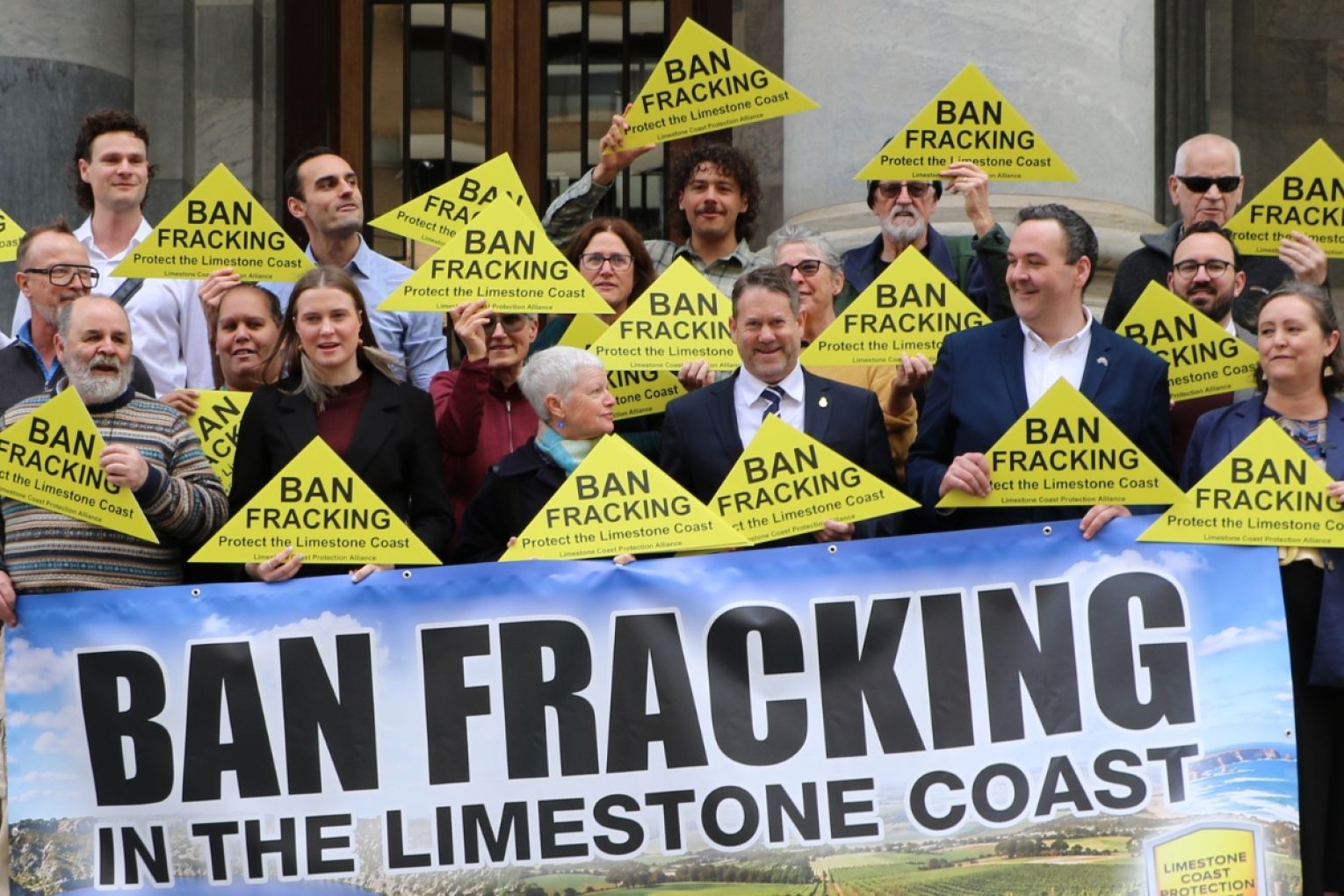
Key names who signed an open letter calling on the state government “to listen to voters, protect the Limestone Coast, and act to permanently prohibit fracking in our region” staged a protest at Parliament House this morning.
It comes after the government introduced the Energy Resources (Regulated Activities) Amendment Bill in May to remove a moratorium on hydraulic fracture stimulation in the Limestone Coast, with Premier Peter Malinauskas saying it needed to happen with the current fuel and gas crisis. The bill was not supported by One Nation, the SA Liberals or the Greens.
Limestone Coast Protection Alliance chair Angus Ralton told InDaily that fracking would have a “catastrophic” impact on the region’s economy and its global reputation as a “clean and green” area for food production.
“The wine goes to Europe, we’ve got Wagyu going to Japan, we’ve got crayfish going to China – fracking will destroy that in an instant,” he said.
“So, we’re on the front foot, and we’re calling on the Labor government to heed warnings and reverse course on this catastrophic policy position and put a permanent ban on fracking in place so we’ve got certainty for our region in the future.”
A groundswell of concern in the region has led to Greens MLC Melanie Selwood announcing her party would be introducing a bill to parliament today to permanently ban fracking in the Limestone Coast.
“Fracking is bad for the environment, fracking is not what the community want, and we need to listen to those concerns,” she claimed.
You might like

According to the signatories of the letter, who did not include state politicians, fracking could impact the Limestone Coast’s reputation as a “food bowl”, with the region producing 30 per cent of the state’s agricultural output and contributing $4 billion to SA’s economy every year.
“Fracking could contaminate the Limestone Coast’s precious water, soil and air. Potential risks include environmental contamination, regulatory failure and excessive methane releases,” they claimed.
“Ground water contamination is an unacceptable risk that could damage our farms and communities permanently.”
Among the letter’s signatories were the City of Mount Gambier, the Southern Limestone Coast Council, the District Council of Robe, Tatiara District Council, Wattle Range Council and Naracoorte Lucindale Council.
Other signatories included the Limestone Coast Protection Alliance, the Limestone Coast Grape and Wine Council, Humpalicious Camel Milk, Grey-Smith Wines, the Mount Gambier Wine Region and The Australia Institute.
One Nation Mackillop MP Jason Virgo, independent Mount Gambier MP Travis Fatchen, Greens MLC Melanie Selwood and Liberal MLC Nicola Centofanti were all at this morning’s event to support the open letter.
However, the move to lift the fracking ban was welcomed by the South Australian Chamber of Mines and Energy, with CEO Catherine Mooney saying it was an important step towards “evidence-based policymaking” and “strengthening the state’s long-term energy security”.
“Removing the moratorium would allow the South East region to participate fully in the state’s economic future, while continuing to operate under some of the strongest environmental protections in the world,” she said.
Stay informed, daily
“As the east coast faces tightening gas supply, unlocking responsibly regulated local production is a practical step toward energy security and affordability.
“South Australia has world-class environmental safeguards. Allowing those safeguards to operate, rather than imposing blanket bans, is the right path.”
Shadow Primary Industries Minister Nicola Centofanti said that “we cannot risk fracking on prime agricultural land in the South East”.
While Mackillop member Virgo claimed there was no social licence for fracking in the Limestone Coast.
“We’ve had a long history of our community making it very clear that we don’t want fracking on prime agricultural land, and One Nation will always protect prime agricultural land and farmers,” he said, proposing instead for a plebiscite in the local government elections.
First Nations Voice to Parliament member Lisa Rigney said that “Aboriginal voices must be heard from the beginning” of the process to remove a ban on fracking.
“Our voices cannot be an afterthought when decisions affect our country, culture, water and future generations – traditional owners must have a voice,” she said.
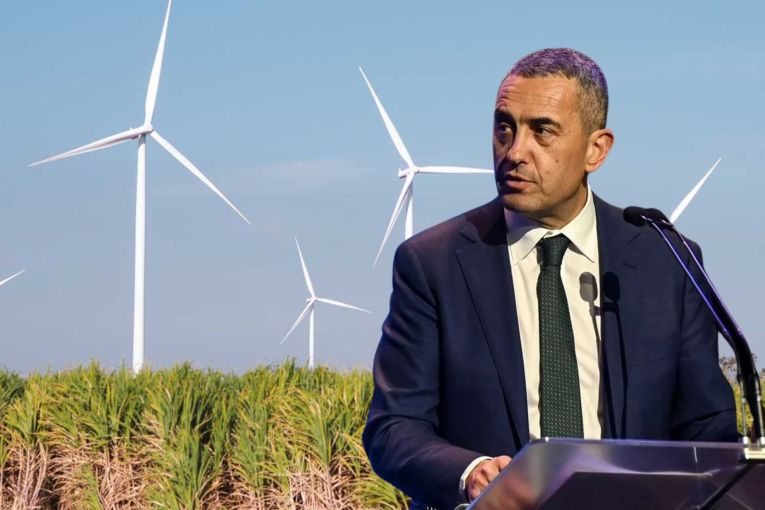
Energy and Mining Minister Tom Koutsantonis said that “any MP who supports this petition must explain why they are pro-gas exploration using hydraulic fracture stimulation everywhere else in the state but against it in the south-east”.
Koutsantonis said the Australian Energy Market Operator has forecast increasing risks to gas supply in southern Australia from 2029.
“It is important that we act now to ensure any future proposals in the South East have sufficient time to undergo planning, technical studies and baseline environmental work needed to support regulatory assessment,” he said, noting that fracking is allowed everywhere else in the state.
“It is important to note, however, that no hydraulic fracture stimulation activity is being approved as part of this decision.
“If the moratorium is removed, any future activities involving fracking would be subject to South Australia’s existing regulatory framework, including comprehensive environmental assessment, mandatory public consultation and ongoing monitoring, compliance and enforcement.”
Want to see more stories from InDaily SA in your Google search results?
- Click here to set InDaily SA as a preferred source.
- Tick the box next to "InDaily SA". That's it.