Government details plans for potential SA bird flu outbreak
Concerns over native birds and poultry livestock are central to the state government’s H5 bird flu surveillance monitoring plans following an outbreak in Western Australia.
Ground-based surveillance and drone surveys are currently being undertaken by the state government along the west coast of SA to monitor H5 bird flu spreading to SA.
It follows a case of deadly H5 bird flu, also known as high pathogenicity avian influenza (HPAI) H5N1, being confirmed in a brown skua.
The large seabird was found in Cape Le Grand National Park near Esperance, about 700 kilometres south-east of Perth in Western Australia.
There were yet to be any instances of H5 bird flu in South Australia,
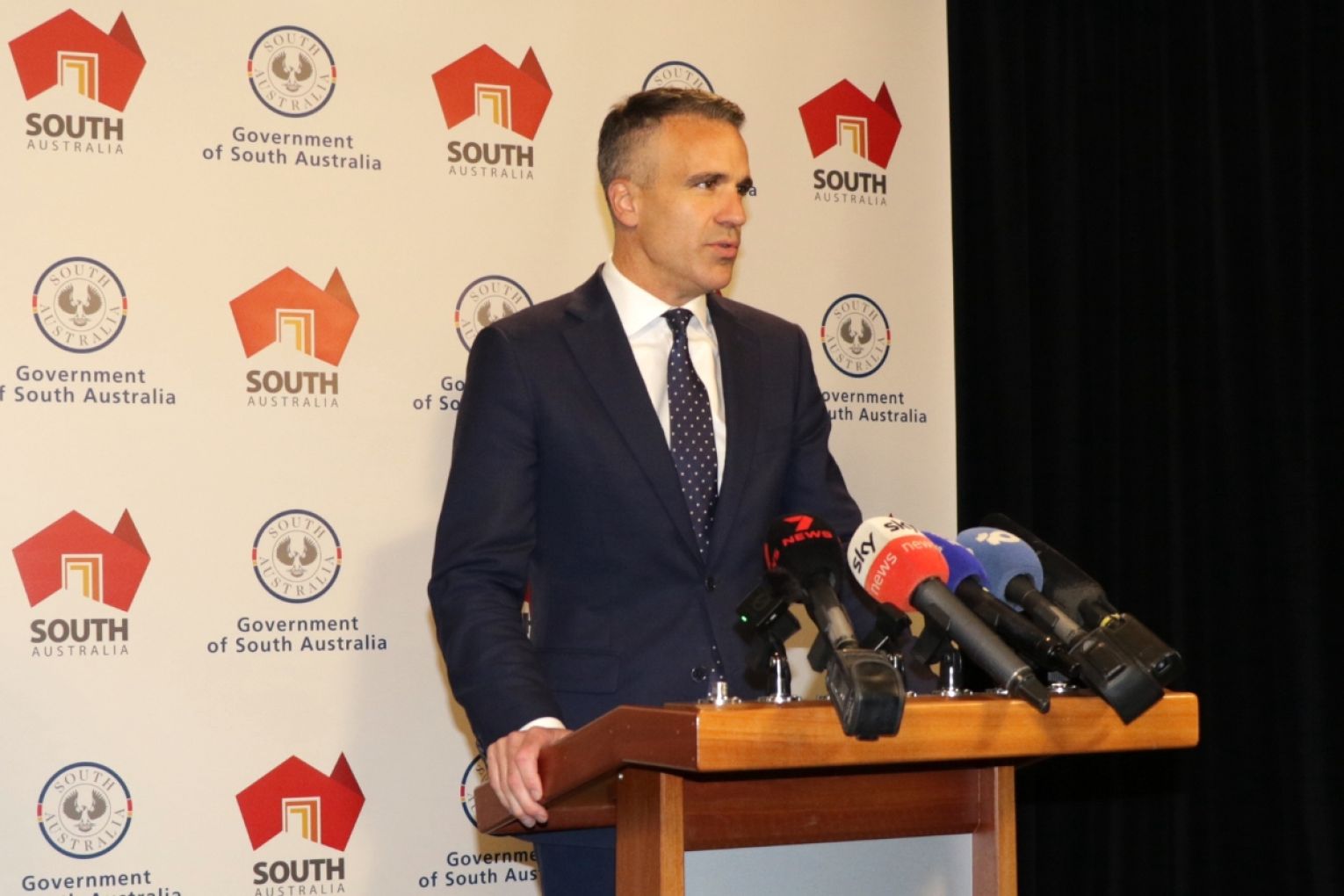
Premier Peter Malinauskas and Primary Industries Minister Clare Scriven told reporters this afternoon that officers from the Department of Primary Industries and Regions SA (PIRSA) and the Department of Environment and Water were closely monitoring sea lions, birds and other wildlife for signs of the illness.
You might like


The South Australian Research and Development Institute (SARDI) would also provide helicopter surveys and ground surveys of sea lion breeding sites between Ceduna and the WA border.
Malinauskas urged the public to avoid coming into contact with dead birds and to instead contact the Emergency Animal Disease Hotline.
“If there’s one key message that we would want South Australians to adhere to when it comes to H5 bird flu is to avoid, record and report if they see dead birds in SA,” he said.
“People should be aware that the likelihood of humans contracting this particular strain of bird flu is low, but it certainly can happen, particularly for those that actively touch or handle birds that are infected.”
Stay informed, daily
Malinauskas also outlined concerns for the state’s native birdlife and poultry sector should the H5 bird flu find its way into SA.
There were more than 120 million chickens in the state, the Premier said, “SA disproportionately produces a lot [of chickens] in comparison to the rest of the country.
“It’s a very large industry that generates billions of dollars of economic activity in South Australia,” he said.
“Our objective, if bird flu is detected amongst the poultry sector, is to intervene at rapid pace and see the euthanasia or destruction of those birds as quickly as possible to prevent the strain spreading.
“One of the things that we’re quite concerned about in an Australian context, including SA, is we don’t know yet how native birds in Australia will respond to the H5 strain because it’s not yet been here before.”
When asked about the likelihood of the H5 bird flu entering SA, the Premier said it was “just so hard to know”.
“We’ve been fortunate in Australia because of our relative remoteness and our geography, but once it gets here, how long it takes to travel across the rest of the country is anyone’s guess,” he said.
Minister Scriven said it was “inevitable that bird flu would eventually get to Australia”, but remained confident that SA had the capabilities to manage the disease.
“All of the work we’ve done over the last two years in terms of preparation whether that be through PIRSA or DEW, in terms of wildlife will now come into play,” Scriven said.
“It means we already have a lot of equipment needed for destruction, we have diagnostic capabilities, we have mobile laboratories, and a number of things that we’ve invested in over recent years because we knew this was a high risk.”
The state government is urging anyone who sees dead or ill birds to contact the Emergency Animal Disease Hotline on 1800 675 888.
Want to see more stories from InDaily SA in your Google search results?
- Click here to set InDaily SA as a preferred source.
- Tick the box next to "InDaily SA". That's it.