Pay not punish SA whistleblowers
A whistleblower who reported a police colleague’s suspicious behaviour is among a growing number calling for stronger SA protections. Should whistleblowers be paid? Take the poll.
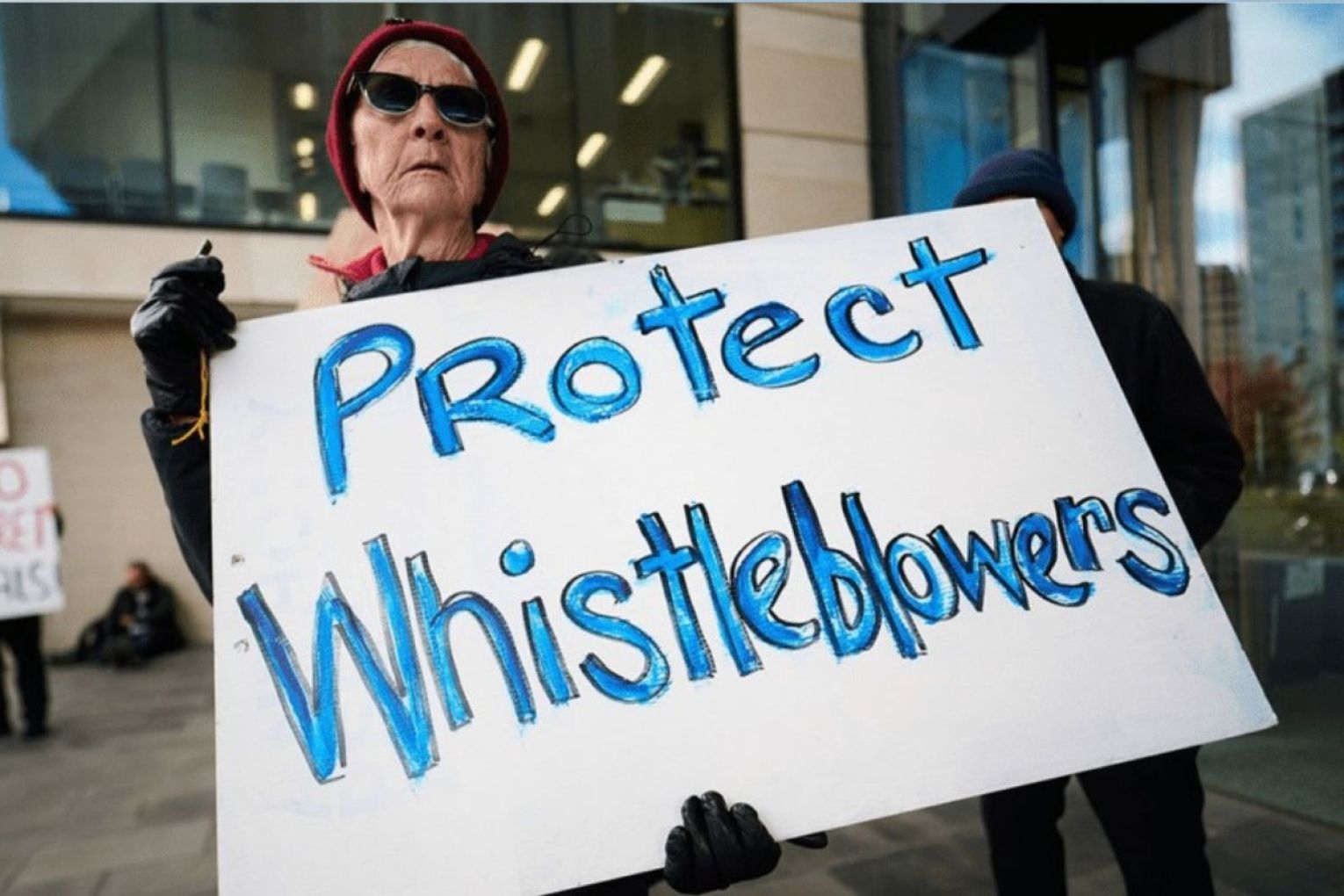
A former whistleblower, a human rights lawyer and an ex-watchdog boss believe whistleblowers should be paid for information to encourage them to come forward.
Asked at an Independent Commission Against Corruption (ICAC) forum in Adelaide on Wednesday afternoon if whistleblowers should be rewarded, former whistleblower Frank O’Toole responded with a quick “yes”.
O’Toole reported suspicious activity of an Australia Federal Police officer colleague which ended in a criminal prosecution, and he now sits on Australia’s National Whistleblowing Advisory Group, Transparency International.
He said many people argued against whistleblower rewards as a “knee-jerk reaction”, fearing a pay packet would encourage false complaints.
“If it turns out to be a vexatious complaint, you don’t get the reward, quite simply,” O’Toole told the panel.
Human Rights Lawyer Anneliese Cooper – who works with the Human Rights Law Centre’s Whistleblower Project – said a reward scheme worked internationally in the United States, Canada, South Korea and the United Kingdom.
“Really a whistleblower reward scheme is about recognising the whistleblower’s contribution to the public interest,” Cooper said.
You might like


“So it’s not necessarily about financially compensating them for what they’ve lost in terms of their lost employment or their legal fees.
“It’s just about saying what you’ve done is valuable and has contributed to society and has resulted in whatever outcome and recognising that.”
University of NSW researcher and law professor Dr Gabrielle Appleby said quantifying the public interest would be a challenge.
“I think that the devil would be in the detail of such a scheme,” Appleby said.
South Australia’s ICAC hosted the panel to address how well current protections for SA whistleblowers are working, as the watchdog prepares a report to table in state parliament by the end of the year.
ICAC Commissioner Emma Townsend said the watchdog’s public integrity surveys showed “ongoing reticence” to make reports due to fear or apprehension of the repercussions and confidentiality concerns.
“South Australia already has a legislative framework in place to facilitate disclosures of information in the public interest,” she said.
Stay informed, daily
“However, almost seven years have passed since the Public Interest Disclosure Act 2018 came into force, and in this time, several Australian jurisdictions have enacted more robust whistleblower protections within their regimes.”
ICAC is currently investigating alleged misconduct by a senior SA police officer after receiving a referral on April 2, saying it was investigating a potential breach of the police code of conduct, not corruption.
Townsend said the topics discussed at the panel – like rewards and who can be a whistleblower – “will shape and improve the future of South Australia’s whistleblowing protection framework” and be incorporated into the report ICAC would present to parliament later this year.
New South Wales Deputy Ombudsman Tom Millett said one of the ways his state had strengthened protections and removed barriers for whistleblowers was by implementing a “no wrong doors” approach.
“You can now go to any integrity agency in New South Wales, and it doesn’t matter if it’s the wrong home for that particular disclosure; we’ve then got an obligation to make sure it finds its way to the right integrity agency,” Millett said.
The panel also discussed expanding the eligibility of whistleblowers protected by the Public Interest Disclosure Act, such as including former public officials, or other witnesses, such as prisoners who witness corruption in the prison system.
South Australia’s Public Interest Disclosure Act does not include former public officials in its whistleblower criteria, and this varies in different states and jurisdictions, according to the Human Rights Law Centre.
On a federal level, a whistleblower incentive scheme has been recommended by multiple parliamentary inquiries and proposed by the Australian Labor Party before the 2019 election but not introduced.
Human Rights Law Centre released a report on Wednesday calling for the Albanese Government to introduce a rewards scheme as a key feature of a suite of protections for whistleblowers.
Ex-watchdog boss Professor Allan Fels AO – a former chair of the Australian Competition and Consumer Commission – said the time to debate the merits of whistleblower rewards had passed.
“Our policymakers must now look towards designing a whistleblower rewards scheme that works for Australia,” Fels said.
“Put simply, rewards schemes are good investments. Done right, they are powerful policy tools with which we can create a more effective regulatory and enforcement system.”
Want to see more stories from InDaily SA in your Google search results?
- Click here to set InDaily SA as a preferred source.
- Tick the box next to "InDaily SA". That's it.