Longer road trains on more SA roads to tackle growing fuel crisis
Premier Peter Malinauskas has unveiled a new reform allowing longer road trains across the state in the latest bid to conserve fuel in SA – prompting concerns over heavy trucks impacting country roads.
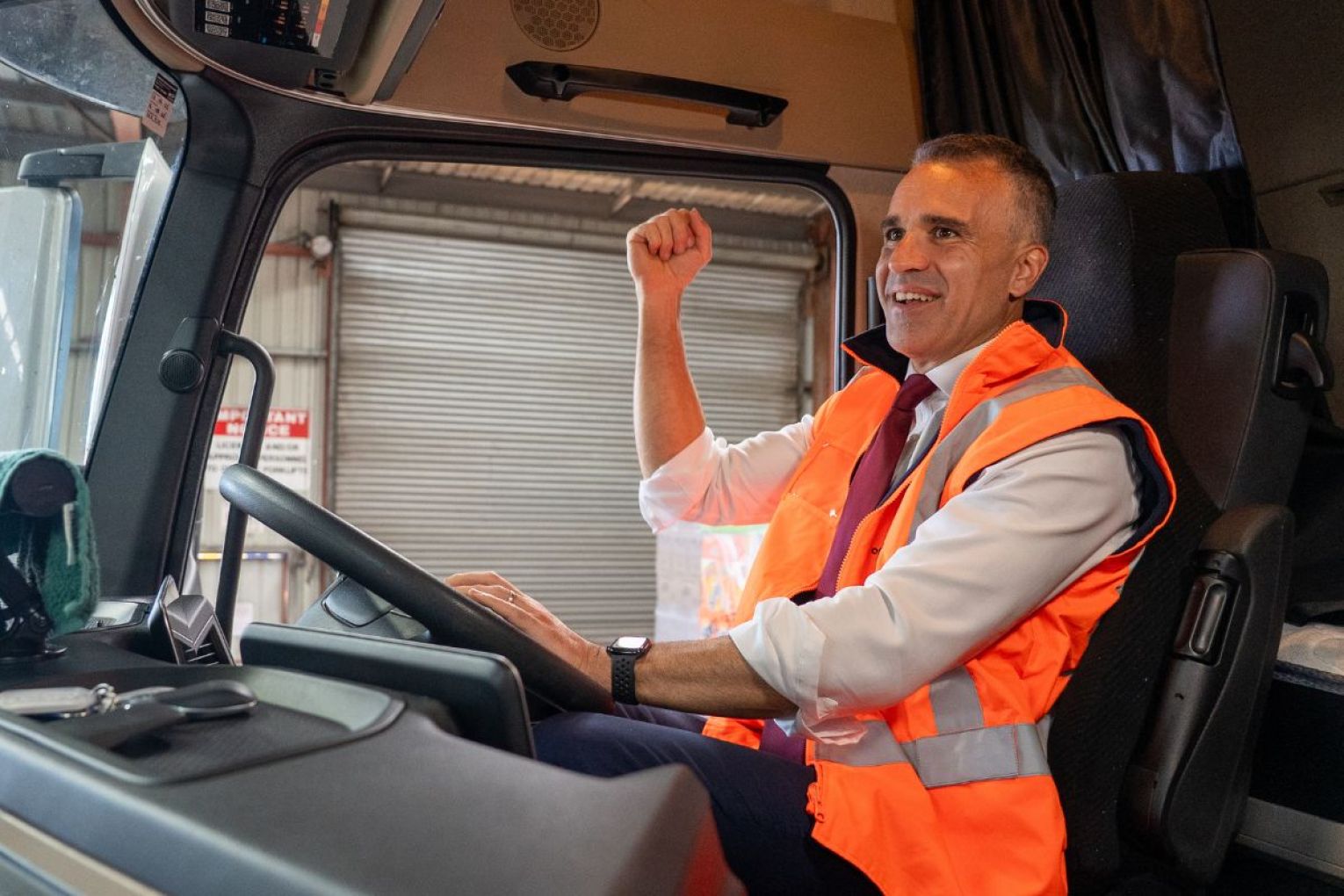
Premier Peter Malinauskas announced on Tuesday morning that the state government would fast-track heavy freight reforms, which would see 100 new network maps for trucks introduced across SA roads to further reduce fuel costs.
He said the move was designed to see fewer and larger trucks on more SA roads in a bid to reduce fuel needs for transport, but the state opposition raised concerns that heavier trucks could lead to more pressure on “already crumbling” country roads.
The National Network Map by the National Heavy Vehicle Regulator (NHVR) is where the heavy vehicle industry maps journeys within SA and across borders by providing a real-time view of approved or restricted routes.
Now, larger tri-drive rigid trucks and prime movers can have three drive axles rather than the usual two axles, and B-Doubles operating long distances on regional roads can increase from tri and tandem-axle trailers to quad-axle trailers to operate on the additional 100 road networks.
It would increase the maximum weight limit for trucks by 13 per cent to 77 tonnes, with the larger payloads per trip enabling trucks to use up to 18 per cent less fuel per tonne of payload.
Malinauskas said the reform would provide freight companies “greater flexibility” to configure their trucks and trailers, meaning they could take more livestock in one trip.
You might like
“Put simply, this means fewer trucks, less fuel, more freight and lower costs for transport businesses,” Malinauskas said.
“By allowing trucks to go on more routes to carry heavier loads, it means we can make the distribution of products more efficient and more productive that then generates more savings for the consumer of these services.”
Shadow Minister for Transport and Infrastructure Sam Telfer said there were already concerns that regional roads needed more maintenance.
“Our roads are already crumbling with a $2.1 billion backlog in road maintenance, which will only be put under more pressure with heavier trucks,” he said.
“Having heavier and longer trucks means we need better roads, and Labor has continuously failed to invest in basic upkeep. We must see a significant boost in road maintenance funding, especially in our regional roads, which are already a danger to truckies and residents alike.”
The reform follows the federal government’s announcement to pause road user charges for trucks for three months and halve the fuel excise tax, which has reduced the cost of fuel by 26.3 cents per litre.
Stay informed, daily
The state government also announced on Thursday that $40 million in GST revenue from rising fuel prices would be redirected to further lower the fuel excise by an additional 5.7 cents per litre.
Malinauskas said essential supplies would continue to reach isolated and regional communities across South Australia without delay.
“We don’t know how long the Iran War is going to go on for and we don’t know how long we are going to see inflated diesel prices,” he said.
“That doesn’t mean we can’t do everything we can to act quickly at a state level to put in place changes that make it easier for goods to get from the farm gate to the supermarket as cheaply as possible.
“This vital reform will also deliver significant benefits to our primary producers, who have done it tough through drought only to confront rising fuel costs.”
Despite the fast-tracked reform, the Premier said the government was “making no compromises to safety” and had undertaken assessments of road and bridge infrastructure as well as the safety of drivers and other road users.
NHVR and other key stakeholders, including Primary Producers SA, RAA, South Australian Freight Council, South Australian Road Transport Association and Motor Trade Association, were consulted by the state government to assess the road safety.
Transport Minister Joe Szakacs said the road networks had gone through rigorous safety tests and would allow the freight industry to “move more with less fuel”.
“Road safety remains our top priority, and every network opened under these new measures has been thoroughly assessed and approved for being able to support these heavier vehicle combinations safely,” Szakacs said.
“We are pulling every lever we can to ensure that goods keep moving across the state and that vital supplies continue to flow to regional and remote communities.”
Want to see more stories from InDaily SA in your Google search results?
- Click here to set InDaily SA as a preferred source.
- Tick the box next to "InDaily SA". That's it.