State emblem seadragon disappears from diving hotspot
Divers are reporting an unusually high number of one marine species at a popular SA diving spot but fears are being raised over the state’s marine emblem. See the video.
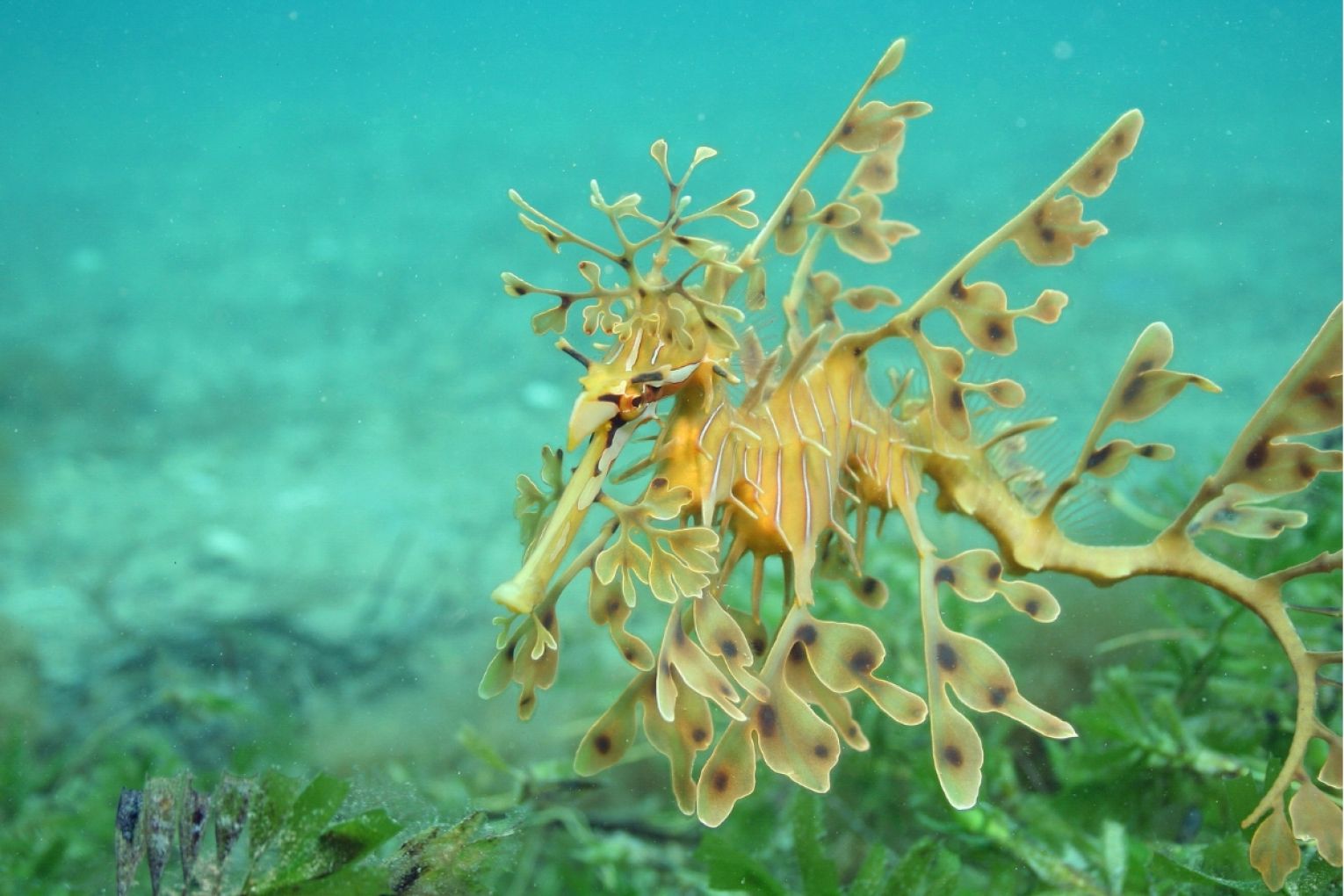
A Divers for Climate supporter spotted 30 weedy seadragons in a single dive at Rapid Bay a few weeks ago – but the state’s marine emblem, the leafy seadragon, seemed to have disappeared from the area.
Dr Yolanda Waters, who is CEO of Divers for Climate, said that climate change and the algal bloom had caused unusual migratory patterns for seadragons.
“The leafy sea dragons were hit quite hard by the algal bloom. There used to be about 45 known residents in that site, and our local divers and contacts there at the dive centre have said they’re lucky to find maybe one or two, since the algal bloom has passed from this region,” she said.
“However, what has been really interesting is that weedy seadragons, which are actually less known at these locations, like they’re quite rare, all of a sudden in February, we had reports that they were popping up.
“Why we wanted to get the story out there is to really say there are such changes happening in our oceans, and there are people seeing this firsthand, it’s really important that we recognise divers as the source of knowledge and information that they are.”


Waters said she expected to see more species appear in strange places due to warmer ocean temperatures.
“We’ve heard stories from around the entire country of species both being where they shouldn’t be, but also species that should be there that are disappearing or moving away,” she said.
Diving instructor Carl Charter also reported an increasing number of weedy sea dragons, while the number of leafy sea dragons had decreased.
Charter leads guided diving tours at Second Valley and Rapid Valley to see leafy sea dragons and has been extensively involved in citizen science projects researching sea dragons.
“I can only assume that they’re no longer alive because they did vanish during the harmful algal bloom, and we’ve all seen in the media the hundreds of dead leafy sea dragons on the beach with community collections through iNaturalist,” he said.
Stay informed, daily
“I’m not sure why we’re now seeing so many more weedy sea dragons. Probably one of the main things I’ve thought about is that there are a lot fewer predators now because of the harmful algal bloom.”
However, Charter said the number of weedy sea dragons had started to drop off in the past couple of weeks.
He was hopeful that leafy sea dragons would return to the area, saying that they lay about 1000 eggs in a one-year cycle.
“I’m optimistic that the ocean is very resilient, and the good thing about the leafy sea dragon is their life cycle is quite short – it only takes about two years for them to get to adult size,” he said.
Want to see more stories from InDaily SA in your Google search results?
- Click here to set InDaily SA as a preferred source.
- Tick the box next to "InDaily SA". That's it.