The algal bloom SA never wanted – and the professionals trying to stop its spread
A Bloomin’ Algae project amassing health and environmental data is pushing research ahead with a city event. Science writer Sarah Keenihan, PhD, speaks to volunteers targeting the most destructive algal bloom since SA records began.
It’s raining events here in South Australia. Adelaide’s LIV Golf tournament has just wrapped for the fourth time. Gather Round 2026 will deliver planeloads of AFL fans to our state in April. We are hosting the world’s first MotoGP race on a street circuit in 2027.
But a more unsavoury, persistent event ruins the vibe. For one year now, our oceans have played host to “the most destructive and widespread marine ichthyotoxic (fish-killing) harmful algal bloom” since records began in 1985. We are just the third place in the world where a toxin-producing algal species called Karenia cristata has been identified.
Biodiversity is under continued threat in our unique marine environments, and dead creatures, toxic foam and irritant-laden sea breezes wreak rolling havoc for beach lovers and businesses. At the moment the bloom is active in Southwest Yorke Peninsula, and parts of Kangaroo Island appear to be experiencing ongoing after-effects.
Preliminary (not yet peer-reviewed) research into the causes of the bloom suggest it resulted from a “convergence” of events, including river flooding and high sea temperatures. But there’s so much we still don’t understand. When will it be over? How can we manage health impacts? What do we do next?
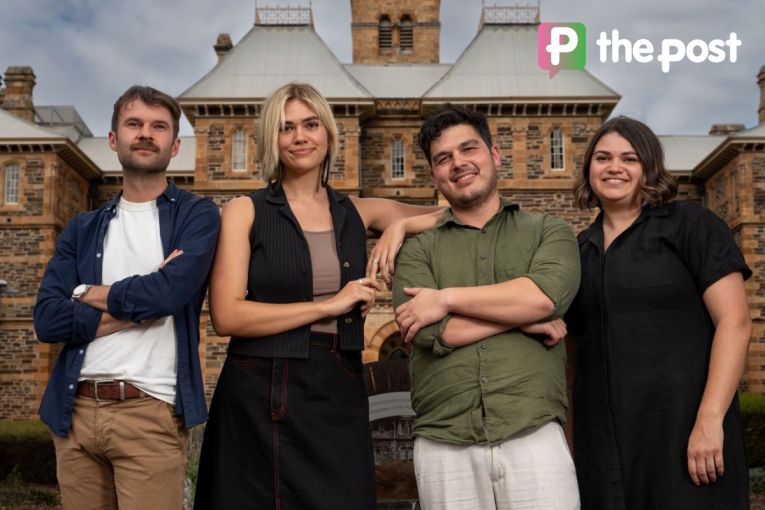
It’s the troubling persistence of such unknowns that triggered Associate Professor Amy McLennan and colleagues to launch the Bloomin’ Algae project in November 2025. The project is being boosted through a ‘launch sprint’ this week in Adelaide.
“We could see the algal bloom was not going away quickly – and awareness was growing this would likely be the kind of event Australia could see more of in the future,” Amy says.
“So we agreed to step up and do what we could to help, alongside so many others.
You might like


“This week our launch sprint will bring together volunteer researchers, analysts and disaster experts to accelerate our work.”
Bloomin’ Algae describes itself as ‘an independent, collaborative research collective’. Through a range of projects, it aims to combine data, community observations and rigorous analytical methods to provide rapid, evidence-based assessments of algal bloom disasters for coastal communities, researchers and decision-makers.
While the resource is not aligned with any university or government entity, neither is it an alliance of keyboard warriors ‘doing their own research’. Bloomin’ Algae is run by a posse of professionals offering their time as volunteers, including those with expertise in environmental and climate risk, global disaster risk analysis and response, water governance, sustainability, epidemiology and microbiology.
Amy’s training is in health – with a twist. After completing an undergraduate degree in biomedical sciences at Flinders University and an honours year in anatomy at The University of Adelaide, in 2009 she travelled as a John Monash scholar to obtain a postgraduate degree in medical anthropology at the University of Oxford.
Anthropology is the study of human societies and cultures.
“It was my anthropology studies that helped me grapple with the messy complexity of health – not just the scientific aspects of it, but also the cultural, social and ecological influences,” Amy says.
“Also, anthropology is really useful when it comes to bringing together lots of different kinds of experts for problem solving – which is what we hope to achieve with the Bloomin’ Algae collective.”
Seven projects are listed on the Bloomin’ Algae website, with a health symptom reporting portal currently live and collecting data.
Stay informed, daily
“The portal is compliant with FAIR principles and Australia’s national statement on ethical conduct in human research,” Amy says.
“We’re also following general data protection regulations (the GDPR) established by the European Union.”
A project titled Learning from other HABs pulls together information on historic patterns, forecasting methods, and indices from other places with harmful algal bloom expertise, including Florida, USA and China.
Also in progress is an interactive timeline (which you can download as a spreadsheet), and a rapid impact assessment tool. Future projects listed include a health impact study, community education events and school engagement.
Amy hopes the project goes beyond generating papers in pursuit of academia’s endless pressure to “publish or perish”.
“Honestly, I’d rather make sure we are using our time and data to improve outcomes in the real world,” Amy says.
“Whether that’s decision-making around how best to spend public money, reorienting health services, building early warning systems, supporting communities in the current algal bloom or in the future – that’s what I’m focused on.
One of the trickiest aspects of disasters like the algal bloom is the level of uncertainty it creates in affected communities.
“People seek certainty, they’re looking for the ‘silver bullet’ that can explain why the algal bloom happened, how to fix it, and what the future looks like,” Amy says.
“But this is an unprecedented event and the bloom is changing on a daily basis – it’s all so new. There’s no playbook like we have for, say, bushfires.
“Anything Bloomin’ Algae can do to help collect reliable data for analysis, and build rapid impact assessments for algal bloom events, we’re keen to do it.”
Unfortunately for South Australia, there’s plenty of data to keep the project current in 2026.
Sarah Keenihan, PhD, is a science writer and a postgraduate student at the Australian National Centre for the Public Awareness of Science. She is on the Advisory Board at the Environment Institute, Adelaide University and a member of the Environment Advisory Committee, Surf Life Saving SA.

Want to see more stories from InDaily SA in your Google search results?
- Click here to set InDaily SA as a preferred source.
- Tick the box next to "InDaily SA". That's it.