International students a ‘political hot potato’, says Flinders Uni chief
As thousands of Flinders University students arrive back on campus today, Vice-Chancellor Colin Stirling reveals in an exclusive InDaily interview that hundreds of international visa applications were not processed in recent years.
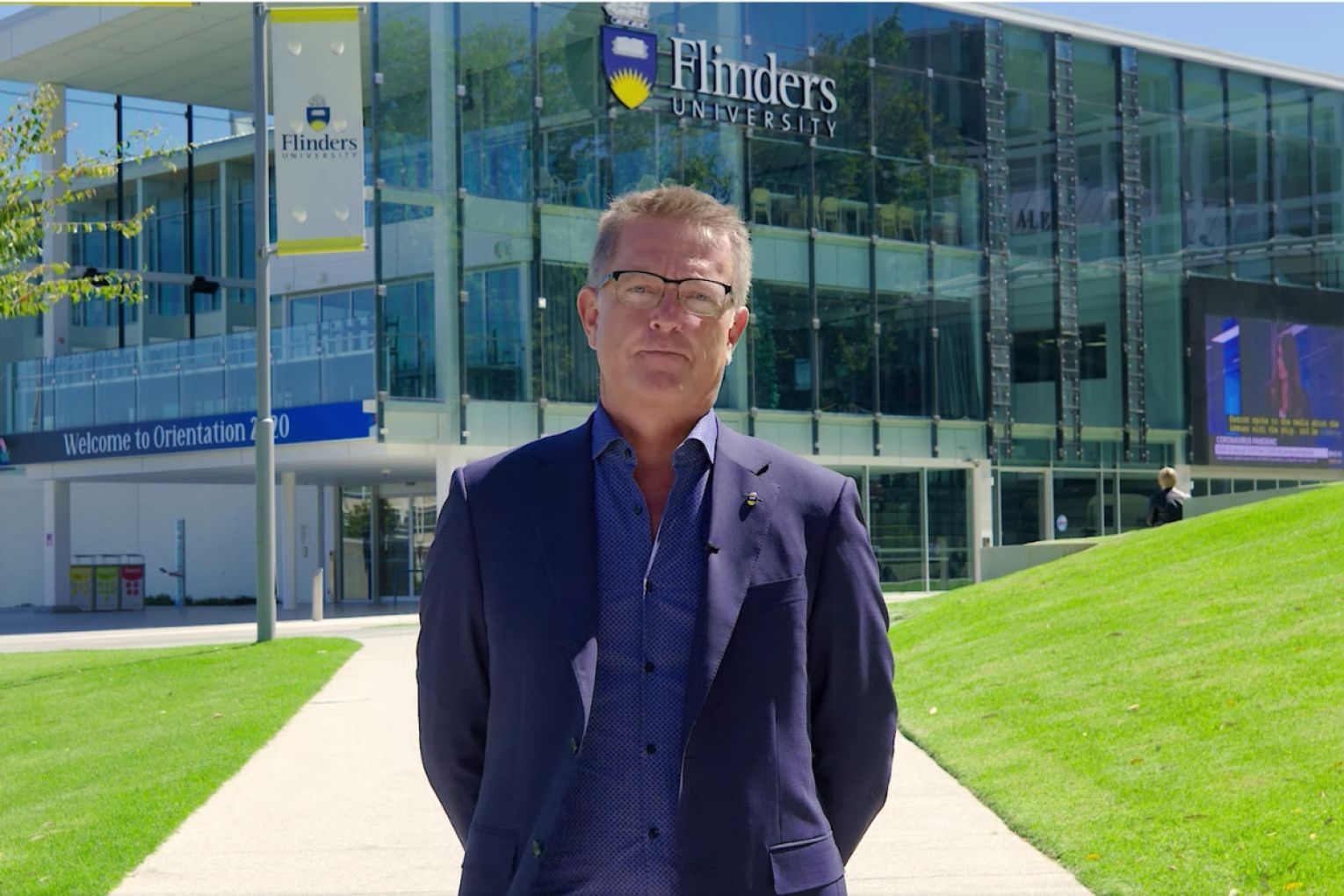
Flinders University Vice-Chancellor Professor Colin Stirling said international students have become a “political hot potato”, and universities were facing “increasing regulatory burdens”.
“I think that the university sector is facing some challenging times,” Stirling said in an exclusive interview with InDaily.
Stirling, who had a background as a genetics professor before moving to “the dark side of university administration”, was also concerned that “student visa processing remains a political hot potato”.
He said that when the Federal Government imposed restrictions on international students in recent years, there were 500 international students who had applied for Flinders University but whose visas were never processed.
In August 2024, Federal Education Minister Jason Clare announced that new international student arrivals to Australia would be capped at 270,000 per year from 2025.
You might like


“International students are being identified somehow as the cause of some challenges in our society, and I think there’s simply no evidence that international students contribute to the housing crisis, for example,” Stirling said.
Stirling said that without international students graduating as nurses, the nursing shortage in the state would be far greater, adding that Flinders University was constructing a $300 million healthcare building designed to address “the chronic shortages of nurses, midwives and allied health professionals in the state of South Australia”.
“We can’t currently increase our student numbers because we can’t find enough placements to complete the training of students and because there aren’t enough professionals to take our students for placements,” he said.
The merged Adelaide University has been particularly high profile across the state, but when asked if Flinders University ever considered joining the universities of Adelaide and South Australia, Stirling said a three-way merger would have been “ridiculous”.
Stay informed, daily
“The view of Flinders University was that, we might be a smaller institution, but we are already very successful and continue to grow and increasingly so, and so, we didn’t feel the need to be part of a merger to be successful,” he said.
“What’s important, though, is that students want choice. Students deserve choice, and with Flinders, students will have choice.
“We wish Adelaide University well, but we’re not going to worry about what they do. We’re going to concentrate on what we do well.”
That included Flinders University’s new strategic plan, with a vision to change 10 million lives “for the better” over the next decade.
“What’s exciting to me about that is that what we’re focusing on is not our institution, it’s not about where we rank, it’s not about the university itself – it’s about the good that we do, the impact that we create and the great things we achieve,” he said.
Stirling said the strengths of Flinders University included its research output and its industry and business partnerships, but he warned that universities were facing increasing burdens from federal government rules.
“The Commonwealth government is imposing increasing regulatory burdens on the sector, and we’re being required to spend more and more of our time and money responding to regulatory issues, which, sometimes, that’s entirely appropriate, and I’m 100 per cent supportive of,” he said.
“Sometimes the regulation gets in the way of doing good things. It would be nice for us to be able to find an appropriate balance.”
Flinders University was currently offering apprenticeship programs with the Australian Submarine Corporation, REDARC and Torrens to Darlington, as well as partnerships with the universities of Rhode Island and Manchester to deliver nuclear engineering specialities.
“Flinders will be an even more successful institution in 10 years’ time than it is today – we will be one of the best institutions in the country,” he said.
“What I mean by one of the best universities in the country is a university that delivers for its students, that delivers an outstanding experience, an outstanding quality of education, and that opens doors for our graduates through very successful careers.”
Want to see more stories from InDaily SA in your Google search results?
- Click here to set InDaily SA as a preferred source.
- Tick the box next to "InDaily SA". That's it.