Controversial city councillor refuses to apologise for ‘belittling’ video
A city councillor is refusing to apologise for a “belittling” social media video targeting his colleagues despite public findings it breached numerous standards.
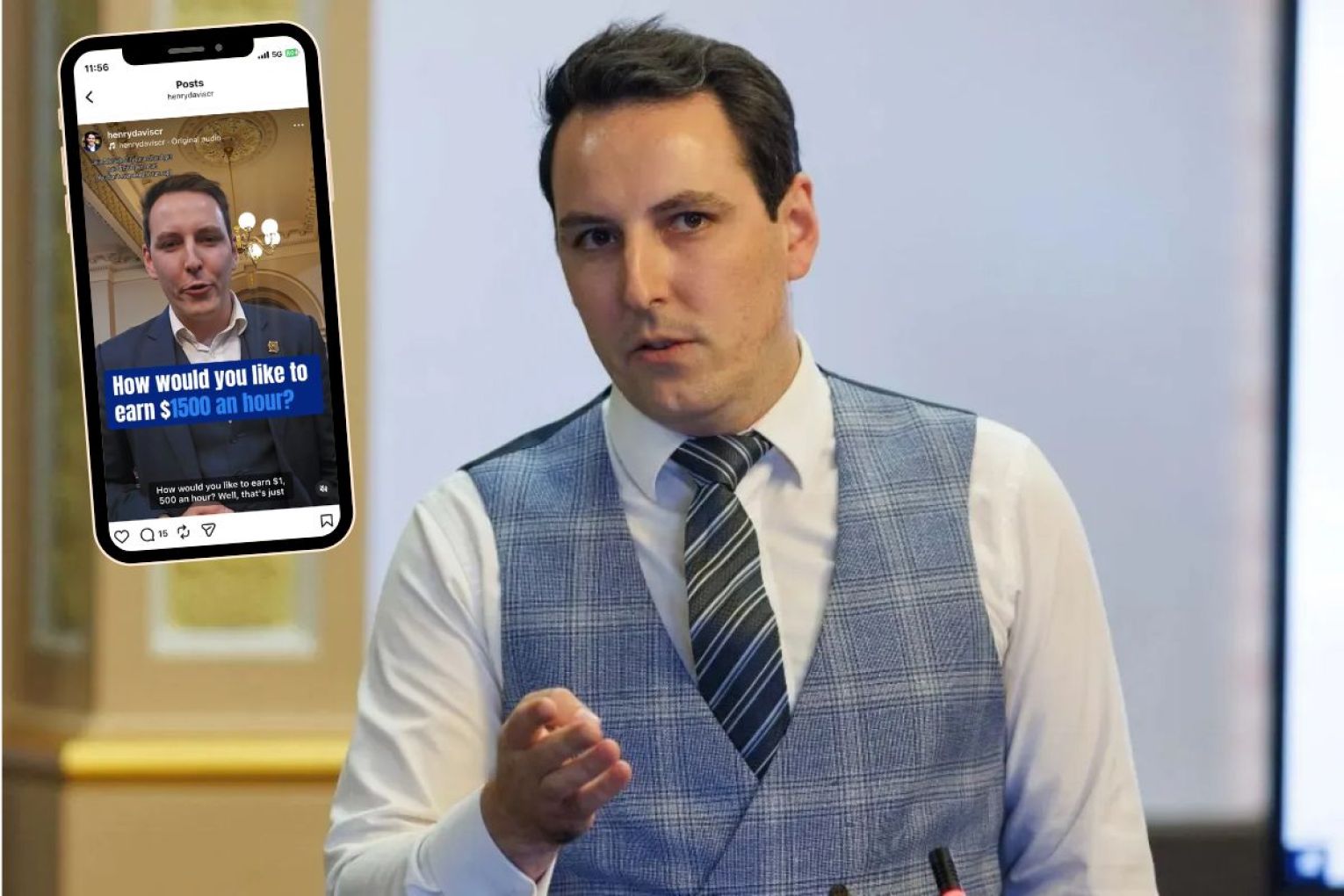
In another war of words at the city town hall, Adelaide City Councillor Henry Davis has refused to apologise for an Instagram video he published in July 2024, which was found to breach eight behavioural standards under the Local Government Act.
Davis – the former lead candidate for Sarah Game’s Fair Go for Australians who parted ways with the party in December last year – was censured by the council over the breaches in a confidential meeting last week, the details of the more than year-long investigation later released to the public.
The Instagram video at the centre of the controversy was published on Davis’ account on July 2, 2024 and featured Davis criticising how much some unnamed councillors were paid to chair meetings under the council’s committee structure.
The video prompted a backlash from councillors Janet Giles and Phillip Martin at the time, who criticised Davis’ social media behaviour. Davis then launched defamation proceedings against them for “allegations of misogyny”.
Both Martin and Giles issued public apologies to Davis in the council chamber, saying they did not believe Davis was a misogynist and settling both legal matters by July 2025.
Separately, the council probe into the video was ongoing at the same time as the defamation action and was made public late last week.
You might like

Lawyer Paul d’Assumpcao found the video “belittled” other councillors, was disrespectful, included “serious allegations” and was “devoid of important context” in a report to the Lord Mayor.
But Davis said he rejected the findings and would not apologise, despite the council requiring an apology along with the censure.
“Council is attempting to force me to say words I do not agree with, delete lawful political speech, and publicly recant criticism of councillor pay,” Davis said in a statement on Monday.
The released documents show that in May 2025, d’Assumpcao emailed Davis a draft set of words for an apology that had been approved by the Lord Mayor.
“No local government has the right to script apologies for elected members or order political retractions,” Davis said.
The Adelaide City Council’s behavioural management policy specifies that a council may require a member to “issue a public apology (in a manner determined by the council)”.
Stay informed, daily
In an email chain in December about “next steps” and a proposed resolution, Davis wrote to d’Assumpcao threatening further legal action.
“You can’t force me to say the words you want. I’ll see you in the Supreme Court if you try that on. This isn’t Nazi Germany,” Davis’ email read.
Davis has until February 26 to issue an apology or respond to the council.
When asked about Davis’ refusal to apologise, an Adelaide City Council spokesperson said the council is not considering further action at this stage.
“Councillor Davis has received correspondence to inform him of council’s decision,” the spokesperson said.
“Until he has had an opportunity to respond, further action is not contemplated.”
If the matter cannot be resolved at a council level, under the Adelaide City Council’s behavioural management policy, the council could refer it to the Behavioural Standards Panel – an independent body that deals with complaints, including repeated or serious misconduct.
Davis was Sarah Game’s lead candidate when she announced her Fair Go for Australia party in August last year, but in December, it was reported Davis and Game had parted ways.
In December, Davis said he had “accepted another opportunity” but would not provide details yet. He has said his goal is “to rebuild a credible centre-right movement in Australia”.
Want to see more stories from InDaily SA in your Google search results?
- Click here to set InDaily SA as a preferred source.
- Tick the box next to "InDaily SA". That's it.