Tandanya looks to the future with new vision for First Nations hub
Designs for Tandanya reveal a fresh new look for the institution. CEO Brenz Saunders tells InDaily how he plans to reawaken the “sleeping giant” on Grenfell Street, at a lower price than what’s estimated for North Terrace’s Tarrkarri. See the pictures.
It’s been three months since Brenz Saunders started as CEO of the National Aboriginal Cultural Institute in Adelaide’s East End.
Saunders – a First Nations man born in Ceduna – inherited the tail end of significant renovation works at Tandanya, which are now mostly completed.
There were issues “of a magnitude unusual for an organisation of its size”, one annual report read, and the state government spent $780,000 on repairing the institute, which lives in what was once the Grenfell Street Power Station.
Saunders has since secured a partnership with Gluttony, which will see the Adelaide Fringe festival hub bring the Tandanya theatre back to life, while Fringe Works – an artist support operations hub – will also make itself at home in the building this season.
| Sponsored |
Saunders has been busy, and now momentum and chatter are building behind Tandanya after more than two years of closure; momentum Saunders wants to capitalise on.
Sitting with InDaily in the Tandanya offices this week, the CEO flips over three architectural renders of a reimagined Tandanya – a facility that Saunders wants the state to be deeply proud of and interacting with regularly.
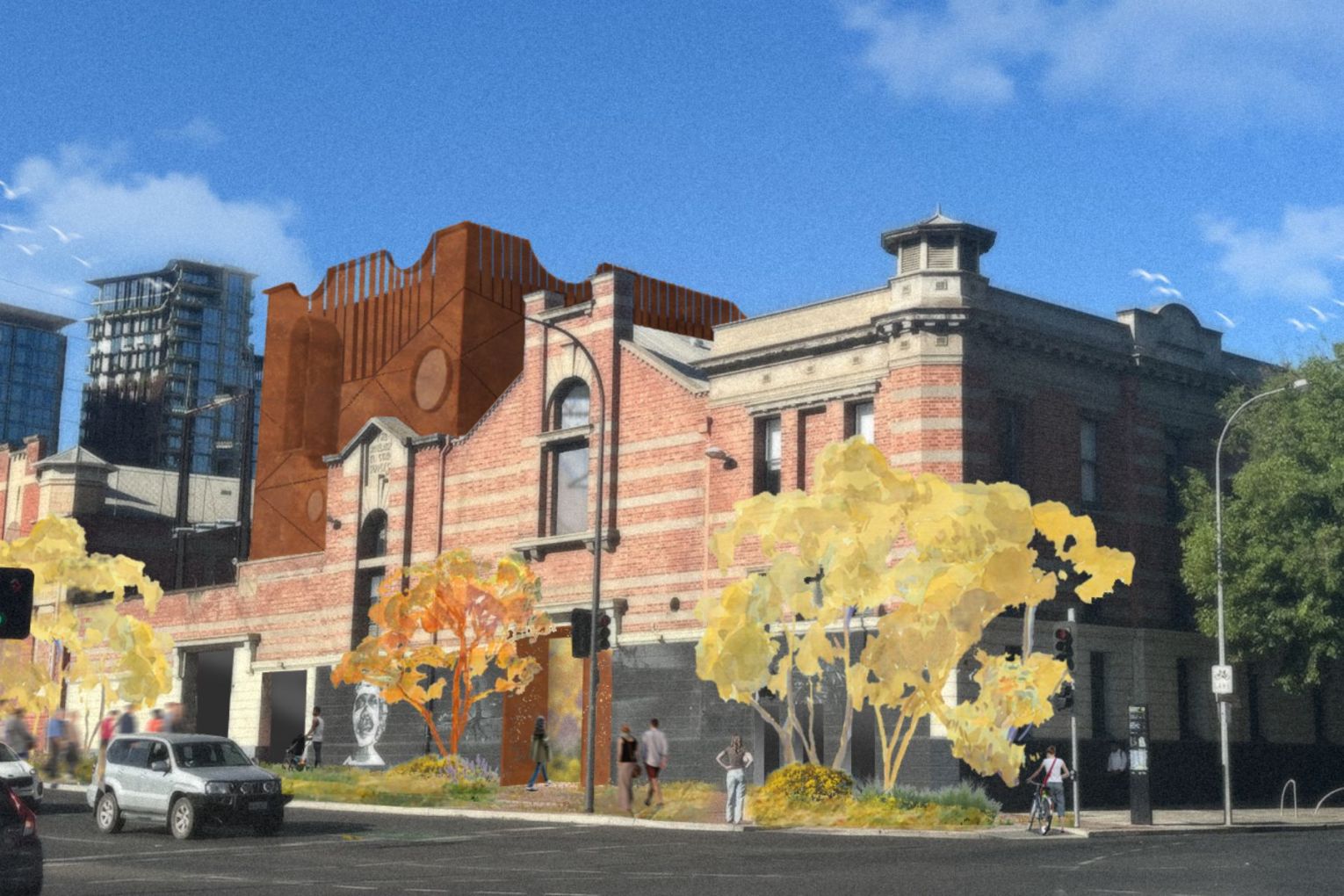
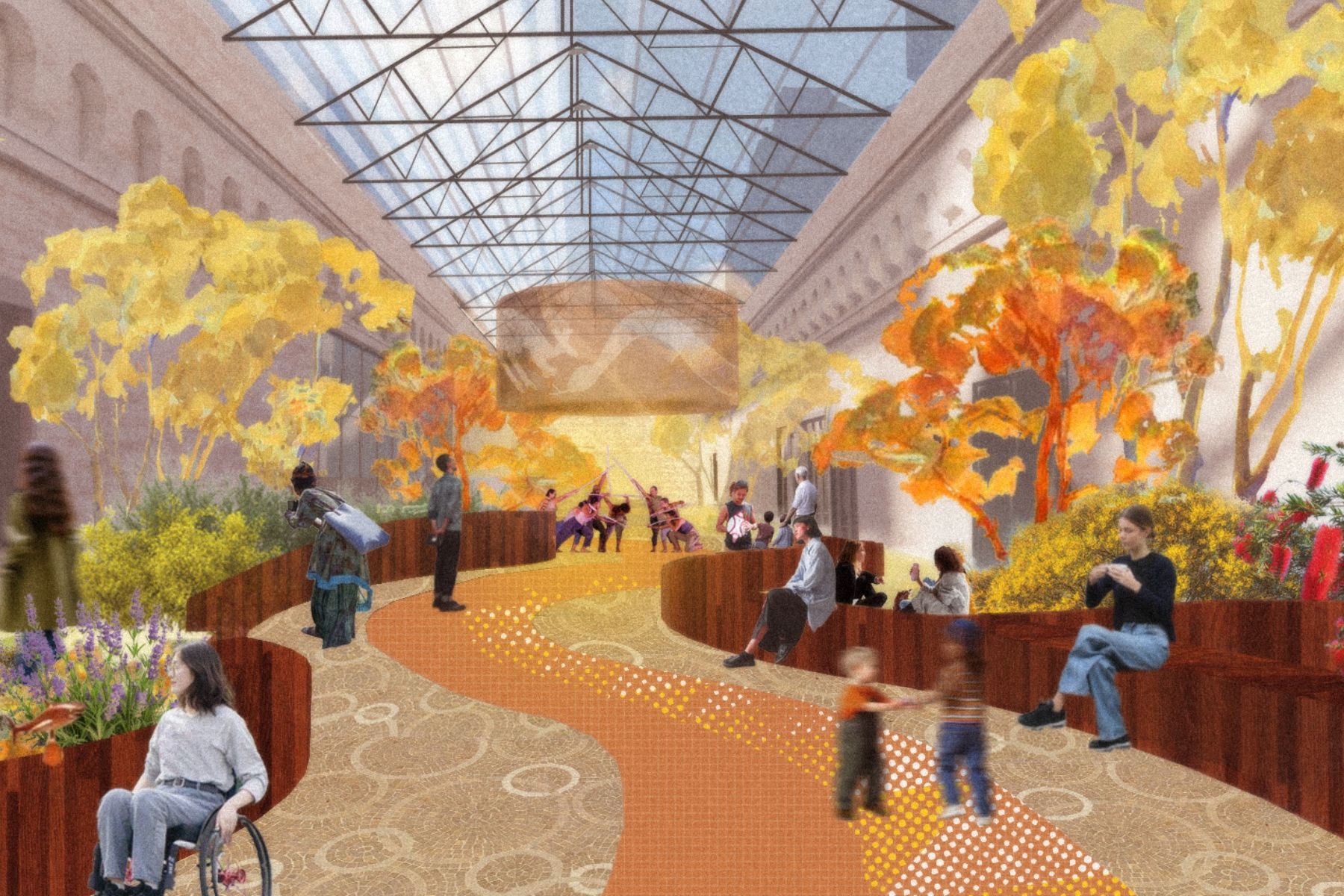
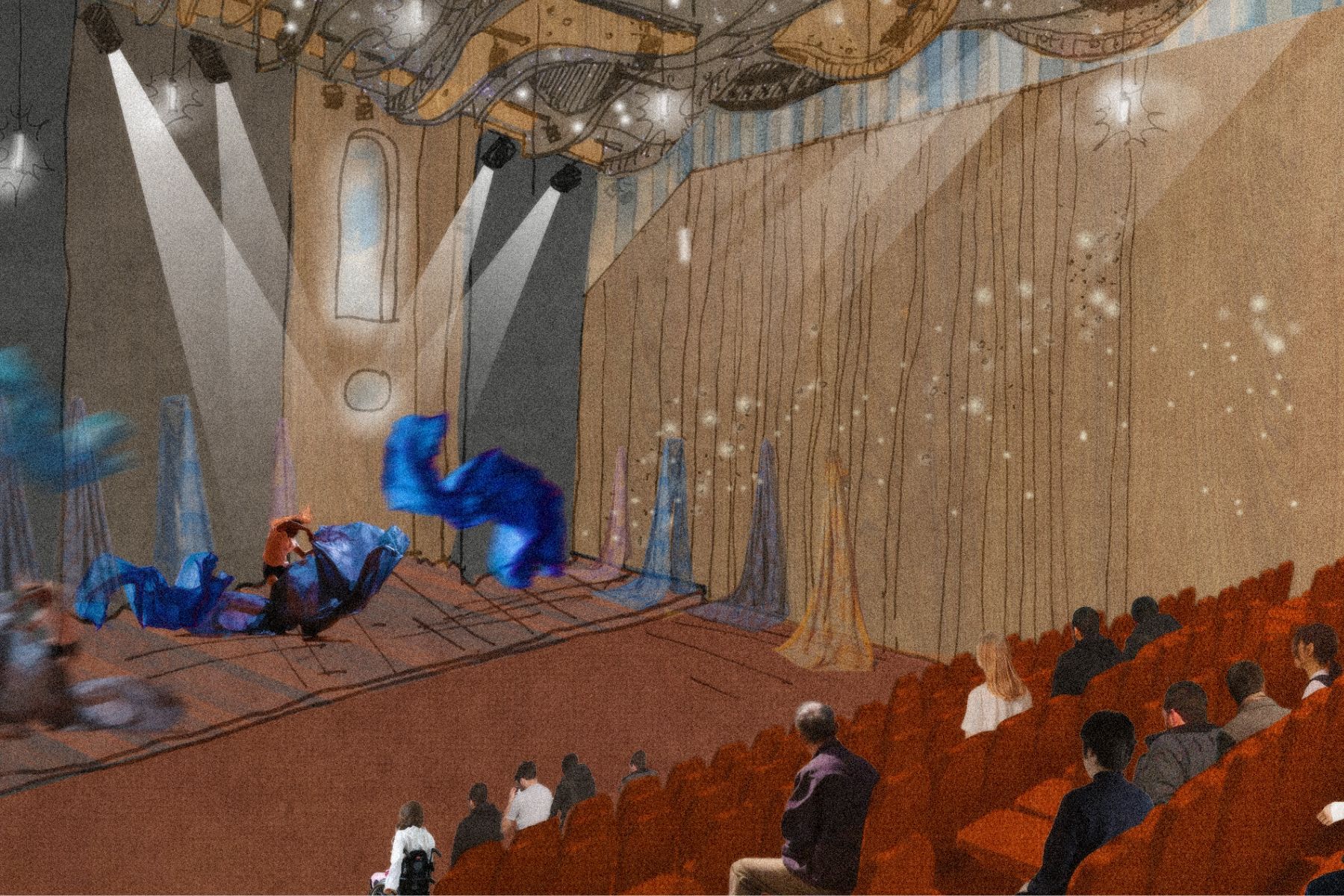
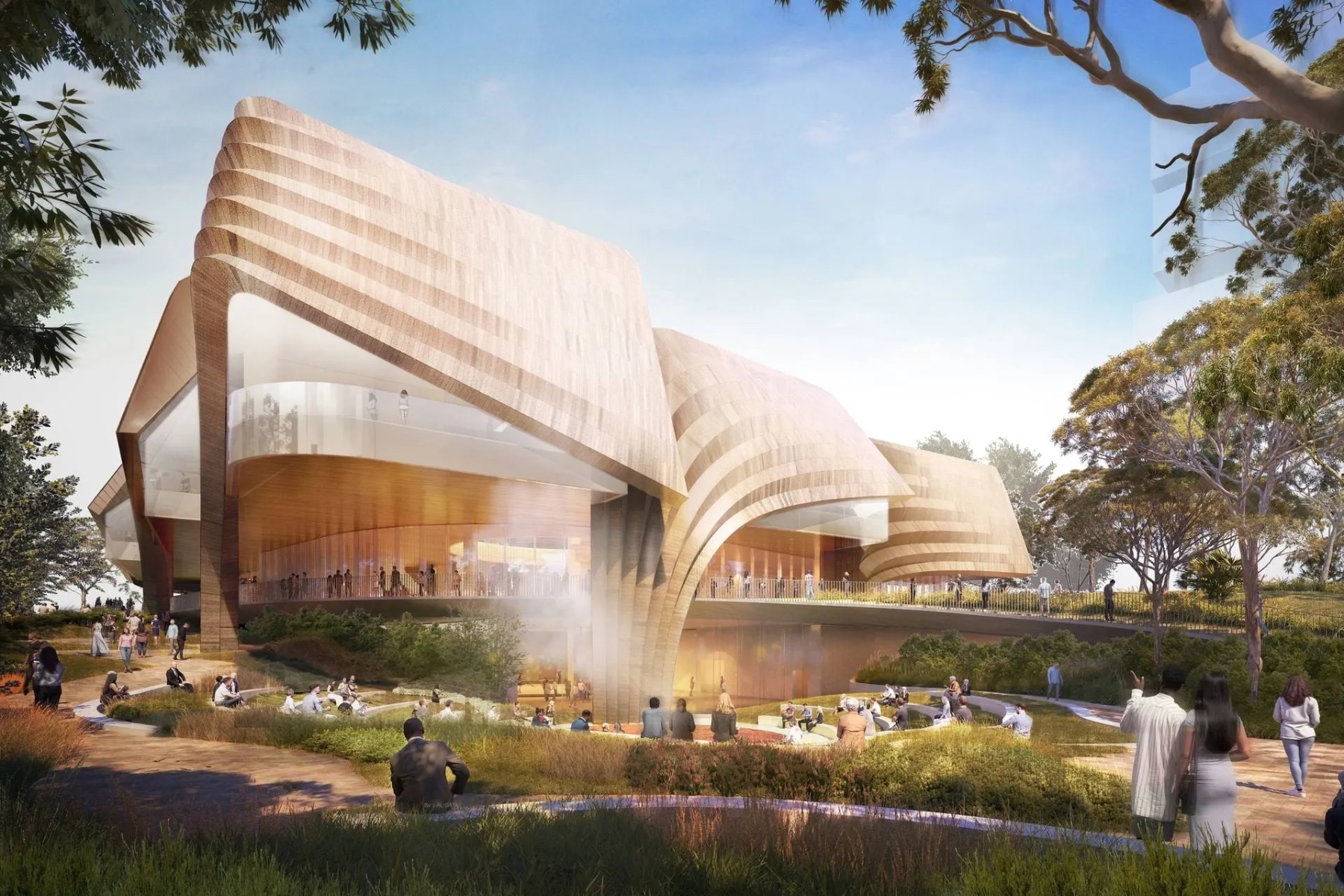
The planning images show changes to the building’s exterior, a new interior centre space stacked with native plants and Indigenous art, and a second theatre to boost what the institute can host.
Saunders worked with the architects who originally transformed the power station into Tandanya: Grieve Gillett Architects and now plans to lobby for state government funding for the project.
“After the investment from the government to get Tandanya to where it is to date, I want that momentum to continue,” he said.
You might like
“For me, that is an exciting ‘GO’ button to keep things progressing. I want to keep things moving.
“These might not be the exact designs, but something close to it would be pretty incredible for South Australia and the Aboriginal community.”
The designs integrate the history of the power station with the character of Tandanya and Aboriginal culture and country.
Saunders and the architects wanted to “peel back layers of colonial infrastructure” and integrate native flora into the space.
The designs aren’t a final decision by any means – the project requires capital and the renders are conceptual in nature – but he hoped that by presenting the illustrations to the public, he could “scrape at the imagination of South Australians”.
“We want to show Tandanya in a different light. Most people probably see Tandanya as a sleeping giant on the corner of Grenfell Street,” Saunders said.
“I very much want to awaken that giant.”
The exterior of the building – formed by 126-year-old bricks – would remain, but surrounded by native plants and vegetation. The garage door on East Terrace would turn into a glass roller door that acts as an entry port or gateway into the main section of Tandanya, while a rusted brown façade – reminiscent of how the power station used to look – rises in the back.
The central hall would be reconfigured with a serpent running through the centre of an exhibition space, winding from the eastern side to the western side of the building.
This would give Tandanya the chance to rethink how artwork and exhibitions could be displayed in the space. More native plants fill the room, and the roof would be replaced with a glass ceiling.
Saunders hoped the space would be welcoming for visitors to Adelaide as well as locals who could stop by on their lunch break to immerse themselves in the environment.
A second theatre could be built too, so Tandanya could embed itself further in the general arts sector and community of Adelaide.
Stay informed, daily
Grieve Gillett Architects director Heather Wasley said the early vision acknowledges the site’s “layered history” with a design approach that “peels away layers, introduces landscaping, revitalised theatre spaces, and flexible environments”.
“Having originated the site’s transformation into an Aboriginal gallery and cultural centre in the 1980s, this reflects a longstanding connection to the place and is intended to inform future thinking about the site,” Wasley said.
A new, cheaper vision for Indigenous culture in SA
The conceptual designs for Tandanya come as the construction of Tarrkarri on North Terrace remains in limbo.
The grand First Nations art and cultural centre was meant to open in 2025, but Premier Peter Malinauskas claimed cost blowouts of between $400 million and $600 million for the building, originally budgeted at $200 million, had put the project on ice.
In December, a state government spokesperson told InDaily the Tarrkarri plan had not been dumped.
However, the spokesperson said that “Tarrkarri would need to deliver a world-class institution, capable of drawing in international visitors and befitting of celebrating the oldest living cultures on earth”.
“Tarrkarri remains a project under active consideration and has been the subject of discussion with the Commonwealth Government and other potential funding sources,” he said.
While Saunders had not done any official costings for his Tandanya vision, InDaily understands it would be significantly cheaper than what Tarrkarri is estimated to cost.
Plus, the government has just spent nearly $1 million on renovating the space so it is habitable.
“I think it would be cost-effective in supporting not only the agenda of the creative policy that the government has, and how we contribute to that, but also providing an opportunity to showcase South Australian Aboriginal culture,” Saunders said.
“The building is in the DNA of the community already. I’m always going to advocate for further investment when it comes to these types of spaces, but if the government or any other party might be interested in wanting to know more about it, I welcome those conversations.
“Two [cultural centres] are great. The more the merrier for South Australians to enjoy. But I would say that the design we’re hoping to create is one that’s rooted in community and culture and country, but also the historical context of South Australia.”
Saunders said that if Tarrkarri were to be built then it would achieve a “different flair” to Tandanya.
But Tandanya already exists: “these visualisations clearly showcase how we operate in comparison to a concept build that doesn’t have an organisation behind it”.
“Tandanya has an organisation that’s ready to rumble and showcase South Australia’s history. It’s literally in our downstairs art collection waiting to be put on show,” Saunders said.
“Having a space like this would enhance my ability to showcase South Australia’s heritage and culture and Aboriginal heritage and culture more broadly to the masses.”
Want to see more stories from InDaily SA in your Google search results?
- Click here to set InDaily SA as a preferred source.
- Tick the box next to "InDaily SA". That's it.