Northern Eyre Peninsula site picked for $5bn desalination plant
A site has been picked for the state’s $5 billion desalination plant, despite a 2023 report finding Cape Hardy on the Eyre Peninsula would have delivered the “greatest benefits and have the least negative impacts”.
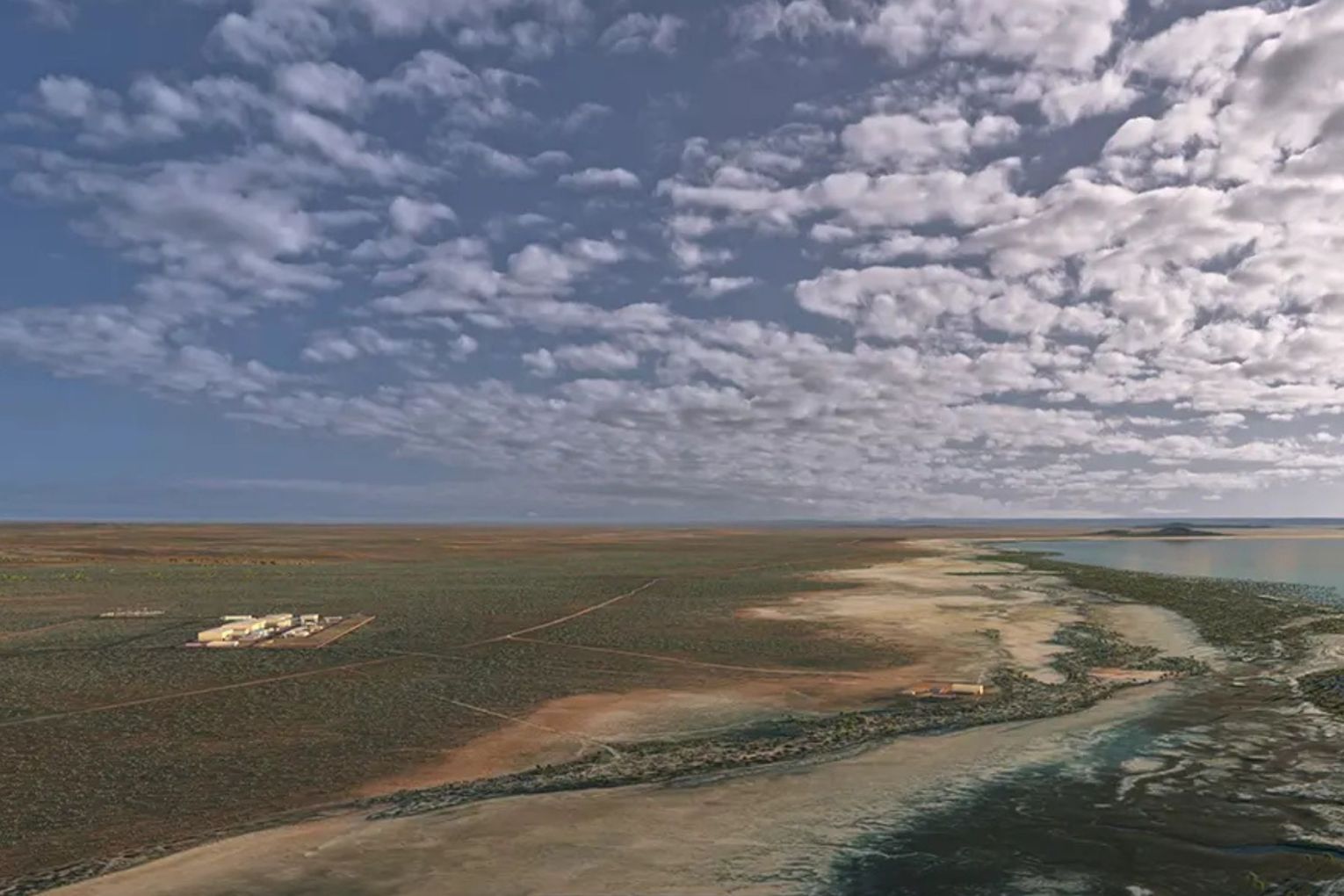
A new multi-criteria assessment (MCA) of two potential sites for the state government’s proposed Northern Water desalination plant – expected to cost about $5 billion – has seen a location south of Whyalla triumphant as host of the mega project.
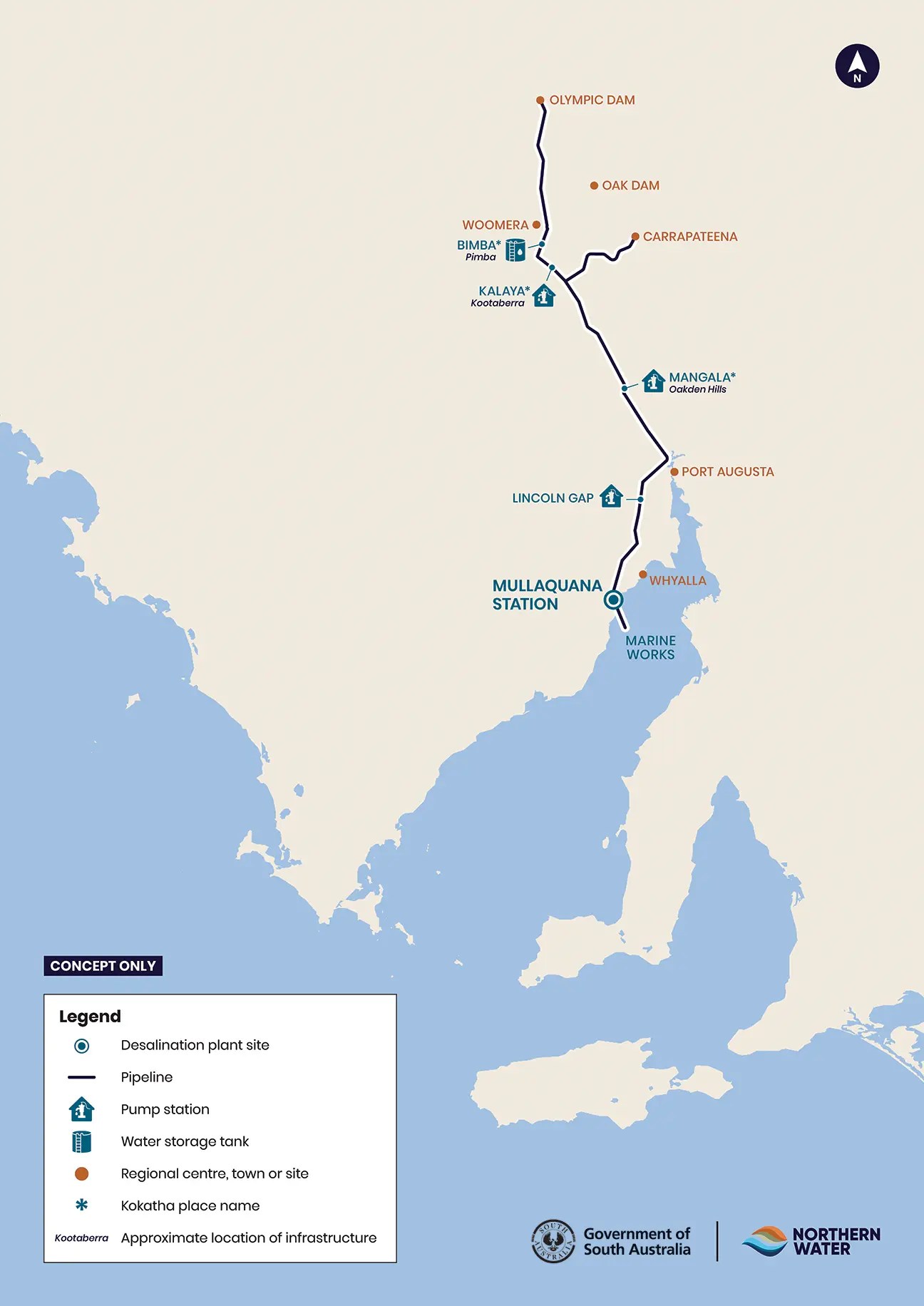
If built, Northern Water will oversee the construction of a 260 megalitre/day desalination plant and a 400km pipeline to transport desalinated water to the Far North to meet the needs of mining, defence and pastoral industries.
Mullaquana, 20km south of Whyalla, was selected as the most appropriate for the desalination project to “successfully support regional industrial opportunities, and best balances social, environment and economic opportunities and risks”, the state government said.
The government said the new MCA analysis compared the two potential sites being considered: Mullaquana and Cape Hardy.
It said selection criteria included “strategic objectives, economic and financial considerations, social outcomes, environmental impacts, and project deliverability”.
It would also save around 200km of pipeline, the government said, reducing potential costs.
The government also claimed the project at Mullaquana would result in lower greenhouse gas emissions and reduced operational energy consumption.
Two shortlisted consortia – WaterConnector (comprised of Acconia Construction Australia and Acconia Agua Australia) and Watermark (comprised of Clough Project Australia, Fisia Italimpianti SpA, CPB Contractors and Sacyr Water) – will now be asked to provide bids outlining how they would design, build, operate and maintain the desalination plant and pipeline at Mullaquana.
This process would result in a market-tested proposal informing the state government’s final investment decision in the project, expected in the next financial year.
Costs would be recovered by future commercial offtake agreements with industrial customers, principally BHP, which requires water to conduct its copper smelting activities at Olympic Dam.
You might like

But Mullaquana is closer to the famed cuttlefish breeding grounds near Whyalla. The government previously scrapped the nearby Port Lowly from consideration for building the desalination plant, with conservationists fearing its impact on the hundreds of thousands of rare Giant Australian Cuttlefish (Sepia apama) that gather along an 8km stretch of rocky reef at Point Lowly about 20km north east of Whyalla during the annual breeding season from May to August.
Treasurer Tom Koutsantonis this morning on ABC Eyre Peninsula and Port Lincoln assured Mullaquana was “far enough away from sensitive areas like Port Lowly”.
“There will always be people who’ll be upset about desal plants no matter where they are,” he said.
“This is about unlocking a major economic opportunity for the north of our state.”
Speaking to InDaily, University of South Australia associate professor Craig Styan – an expert in monitoring and managing environmental impacts in coastal environments – said the desalination plant at Mullaquana would be unlikely to have an impact on the giant cuttlefish population.
“We don’t know that the cuttlefish population survived the bloom yet… but [Mullaquana] is still a long way away and it doesn’t take too much engineering to make sure that you’ve got enough dispersion to disperse the brine plume,” he said.
“As long as they’re in deep enough water and you put enough energy into it, it’s easy to have a footprint of the brine being literally tens of metres.
“[The desalination plant] is still going to need environmental assessment, but as long as it’s designed properly and run to specifications, then these things ought to be manageable.”
| Sponsored |
Koutsantonis claimed Cape Hardy – owned by Iron Road – was a “completely maiden site”.
“There was no infrastructure there,” he said.
“But of course, Mullaquana is also 200km closer to Olympic Dam than Cape Hardy, which saves a tremendous amount of money.
“Cape Hardy one day will be an amazing port. It’s got exceptional deep water. It’s a perfect place for a port on the Eyre Peninsula. However, there’s no power, there are no roads, there’s no infrastructure.
“If you look at Whyalla, we’ve got a workforce and a contractor base that’s ready to go.”
But an MCA conducted in 2023 by Jacobs Group for the state government found Cape Hardy was the “preferred side”.
Stay informed, daily
“Cape Hardy became appropriate with the emergence of significant water demand at the site, requiring a pipeline to connect Cape Hardy to the broader NW scheme,” Infrastructure SA’s 2023 Northern Water project Business Case Summary reads.
“Early investigations revealed environmental and technical advantages, strategic benefits and potential efficiencies through co-location with other prospective development at this site.
“Preliminary environmental studies and stakeholder engagement show Cape Hardy offers superior benefits to those seen at the other three proposed sites. This option is supported by research and analysis undertaken by SARDI.
“Economic analysis assumes a slightly higher cost for building the desalination plant at Cape Hardy.”
The Cape Hardy land is owned by a South Australian ASX-listed company called Iron Road.
It was involved in the lengthy decision-making process that eventually landed on Mullaquana.
Announced in April 2024, Iron Road and Northern Water executed Option Deeds for the purchase of land within the 1207-hectare Cape Hardy Industrial Port Precinct.
Iron Road was to receive land acquisition payments of about $3.3 million for the 89.55ha desalination plant site, 5ha pipeline easement and 9ha transmission line easement.
Northern Water was given until 31 December 2024 to exercise this option, but extended that timeframe by three months. During this time, the state government paid Iron Road monthly option fees.
When that date passed, Iron Road announced it was unable to come to commercial terms with Northern Water.
Opposition spokesperson Ben Hood said in a statement to InDaily: “The opposition does find it somewhat curious on the selection of Mullaquana as the site for the Northern Water project given a 2011 report from BHP stated environmental and constructibility issues around that area”.
Premier Peter Malinauskas said the selection of Mullaquana was a “massive milestone” for the Northern Water project.
“South Australia is home to almost 70 per cent of Australia’s proven copper deposits, and there is a generational opportunity to maximise the benefit of this critical mineral for our entire state,” he said.
“If green-lit, Northern Water will support South Australia’s strategic mineral industries, including magnetite for steel production and copper expansion at Olympic Dam, Oak Dam and Carrapateena.”
BHP CEO Mike Henry said the company was “pleased to become a foundation commercial customer to the Northern Water Project”.
“This is a compelling example of national strategic infrastructure. It will enable multi-industry regional economic growth, including a potential doubling of South Australia’s copper production,” Henry said.
“Led by State Government, with Federal Government support, this project represents the best of government and business working together to create investment and South Australian jobs.”
Want to see more stories from InDaily SA in your Google search results?
- Click here to set InDaily SA as a preferred source.
- Tick the box next to "InDaily SA". That's it.