Surge in deaths as US loses measles elimination status
“One obvious explanation: The vaccine worked so well that people forgot what the disease does.” An epidemiologist tells how misinformation is impacting herd immunity.
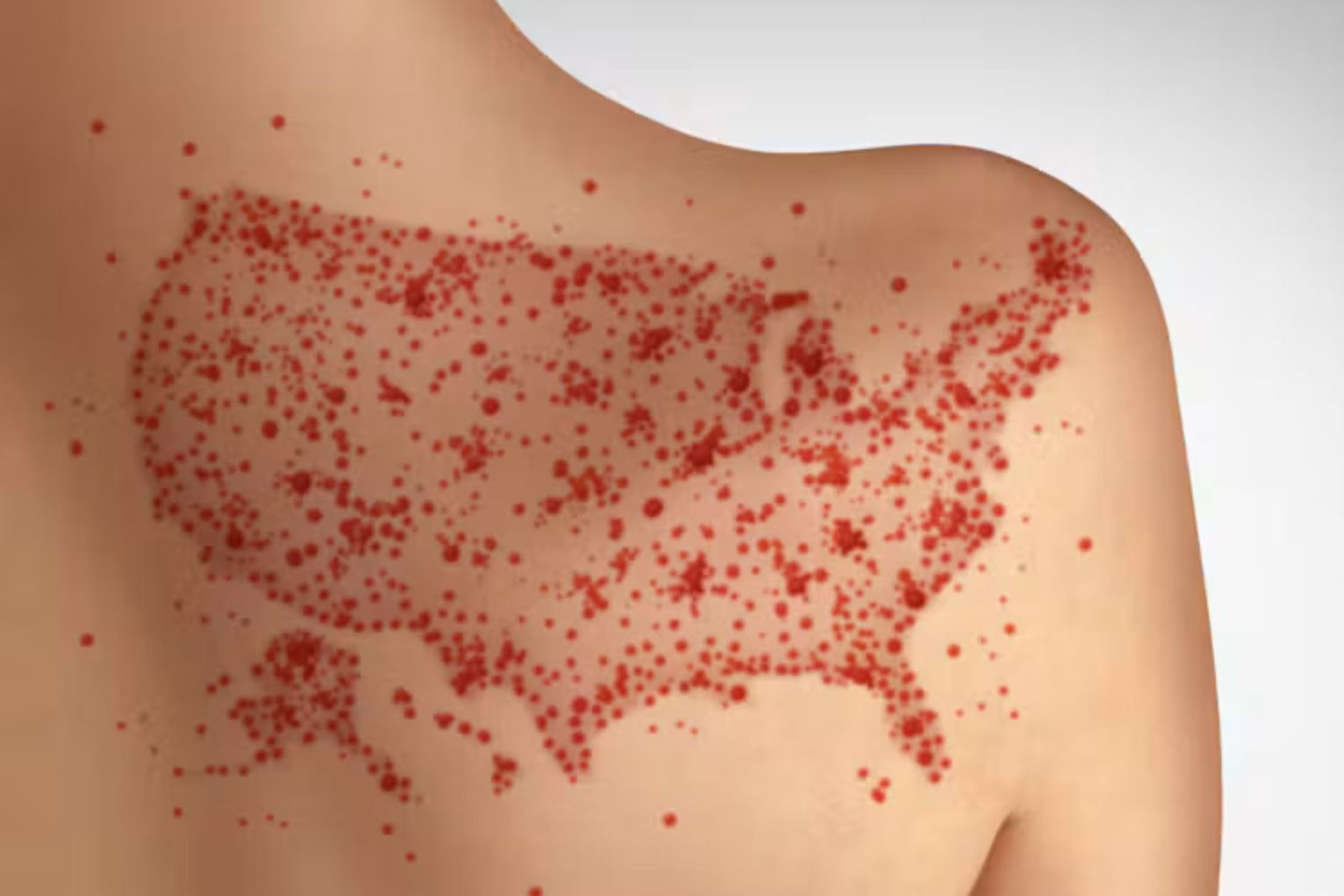
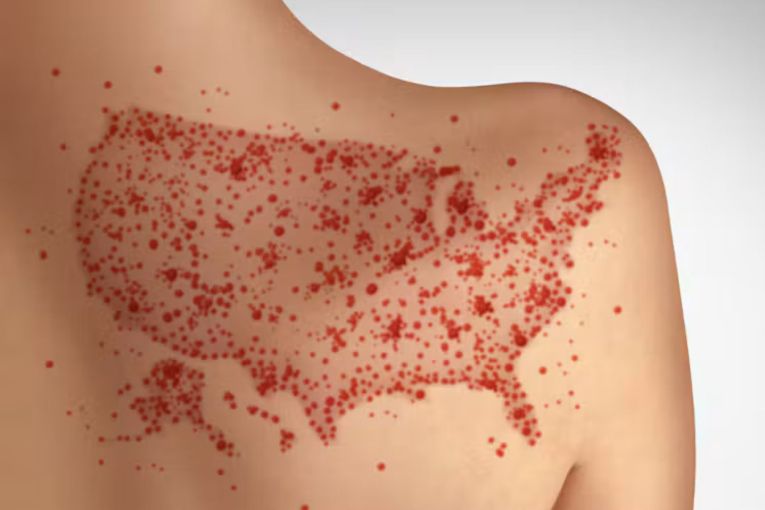
The United States has lost its measles elimination status – an international designation reflecting an absence of local measles transmission for at least 12 months – a public health achievement held since 2000. A commission of the Pan American Health Organization, a regional office of the World Health Organization that oversees the Americas, reached that conclusion in November 2026, with a formal announcement expected Nov. 17.
Canada lost its measles elimination status in 2025, as did the United Kingdom and other countries in Europe and central Asia in early 2026.
These losses of status are no mystery. Measles is one of the most contagious diseases and still circulates in much of the world. What keeps the disease in check is herd immunity – when a high enough percentage of the population is vaccinated to break the chains of transmission. For measles, that’s at least 95 per cent. But in 2025-26, only 92 per cent of kindergarteners in the U.S. received the measles, mumps and rubella, or MMR, vaccine.
I’m an epidemiologist who studies misinformation in the same way others study smoking or air pollution: as an exposure that makes populations sick. For years I’ve watched vaccine misinformation help erode the coverage that kept measles from spreading.
An effective vaccine
A measles vaccine has existed in the U.S. since 1963. The combined MMR vaccine followed in 1971; two doses are about 97 per cent effective. A federal program created in 1993 made it free for eligible children. After widespread vaccination efforts, reported cases dropped more than 99 per cent, and by 2000 measles was declared eliminated.
But due to the success of the MMR vaccine, within a generation most parents and many doctors had never even seen a measles case. The experts who certified elimination in 2000 warned that maintaining elimination status would require sustained high rates of vaccination, fast outbreak response and strong surveillance. Drop any one of these conditions and imported cases would spread.
So how does a country with a 97 per cent effective vaccine lose measles elimination status? One obvious explanation: The vaccine worked so well that people forgot what the disease does.
Before the vaccine, measles infected three million to four million Americans a year. Tens of thousands were hospitalized, and hundreds died. Parents didn’t need convincing. They had seen it. Even with most cases unreported, the official count in 1963 was nearly 400,000 cases.
About 1 in 20 children who contract measles develop pneumonia. The virus can also erase part of the immune system’s memory, an effect called immune amnesia, leaving children open to infections they had already beaten.
In rare cases, it causes a fatal brain disease, subacute sclerosing panencephalitis, which appears years after apparent recovery. In 2025, a child in Los Angeles died of it.
A surge of outbreaks – and deaths
As of November 12, the Centres for Disease Control and Prevention counted 5,412 cases for 2026 – the highest number since 1991 – and 591 hospitalizations. Among children under five, one in six have been hospitalized.
Six deaths appear in the CDC’s 2026 count, which now relies on federal death certificate data. States, using a broader definition, report a total of 10 deaths: seven in Pennsylvania, one in New York and two in Wisconsin.
Pennsylvania’s outbreak alone has produced 1,542 cases and 305 hospitalizations, by the state’s November 13 count. Major outbreaks have also hit South Carolina, Utah and Arizona since the West Texas outbreak of early 2025, which was the start of the national surge of measles outbreaks. Utah’s outbreak, which began in June 2025, has gone well past the 12-month mark. That outbreak alone breaches the WHO’s definition of measles elimination and could have triggered the loss of elimination status.
Fertile ground for misinformation
When no one remembers the disease, the vaccine becomes the only thing left to fear. Misinformation feeds on that imbalance.
Parents who had never seen measles had nothing vivid to weigh against claims of vaccine risk, so even discredited risks felt plausible. A 1998 paper fraudulently linking MMR to autism was retracted in 2010, and its author lost his medical license. But the damage was already done, and this myth persists to this day, even though studies that included millions of children have found no link.
During the COVID-19 pandemic, vaccine misinformation proliferated in echo chambers on social media. It is no surprise that the percentage of kindergartners who have received their MMR shots has fallen every year since the 2019-20 school year.
In a 2025 KFF poll, parents who believed any false measles claim were more than twice as likely to have skipped or delayed vaccines. Since the COVID-19 pandemic, the anti-vaccine movement has also used the banner of medical freedom to gain a larger, more mainstream audience.
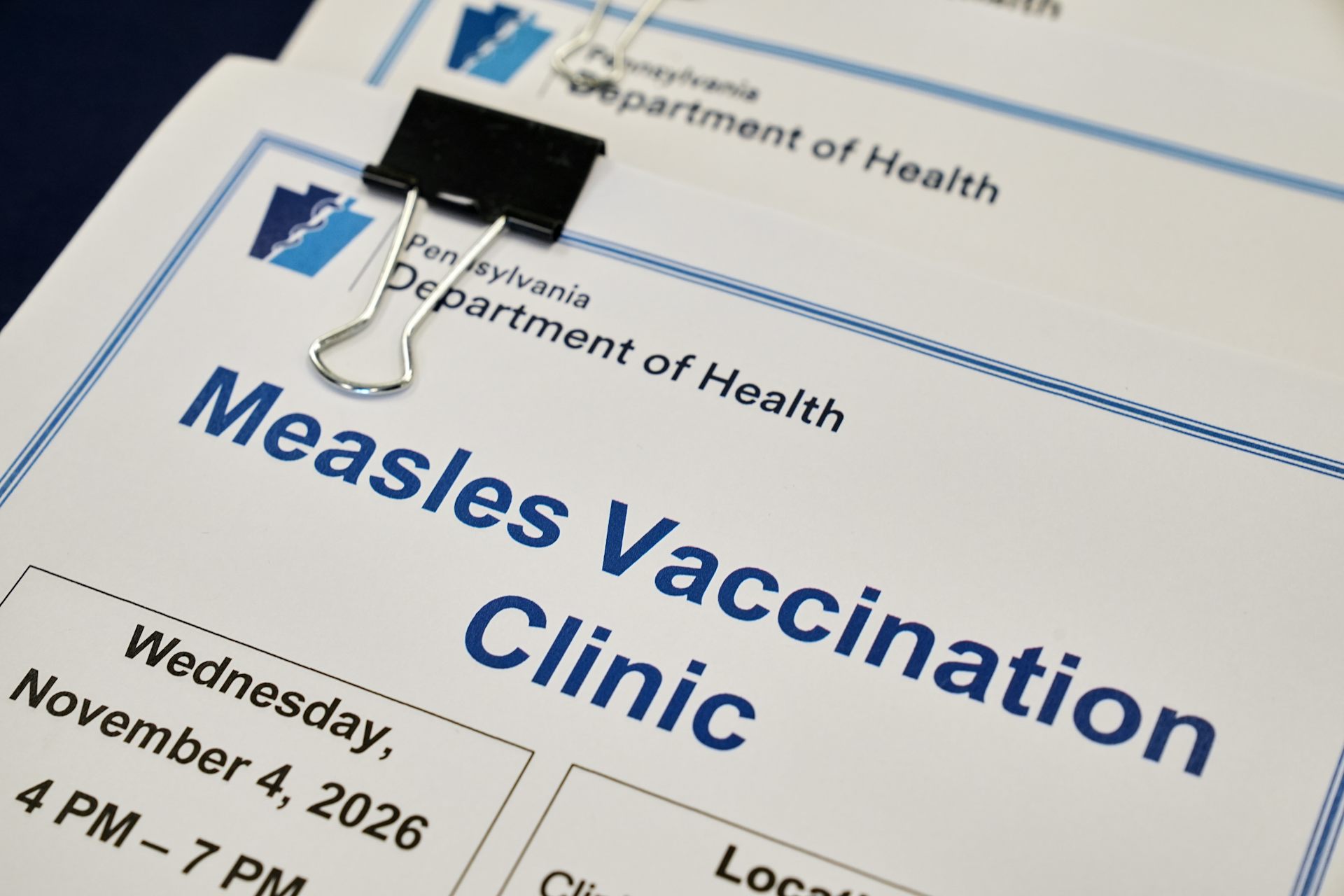
Pennsylvania has recorded seven measles-associated deaths in 2026.
AP Photo/Matt Rourke
Federal policy fuels further confusion
Now these arguments have found an audience in federal policy.
On August 10, 2026, President Donald Trump signed an order calling for MMR to be split into three single-disease shots, which are not sold in the United States. There is no published evidence that separating MMR offers any benefit, and more doctor visits mean more chances for missed doses.
Health and Human Services Secretary Robert F. Kennedy Jr. suggested in August that Pennsylvania’s first two measles-associated deaths “may even have been altogether fabricated.” State officials had investigated both. While questioning the vaccine and measles deaths, he has promoted vitamin A and nutrition as measles cures. The CDC classifies vitamin A as a supportive treatment, not a cure or vaccine substitute.
Vaccination rates for the MMR vaccine among U.S. kindergartners fell from 95.2 per cent in 2019-20 to 92.4 per cent in 2025-26. Exemptions from any required vaccine rose to a record 4.2 per cent.
Of this year’s cases, 96 per cent were unvaccinated or of unknown status. The 92.4 per cent kindergarten vaccination rate leaves about 280,000 kindergarteners without documented MMR. Among states, Idaho has the lowest MMR rate with 75.2 per cent among Idaho kindergartners, while some counties and communities there and elsewhere have even lower rates.
Adult immunity also has gaps: Adults are 41% of this year’s cases, and 15 per cent of them were hospitalized. Many who were vaccinated before 1989, when a second MMR dose was added, got only one.
Roadblocks to recovery
Regaining elimination status means the U.S experiencing at least 12 months without continuous transmission. That will require the same factors that led to the U.S. earning that status in 2000: stronger surveillance, speedy outbreak response and increased vaccination rates.
But it will also require federal health leadership that is focused on bringing those things about.
The Department of Health and Human Services blames current vaccination gaps on missed pediatrician appointments during the COVID-19 pandemic. CDC Director Erica Schwartz said that the agency would not make any changes in measles response efforts in light of losing elimination status.
Additionally, orders like August’s about the MMR vaccine, and revisions to long-standing vaccine recommendations, are weakening vaccination efforts.
Also, on top of a chronically underfunded public health infrastructure , many career public health scientists lost their jobs in 2025. The surveillance capacity that made elimination possible has been substantially weakened.
So what does this mean for Americans? The loss of measles elimination status in the U.S. does not change the fact that the vaccine is safe and effective – and it is now more important than ever.
Katrine L. Wallace, Assistant Professor of Epidemiology and Biostatistics, University of Illinois Chicago
This article is republished from The Conversation under a Creative Commons license. Read the original article.
Want to see more stories from InDaily SA in your Google search results?
- Click here to set InDaily SA as a preferred source.
- Tick the box next to "InDaily SA". That's it.