‘Absolute agony’: Damning report reveals SA prisoners suffer toilet and sleep deprivation
A damning new report claims SA prisons are falling short of human rights standards. Reports include prisoners being shackled to wheelchairs and forced into “lights on” solitary confinement.
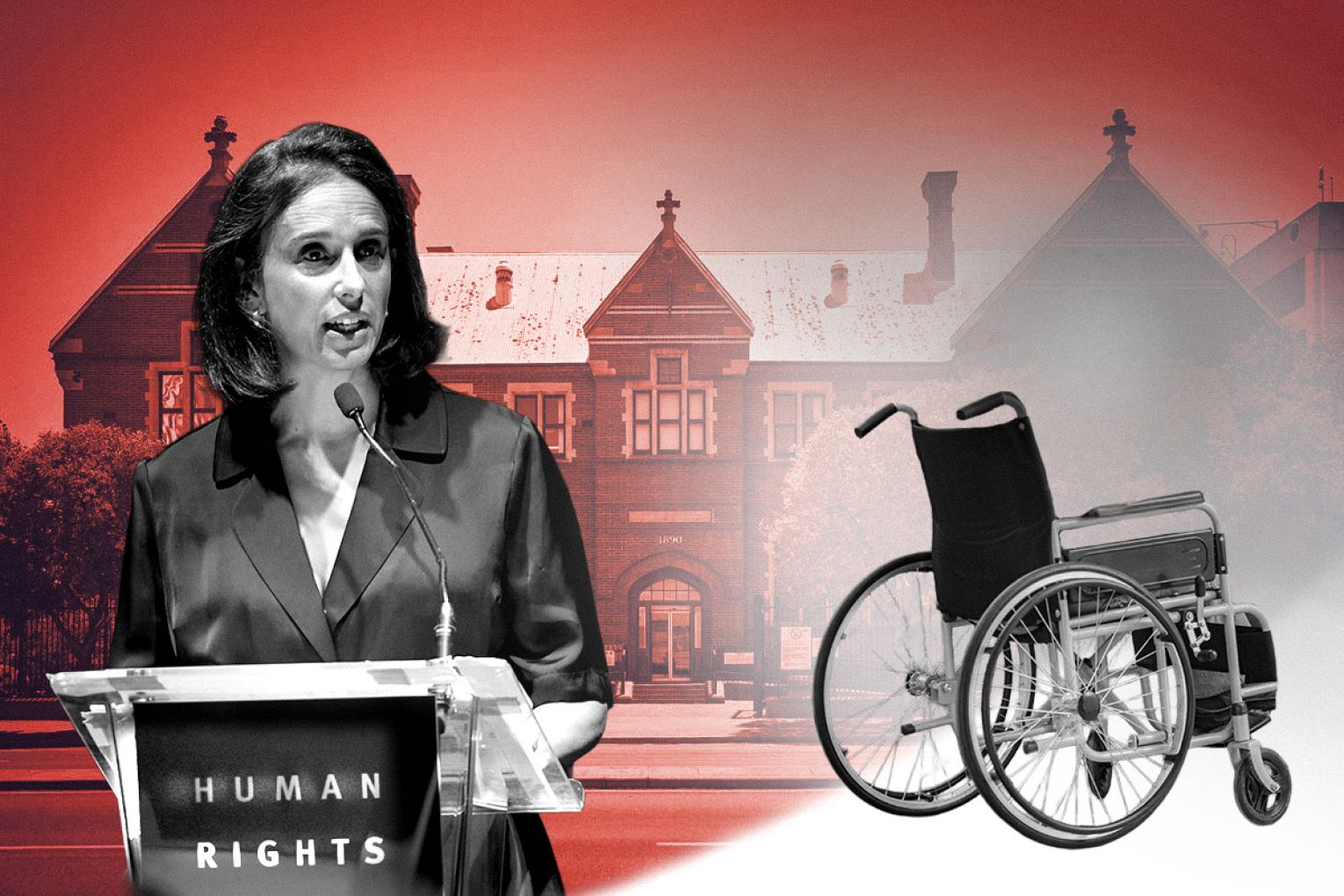
People with disabilities have reported going days without a toilet, being shackled during hospital appointments and being left in solitary confinement for weeks on end in a damning indictment of the SA prison system.
A new report from Human Rights Watch today recommended the state government stop solitary confinement of prisoners with a disability, and prolonged solitary confinement in all cases.
Some wheelchair users in the prison system said they did not attend post-surgery medical appointments because they did not want to visit hospital “shackled to a wheelchair” due to the stigma and attention it would draw from other patients.
Another woman, Alex, described being handcuffed and restrained at the legs at all hospital appointments, including following a mastectomy – “it’s not a very nice procedure, they really treat you like an animal”, she said.
The report made 18 recommendations to the state government, including ending prolonged solitary confinement – when someone is confined for more than 15 days – which Human Rights experts said “may amount to an act of torture”.
South Australia’s Aboriginal Legal Rights Movement (ALRM) told Human Rights Watch that their lawyers “know that people are being held in solitary confinement in South Australia prisons for more than 15 days”.
ALRM reported it was aware of at least two recent instances where people were held in solitary for more than two months; one was known to have mental health needs.
The United Nations Committee Against Torture has previously called on Australia to ensure people with disabilities were not held in solitary confinement.
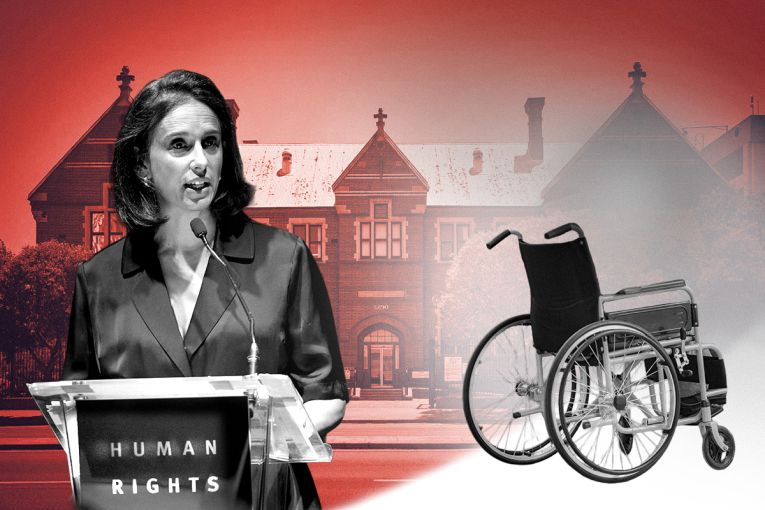
Human Rights Watch Australia director Daniela Gavshon said the state government should take “urgent action”.
You might like

“Solitary confinement has a disproportionate harmful impact on people with certain types of disabilities and can amount to cruel, inhuman or degrading treatment, and even torture,” Gavshon said.
“People are hiding mental health or self-harm or other concerns because they are so afraid of having the punitive response of solitary [when their concerns] require a more therapeutic or appropriate response.
“It’s really stark, and I think it’s something that the South Australian government should be taking very seriously.”
Current South Australian laws do not include any limitations on solitary confinement for people with disability.
The SA Correctional Services Act says authorities can order an incarcerated person to be kept separate from all other prisoners if it is “desirable” for safety or welfare, to protect other incarcerated people, to maintain “security and good order” or during an investigation.
Human Rights Watch interviewed more than 40 people in 2025 and 2026 who had been incarcerated in SA, including 14 with a disability – all were kept anonymous and given pseudonyms.
Multiple accounts mentioned hiding mental ill-health out of fear they would be detained in solitary confinement blocks at the Adelaide Women’s Prison and Yatala Labor Prison.
First Nations woman and abolition activist Tabitha Lean said it was “common knowledge” solitary confinement was a response to those perceived to be at risk of self-harm or suicide.
“We just go cry in the shower; it’s the only safe place to cry,” Lean said.
Similarly, activist Dan Vansetten, who spent 12 years in SA prisons, said: “Anytime you’re given bad news, you would just try and keep a straight face. I was told my grandma had passed away and I wouldn’t be able to go to her funeral; I just kept a straight face”.
Five of 11 women who had experienced solitary at Adelaide Women’s Prison claimed they were subject to sleep deprivation because “the lights are on 24/7”.
“It’s the most horrific thing I’ve ever been through,” formerly incarcerated woman Tina said.
Stay informed, daily
The United Nations minimum standard rules for prisoner treatment prohibit being held in constantly lit cells.
Human Rights Watch made 18 recommendations to the state government, including introducing laws to ban solitary confinement for disabled prisoners, using pretrial detention as a “last resort”, establishing an independent inspector for prisons and improving access to support services for incarcerated people.
InDaily approached the Corrections Department, Corrections Minister Michael Brown and Attorney-General Kyam Maher for comment.
A state government spokesperson responded saying it “will consider the recommendations made by the Human Rights Watch report”.
“Everyone deserves to be treated with dignity and the Department for Correctional Services works closely with SA Prison Health Service (SAPHS) to support the specialist health and disability related needs of people in custody, including access to services and adjustments that enable effective participation in prison programs, activities and daily life,” the spokesperson said.
The Correctional Services Department released a new Disability Access and Inclusion Plan in July 2026 acknowledging issues raised in today’s Human Rights Watch report, including introducing better screening of disability, increased staff training and more appropriate daily living supports for incarcerated people with disabilities.
Human Rights Watch’s report acknowledged the plan and said it was “a step toward addressing the mistreatment of people with disabilities in South Australian prisons” but “does not commit to all the changes needed to ensure the human rights of incarcerated people with disabilities are upheld”.
‘Not designed to be this cruel’: Man denied toilet for days
One First Nations man, given the pseudonym Tony, uses a wheelchair and was held at the Adelaide Remand Centre for eight days in 2020 with no access to a shower or toilet.
Tony did not release his bowels for close to nine days, his lawyer said, and was “getting hot sweats; he can barely keep his eyes open…it is alarming”.
The conditions were “so dangerous to his health” that a District Court judge ordered his release from prison to home detention.
“There is the risk of infection, there is a risk of his bowel exploding.… It’s beyond what prison is designed to do,” Tony’s lawyer told the court.
“Prison, yes, is designed to punish and penalise people. It’s not designed to be this cruel.”
Asked about the incident today, a government spokesperson said it was “impacted by strict COVID-19 protocols where all new admissions entering prison were held in protective quarantine for a period of time”.
Adelaide Remand Centre, where the incident took place, is operated by private prisoner operator Serco.
Asked about wheelchair-accessible facilities by Human Rights Watch, Serco deferred to the state government, “who own all prison infrastructure and standards”.
Human Rights Watch researchers were unable to visit Adelaide Remand Centre, Adelaide Women’s Prison and Yatala Labor Prison after their requests were denied by Correctional Services and Serco.
A government spokesperson said today: “All South Australian prisons, with the exception of the Adelaide Pre-Release Centre cottage accommodation, have wheelchair-accessible cells, showers and toilets”.
In response to questions from Human Rights Watch, Correctional Services Department Chief Executive David Brown said the “use of restraints is limited to circumstances where they are necessary to manage a prisoner in a non-secure environment, such as a hospital, and is undertaken in accordance with relevant legislation and policy requirements”.
Want to see more stories from InDaily SA in your Google search results?
- Click here to set InDaily SA as a preferred source.
- Tick the box next to "InDaily SA". That's it.