Greens’ public supermarket plan just won’t work
Why Greens’ plan for 624 public supermarkets to take on Woolies and Coles just doesn’t add up, according to University of Queensland professor Flavio Menezes.
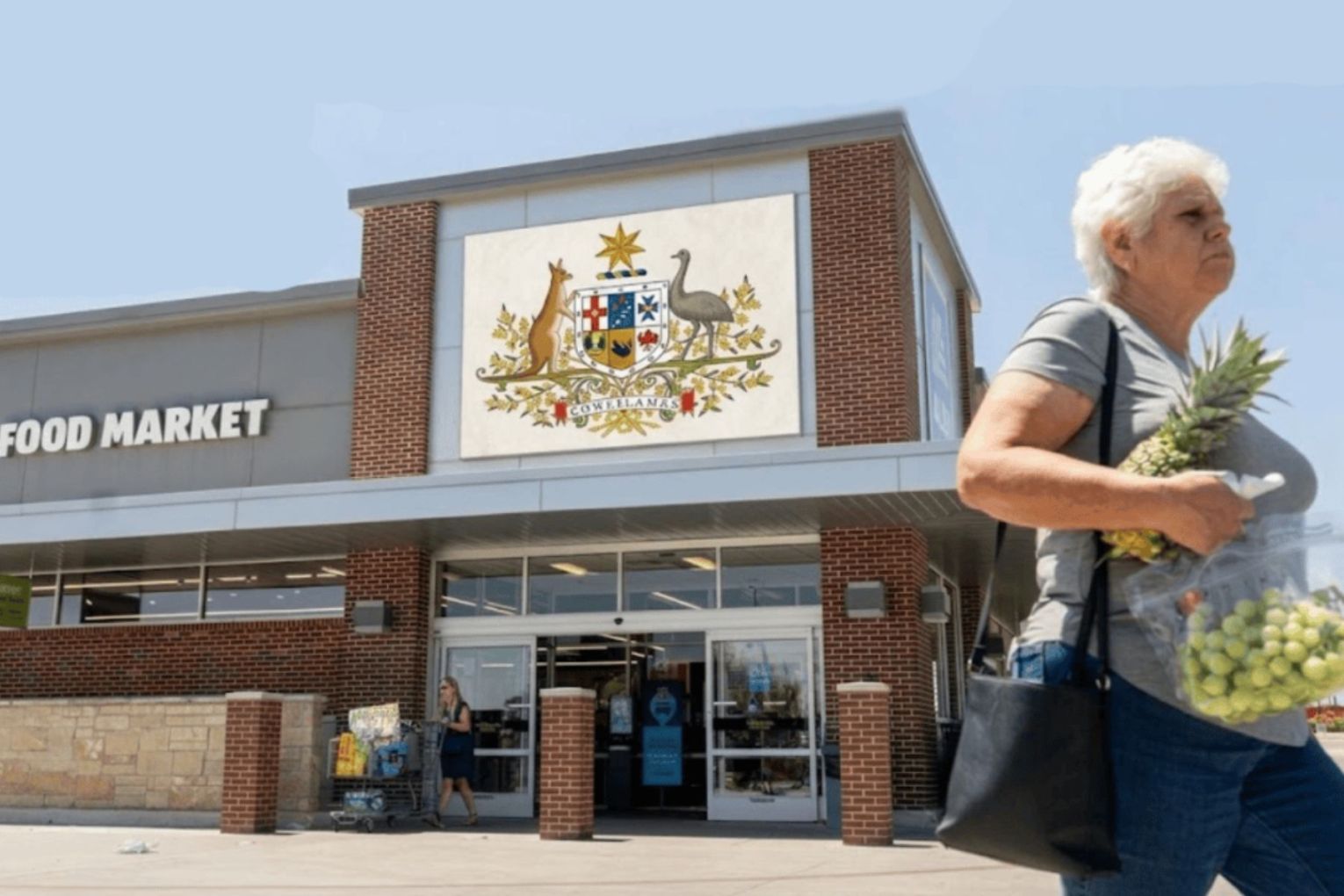
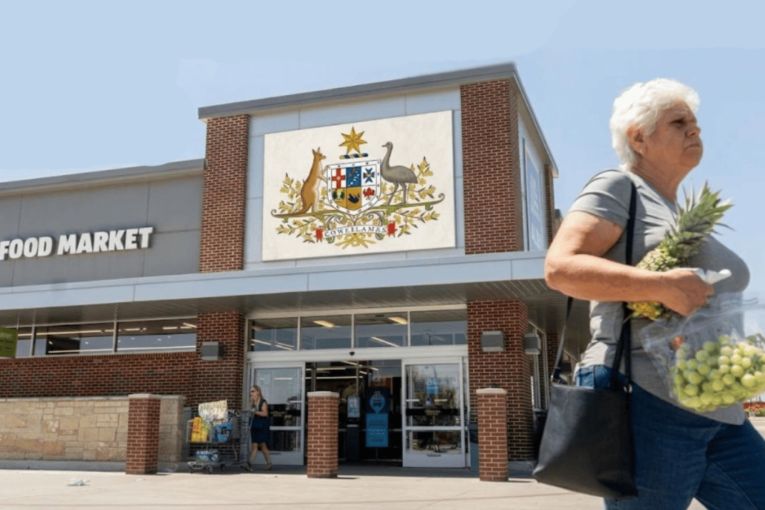
The Greens’ official research think tank has proposed forcing Woolworths and Coles to sell 200 stores as a first step to creating a national chain of 624 publicly owned supermarkets.
The Green Institute’s proposal aims to cut household bills by 22 per cent, or about $60 a week for an average four-person household. The institute claims so-called Fair Go Grocers could become self-funding within six years.
The projected cost would be $25.1 billion over five years – which is more than the Pharmaceutical Benefits Scheme currently costs the federal government each year.
The proposal follows a recent announcement by New York Mayor Zohran Mamdani to establish a small network of affordable, publicly owned supermarkets.
But how similar are these two proposals? And, more importantly, do the economics in this new Australian proposal stack up?
What is ‘Fair Go Grocers’?
The Green Institute’s eight-page proposal is to create “Fair Go Grocers” – a federal government-owned supermarket chain intended to challenge the Coles-Woolworths duopoly and reduce grocery prices.
The proposal has not been formally endorsed by the Australian Greens, but new leader David Shoebridge says publicly owned supermarkets should be considered.
Deputy leader Steph Hodgkins-May shared the proposal on social media, declaring “let’s get on with it!”.
Proposed new divestiture powers would force Coles and Woolworths to sell 200 stores and three distribution centres to Fair Go Grocers. The government would build a further 424 stores and 10 distribution centres.
The chain would operate without a profit margin, with the government funding the capital costs, and store revenues covering ongoing operating expenses.
You might like

The proposal aims for prices 30 per cent below Coles and Woolworths for essential foods, and 22 per cent lower on an average shop.
A statutory authority would set prices monthly on a state-by-state basis. It would also guarantee fair prices for farmers,and purchase edible produce rejected by private supermarkets.
New York’s plan for public grocers
New York’s Mayor Mamdani announced plans to establish five public grocery stores – one for each of New York City’s five boroughs. The first is expected to open in the Bronx next year, with the remainder by 2029.
New York City has committed US$70 million ($100 million) in capital funding to the “NYC Groceries” scheme.
In contrast, the Green Institute proposes an investment of $25.1 billion over five years in more than 600 Australian sites, to end up with a 20 per cent national supermarket share as a government-owned and operated business.
Could Fair Go Grocers outsell Aldi?
Woolworths and Coles are Australia’s dominant supermarkets, accounting for about 38 per cent and 29 per cent, respectively, of national supermarket grocery sales.
Their largest challenger, Aldi, entered Australia in 2001. It operates with a different model, stocking only around 1800-2000 products, compared with 15,000-25,000 in a standard Coles or Woolworths.
Aldi still accounts for only around 9 per cent of supermarket grocery sales. There are clear economic reasons for this, which Fair Go Grocers would also face.
An Australian Competition and Consumer Commission 2025 supermarket inquiry found competing at scale requires substantial capital, access to suitable sites, a large supplier network, and scale in procurement, distribution and logistics.
That inquiry found Coles and Woolworths held more than 150 undeveloped sites, intended for future supermarket use. Planning and zoning restrictions further constrain suitable sites. This raises questions about where Fair Go’s 400 new supermarkets would be built.
There are also practical constraints of construction worker shortages and rising construction costs – neither of which is accounted for in this proposal’s costings.
An unprecedented move
Then there is the proposal’s reliance on compulsory acquisition.
Stay informed, daily
Woolworths and Coles are both Australian Securities Exchange-listed public companies. They are each owned by hundreds of thousands of individual and institutional shareholders.
Forcing them to sell 200 stores and three distribution centres to a government competitor would be an extraordinary intervention. There is no obvious modern Australian precedent.
Do the economics stack up?
There are significant gaps in this proposal’s economic reasoning. Here are just three.
1. Gaps in funding discounts
It’s unclear how discounts of 22-30 per cent at the checkout would be sustainably funded.
Eliminating profits cannot generate price reductions of the magnitude claimed. Supermarket net profits after tax are more like 3.6 per cent.
Other areas Fair Go Grocers would cut, such as marketing and executive pay, are also small relative to total sales.
2. Scaling up faster than Aldi
Fair Go Grocers is assumed to scale up very quickly to compete with Coles and Woolworths, at a bigger scale than Aldi has achieved in 25 years.
Yet it’s unclear how a government-owned and operated chain would develop the same scale of supplier relationships, procurement capability, logistics expertise, IT systems and management capability needed to compete nationally.
3. How do you charge less while paying more?
Finally, the proposal simultaneously assumes lower consumer prices and favourable prices for suppliers. Both may be desirable, but they pull in opposite directions in a retailer’s accounts.
So what should government do?
The Green Institute raises legitimate concerns about Woolworths and Coles’ dominance and the need to improve competition.
The ACCC came to similar conclusions in its 2025 inquiry – but its final report prescribed very different remedies.
It focused on reducing barriers to entry and expansion, improving price transparency and strengthening protections for suppliers. The federal government agreed in principle with all 20 recommendations and has implemented, or begun implementing, a number of them.
Before committing $25.1 billion of public money to building a government supermarket chain, there is a strong case for seeing how far at least some of these reforms can take us.
Professor Flavio Menezes is director of the Australian Institute for Business and Economics at The University of Queensland
This article is republished from The Conversation under a Creative Commons licence. Read the original article
Want to see more stories from InDaily SA in your Google search results?
- Click here to set InDaily SA as a preferred source.
- Tick the box next to "InDaily SA". That's it.