Claims hundreds of SA patients waiting on surgery they can not access
Patients believing they were in line for expensive, “life-saving” surgeries have found out no public SA hospital can meet their needs.
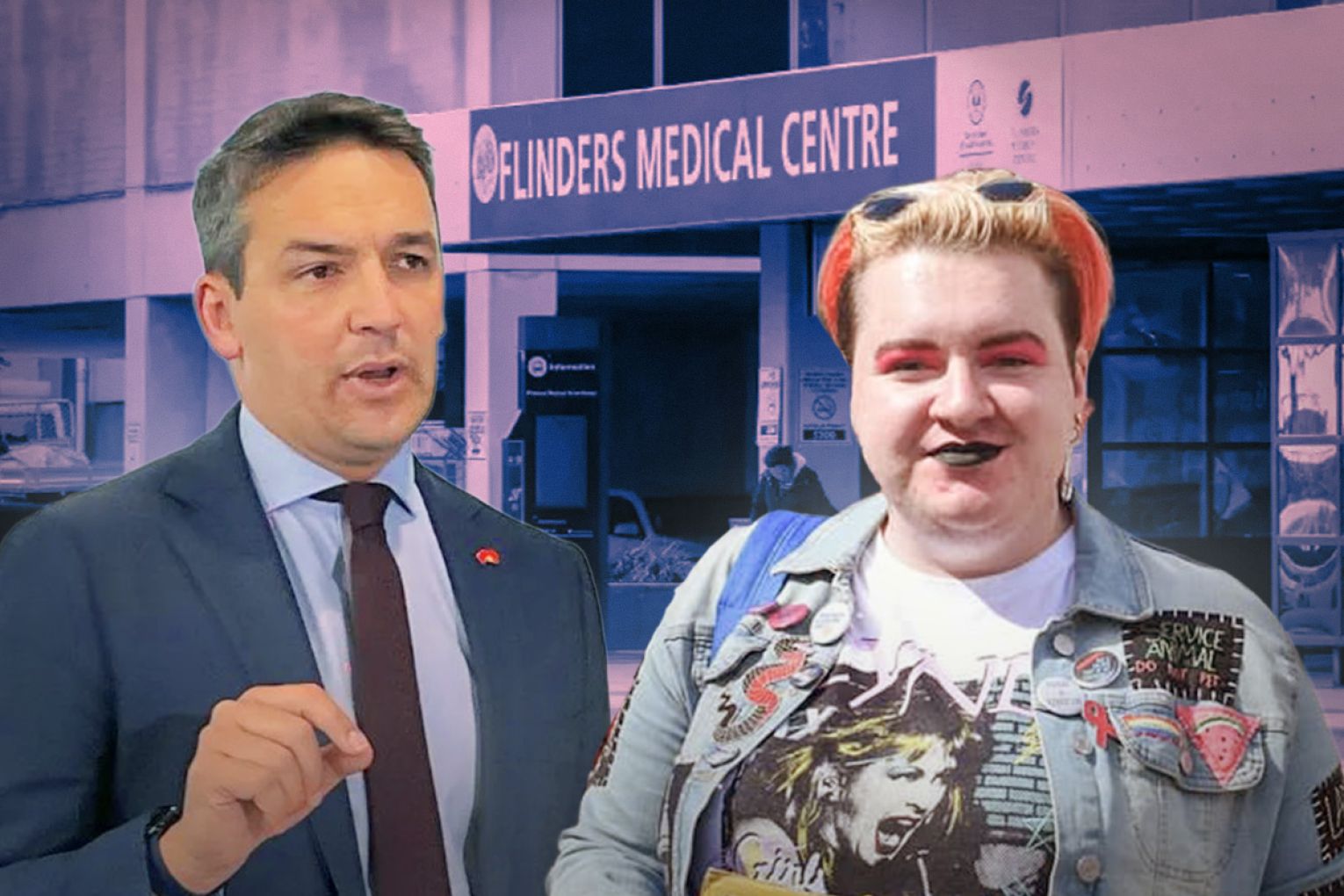
Hundreds of South Australians believed they were waitlisted to have gender-affirming surgery at a new unit at Flinders Medical Centre, according to advocacy group Trans Justice Adelaide.
But SA Health told InDaily this week no unit for gender-affirming surgeries – which can set people back from $10,000 to $100,000 – was available or commissioned for Flinders, or any other public SA hospital.
This was despite a 2023 report, called the SA Health Gender Diversity Model of Care, stating that in one to two years after a new model of care was implemented across the state, there would be “timely access” to specialised services including surgeries.
“It was something that was expected within the community,” Trans Justice Adelaide spokesperson Kansas Bird told InDaily.
Bird said “hundreds” believed the new unit was bound for Flinders Medical Centre, after “gender affirming surgery for adults, that was previously being conducted publicly through the Royal Adelaide Hospital, was then deferred, and those patients were put on waitlists at Flinders”.
“There were people on waitlists and people who had been referred by their GPs [to the Southern Adelaide Local Health Network] with the expectation that this service would go ahead,” Bird said.
In a letter to Bird’s group, SA Health’s Southern Adelaide Local Health Network CEO Kerrie Mahon acknowledged the Model of Care plan, and said her network – which includes Flinders Medical Centre – had developed a model to deliver the surgeries.
You might like
In the letter, sent on July 31, Mahon wrote that although the service was proposed to be held in their network, which includes Flinders Medical Centre, “regrettably, the public system does not have capacity to currently include gender affirming surgery at this time” because of “unprecedented” demand for elective surgeries.
“The surgical model will be reviewed by SA Health through the annual process for new, unfunded surgical procedures for South Australia, to determine the capacity for adding this surgery to the public health system,” the letter said.
Gender-affirming surgeries vary, and can include ‘top’ surgery, which creates or removes breast tissue, or ‘bottom’ surgeries like a phalloplasty or vaginoplasty. Some gender-affirming surgeries can also include facial feminisation or surgery that alters your voice.
Asked about the waitlisted patients, SA Health told InDaily, “there was no surgical waiting list for adult gender affirming surgery as the service had not been commissioned”.
“While some private hospitals provide surgical options for gender diverse patients, currently no state or territory public health system in Australia provides gender affirming surgical services,” SA Health said.
But advocates are calling for these surgeries to become available in the public system, saying a 2026 study from Melbourne University found it could save Medicare millions in other mental health care.
SA Rainbow Advocacy Network board Chair Lucy Solonsch told InDaily the organisation was “deeply concerned” about the service not going ahead, and the way the community were informed.
“It certainly wasn’t clear to us,” Solonsch said.
Stay informed, daily
Solonsch added that a recent study from Melbourne University found funding surgery and hormones for transgender people could save Medicare $42 million over five years, calculated based on what the Medicare system would save on mental health care rebates.
Australia’s largest study on the mental health of transgender, gender diverse and non-binary young people aged 14-25, found that about 80 per cent experienced self-harm, about 75 per cent experienced depression, 72 per cent experienced anxiety and 48 per cent attempted suicide.
“We know that inclusion of LGBTQA+ people is preventative; that it reduces broader healthcare expenses, particularly mental health expenses, due to the fact that the discrimination which we face is the key contributor towards many of the challenges that we go through,” Solonsch said.
“We absolutely want to see the decision about funding gender-affirming surgery re-examined.”
Health Minister Blair Boyer said, “this decision was a clear one for me”.
“I understand that people will be upset and I appreciate that but I have to balance that with unprecedented demand on elective surgeries which does continue to grow,” Boyer said.
As of June 2026, the state government said 25,286 patients were waiting for elective surgeries across the state, causing an increase in overdue patients.
Latest statistics show that public hospitals delivered 61,915 elective surgery admissions in 2024-25 – about 5,330 more than in the previous financial year.
Greens MLC Melanie Selwood said that it was “incredibly disappointing news for transgender South Australians who have been waiting for this service and were led to believe it was progressing”.
‘Life-saving’ surgeries funnelled to the private system
Bird is going through the private system and said they waited about five years to save the money and find an available surgeon for the “life-saving” surgery.
“It will make a huge difference; in addition to being something to look forward to, it allows me to see a future for myself where I know that I’m going to be able to look the way that I feel on the inside,” they said.
“There is a very big misconception that you know a trans person is able to just walk into a hospital and walk out having had surgery.
“It’s a very long process. It’s a very expensive process, and it’s a process that can also be quite exclusionary.”
Solonsch said if there was such a hospital: “Please show me where that happens. I’d love to go there.”
Want to see more stories from InDaily SA in your Google search results?
- Click here to set InDaily SA as a preferred source.
- Tick the box next to "InDaily SA". That's it.