Lattouf on suing the ABC and the Adelaide woman who took on Google
The high-profile journalist sacked over a social media post about the conflict in Gaza has a new book about “women who win”, telling the story of a now-70 year old Adelaide woman who took on Google and “beat the bastards”.

When journalist Antoinette Lattouf was in a gruelling court battle against the ABC, a 70-year-old South Australian who took on another legal behemoth sent her a message on social media platform X.
Lattouf missed the message from Adelaide researcher Dr Janice Duffy because she was “too scared to look at my DMs anymore because of the amount of crap I was copping”.
But Duffy knew better than most about what she was going through, having spent more than a decade in a legal stoush with Google.
“I understood how they would try and bully her, to try to make her go away,” Duffy told InDaily.
The two eventually connected last year, and Duffy – the “woman you’ve probably never heard of – but should have” – was detailed alongside others who defied expectations in Lattouf’s new book Women Who Win.
In the legal battle which ran from 2011 to 2023, Duffy lost her job and spent all her savings and superannuation to pay lawyers. When it ran dry the former SA Health researcher took on the tech giant armed only with her research skills, an Officeworks binder and an old printer.
It started in 2007 when Duffy was “ripped off” by a website advertised as a spiritual guidance service. Duffy shared warnings on American website Ripoff Report, only to find herself defamed in return. A “digital crusade” against Duffy influenced the Google search results after her name to show phrases like “stalker, blackmailer”.

You might like
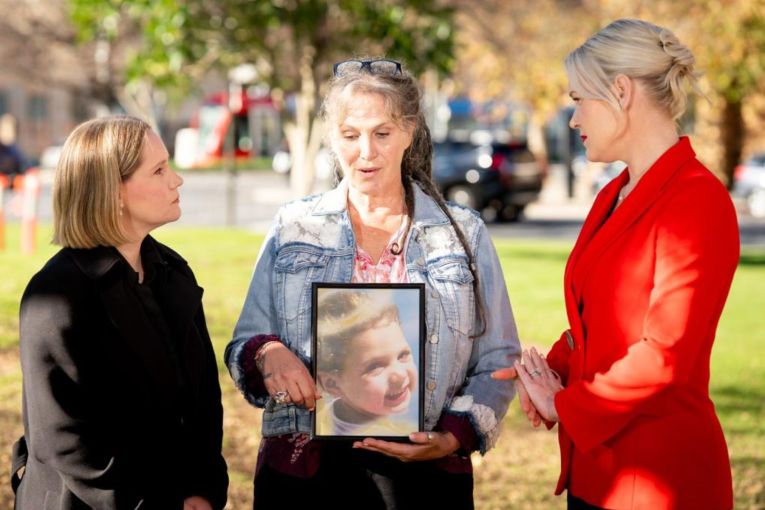

In 2015 and 2023 Duffy successfully argued Google was responsible for publishing the defamatory extracts on its search engine page and in 2023, she received a confidential settlement paying her damages and legal costs.
The legal precedent now supporting others in similar battles.
“I made law that helps people, because initially, when I first started the battle, no one could get anything removed,” Duffy said.
“When I filed proceedings, Google actually said in court ‘we’re not responsible’.
“It’s now much easier to deal with the devastation of being defined online.”
Her story has been immortalised in South Australia’s parliamentary record Hansard, the case cited when the state passed changes to defamation law last year which allows courts to order platforms like Google or Facebook to remove defamatory content.
“Although tech’s evolving, the law is now starting to keep up with it, where, once even lawyers said, ‘we don’t even know how to serve Google’,” Duffy said.
To win, it took Duffy 12 years, and another two to recover from the “gruelling” saga which included receiving death threats against herself and her dog.
She said she was “honoured” to feature in Women Who Win alongside the stories of others, including fellow South Australians Aunty Gladys Elphick and Greens Senator Sarah Hanson-Young.
“Corporations, or people with the power, thought, ‘we’ll just put a bit of pressure and just make them go away’ but we didn’t go away,” Duffy said.
Stay informed, daily
"Antoinette didn’t go away, I didn’t go away and the other women didn’t go away. That, I think, is a great message of perseverance and that you can actually beat the bastards."

Lattouf began to research – and had titled – Women Who Win before the Federal Court determined last year that ruled she was unlawfully terminated from the ABC over an Instagram post about Gaza after a campaign from pro-Israel lobbyists.
She told InDaily if the federal court verdict was different “I’d like to think I would have still released it under the same title” but conceded with a laugh, “it may have been harder to market”.
Stories like Duffy’s, along with Aboriginal rights advocate Murrawah Johnson who stopped a coal mine, and many more canvassed in the book strengthened her resolve through a “traumatising” chapter taking on the public broadcaster.
Lattouf injects the crushing reality of her own experience throughout the book, including a “remix” of court transcripts she said were “traumatising to revisit”.
She employed humour to “communicate it without falling into a pit of despair” and said there were “many times where I was like, ‘I’m just one woman…Oh my god, I don’t want to do this, why am I the first, this sucks’.”
So she poured over newspaper archives to find others, searching for “baller women” and “women who didn’t take shit”, all united by a common crime: “being right too early”.
“In many ways, that was to kind of prepare me and comfort me for the attacks that came my way in the press,” she said.
“It was a very clear pattern that sadly hasn’t pitted out, that women are often demonised and misrepresented during their time, and then later revered and respected and appreciated for what they stood for.
"Often winning for a woman is not clear cut. It doesn’t come without cost. It sometimes doesn’t even come within her lifetime, [is] hers to claim, and often it’s determined by somebody else."
Asked about Duffy, Lattouf said “she’s a legend”.
“The most galvanising thing about her was just how underestimated women continue to be and the power of learning from one another and leaning on one another,” she said.
“I really got through my trial and all of the public scrutiny and backlash… by leaning and look on these women and learning from them.”
Antointette Lattouf will launch her book Women Who Win in Adelaide’s Regal Theatre on Tuesday, May 11.
Want to see more stories from InDaily SA in your Google search results?
- Click here to set InDaily SA as a preferred source.
- Tick the box next to "InDaily SA". That's it.