SA’s top judge reveals final act: Releasing most ‘advanced’ guidelines in country
SA’s top judge is releasing new AI guidelines for courts as one of his final acts as Chief Justice, today reflecting on the “good ways and bad ways” the court has changed in an exclusive interview with InDaily.
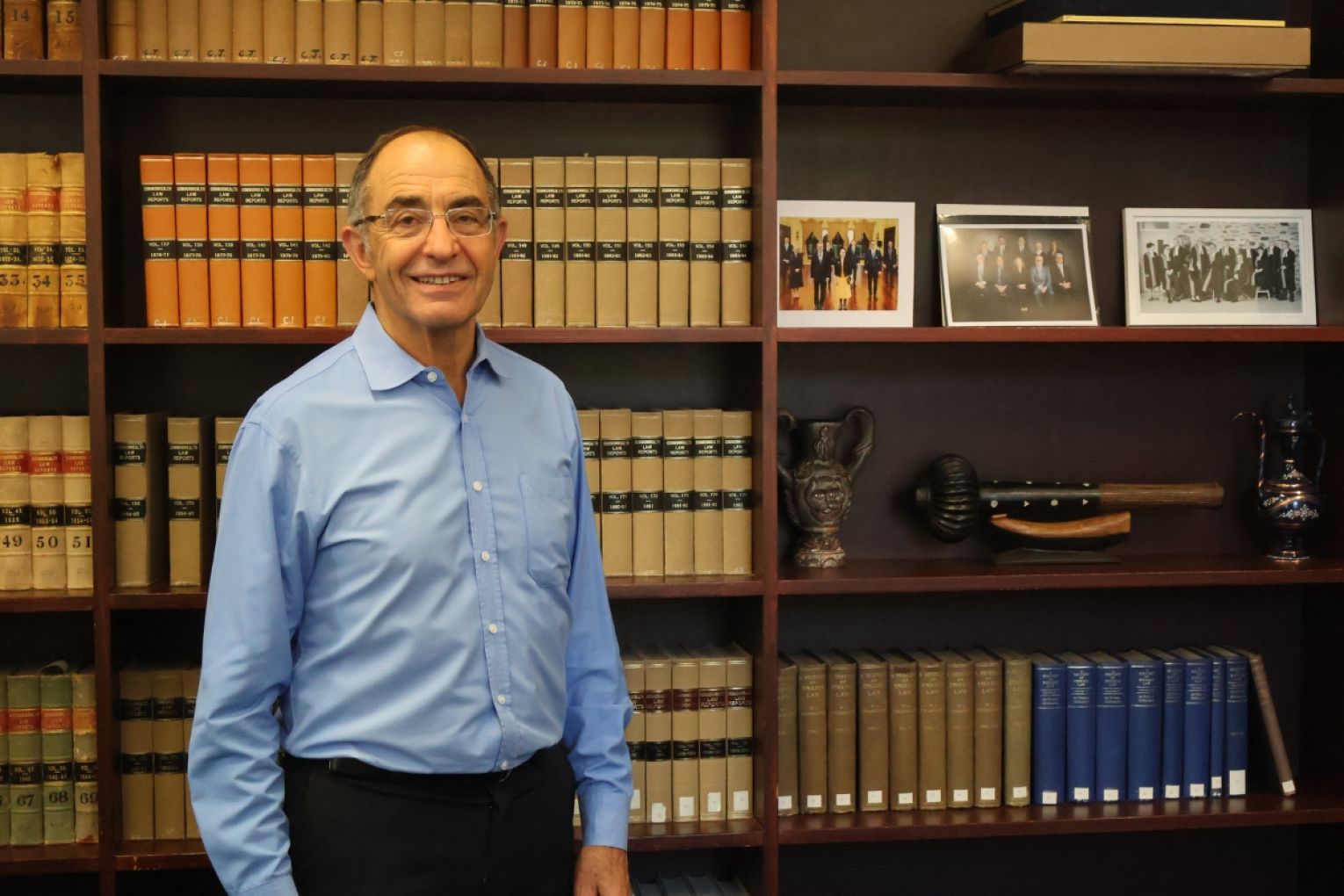
South Australia’s Chief Justice Chris Kourakis says that guidelines for the use of artificial intelligence in the state’s courts will likely be released next week as the state’s justice system contends with the emerging technology.
Kourakis said that in his entire legal career, he has not “seen a tool that has as much potential to shift the dial on access to justice”.
“I’ve never seen a tool that has as much potential to allow people who couldn’t afford to bring their complaints to a court to now bring them there, and for those who always could afford to, to make it quicker and cheaper,” he said.
Kourakis says the guidelines would come into effect in January 2026 and would “give examples of ethical use and responsible use of AI and improper use of AI and particular situations”.
“I think they’re (the guidelines) the most useful and comprehensive and advanced of any in the country and they are more in line with approaches of jurisdictions like Singapore, which have always been pragmatic and eager adopters of technology,” he said.
It comes as Kourakis yesterday announced his retirement from the Supreme Court after serving 13 years as South Australia’s Chief Justice, saying that “it is an appropriate time to retire”.
You might like


Kourkais submitted his resignation to Governor Frances Adamson on November 11, with his final day slated for Thursday, February 19, 2026.
South Australia’s Attorney-General Kyam Maher said that the state government had begun the process of appointing Kourakis’s successor and would share more information in the coming weeks.
Reflecting on his time as Chief Justice in an exclusive interview with InDaily, Kourakis said that the legal profession has changed in both “good ways and bad ways”.
Among the most important cases he has worked on, Kourakis pointed to R v Cramp (2010), which brought home the negative impacts of widespread methamphetamine usage on the community.
In the judgment, he referred to neurological research on its effects and noted the “much more cruel crime committed within the underworld of methamphetamine traders and users”.
Kourakis also affirmed the admissibility of evidence for victims of child sexual abuse years after the offending had occurred in Morton v The King (2025), and of a secret tape a woman made of her husband drugging and abusing her in R v Smart (2018).
Stay informed, daily
“I’d like to think that I’ve always looked for the opportunity within the law, and within the legal principles, to help the law keep up with modern understandings of social problems, so that the law can adequately deal with those problems,” he said.
He said that one of the more positive changes was that the legal profession has become more diverse, with more female lawyers as well as those from a variety of ethnic backgrounds.
“When the diverse members of the community, whether it’s ethnic background, gender or class, when they look at the court and see people who have similar backgrounds to them, they are much more accepting of the authority of the courts because they can see that it reflects them, reflects the diversity of the community,” he said.
However, he said that, while changing, one problem was that women are not staying in the profession long enough to become senior partners, senior counsel and judges.
Another change was, of course, the emergence of new technologies.
“When I was a junior lawyer, that amazing piece of technology was electric typewriters that had a bit of a memory for precedence, and I thought that was fantastic, but the technologies come ahead in leaps and bounds, and it started with word processing on computers and the like,” he said
Kourakis said one of his proudest legacies was the key role he played in establishing the Electronic Courts Management System used by SA’s major courts, which he said was “the most usable” and “unique in the country”.
“The really big thing and the thing that I think the courts have done really well and were all very proud of, is the electronic court management system, which allows some parties to file their documents 24/7, which is a great convenience to them,” he said.
Asked about why he has been so outspoken about combating bullying and harassment in the legal profession, Kourakis said he was “surprised and disappointed” that it still occurred.
“The thing that I really found terrible about it is that it suppressed the talents and contributions which people might make, practitioners, especially young practitioners, female practitioners, practitioners that were vulnerable for some other reason, and it meant that the whole community lost the benefit of that contribution,” he said.
Kourakis was tight-lipped on who his successor might be, but said retiring now was the “right time for the court”, adding that he hopes to continue acting as an auxiliary judge and also looks forward to more travel.
He hoped that his greatest legacy would be the method of work he had encouraged.
“It’s to try and look at the underlying substance of any case, and to address that and to think differently, to think inevitably about the law’s responses to problems and to a particular case – that’s what I hope is my legacy,” he said.
Want to see more stories from InDaily SA in your Google search results?
- Click here to set InDaily SA as a preferred source.
- Tick the box next to "InDaily SA". That's it.