New voices in agriculture are coming from women on the ground
As South Australians vote for the 2026 Agricultural Town of the Year, three Rural Women’s Award-winners are demonstrating how innovation in agritourism, sustainability and wool is reshaping the sector’s future.
Across regional South Australia, agriculture is being reshaped not only by innovation on-farm, but by women building new industries, telling new stories and redefining what rural leadership looks like.
As attention turns to the upcoming Agricultural Town of the Year awards – an initiative of the Department of Primary Industries and Regions (PIRSA), delivered in partnership with InDaily – three recent winners of the South Australian AgriFutures Rural Women’s Award are highlighting just how deeply women are embedded in the future of regional agriculture, from wool and livestock to sustainability, tourism and education.
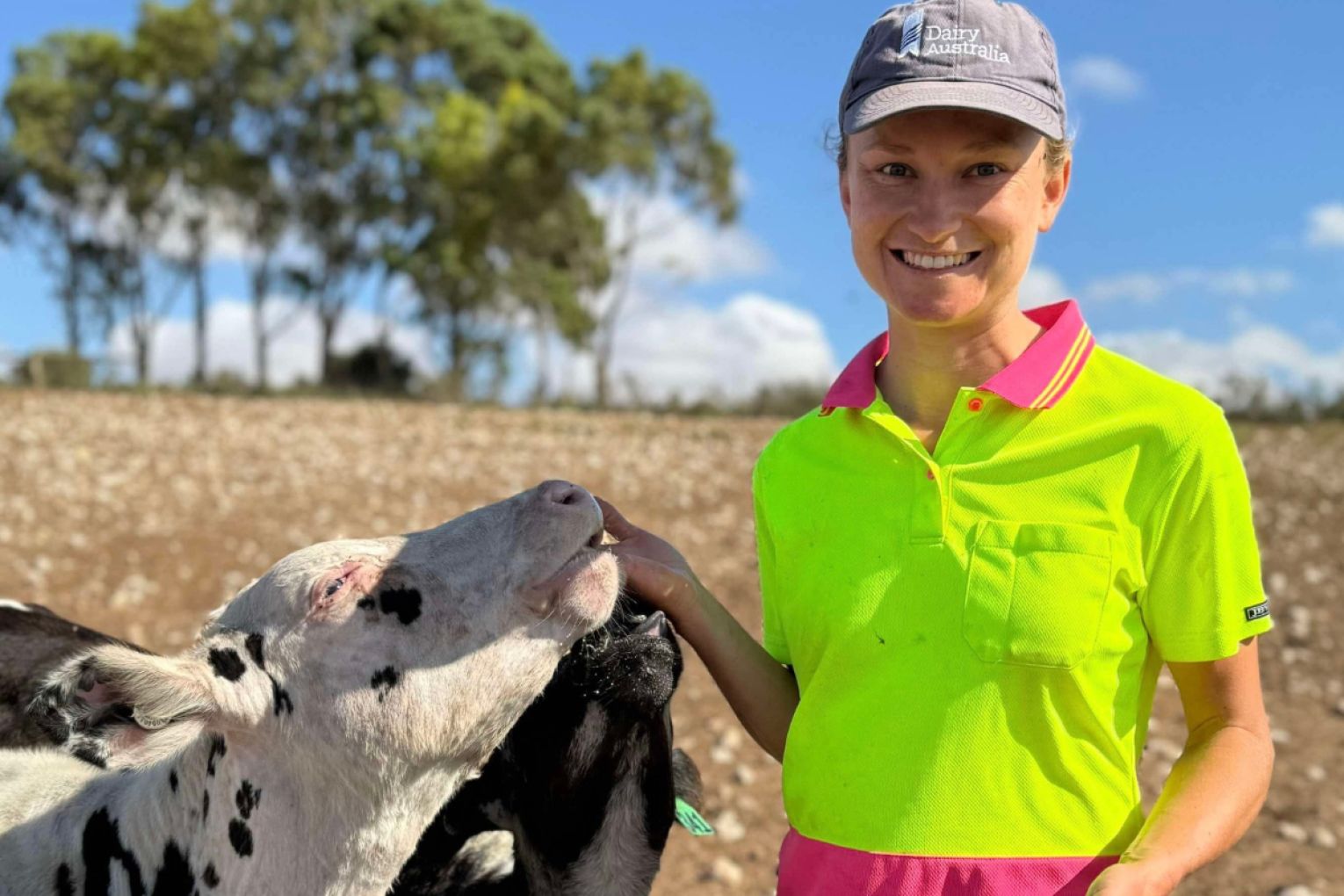
For 2026 winner Narelle Zanker, founder of Dairy Adventures in Mannum, work sits at the intersection of farming, education and tourism, opening the gates of a working dairy farm to help consumers better understand where their food comes from and why it matters.
What started as a small idea has quickly scaled into a recognised agritourism business.
“Dairy Adventures began with social media in May 2024 before officially opening to the public in September 2024,” Zanker says. “Since then, it has grown significantly from a small idea into an award-winning agritourism business that has welcomed more than 1600 visitors onto our working dairy farm.”
The growth, she says, reflects a strong appetite for agricultural education.
“We’ve built strong connections with schools, families, community groups and industry organisations, while continuing to expand the experiences we offer. The growth has honestly been hard to comprehend at times, and it has been incredibly rewarding to see how much interest there is from people wanting to learn more about agriculture and where their food comes from.”
Winning the South Australian AgriFutures Rural Women’s Award, along with a $15,000 Westpac grant, is now set to accelerate that reach.
“Winning the award will help us reach even more people and continue spreading awareness about the importance of agritourism and helping people better understand where their food comes from,” Zanker says.
You might like

For 2025 winner Kelly Johnson, founder of Mannum-based Woodlane Pantry and SPhiker, the focus is food sustainability and regional innovation.
“The business actually began nearly six years ago as Woodlane Orchard, with a simple goal of helping save surplus and second-grade produce from going to waste,” Johnson says.
“Over time, customers began asking for lightweight, easy-to-cook meals suitable for hiking, camping, cycling and travel, which led to the creation of SPhiker.”
Today, the business creates shelf-stable dehydrated meals, soups and pantry products using rescued South Australian produce.
“At the heart of the business is a strong circular economy focus,” Johnson says. “We work directly with farmers to save produce that may otherwise be wasted due to size, appearance or oversupply, while creating value-added products that support both regional communities and food security.”
Johnson says winning the 2025 Rural Women’s Award was “honestly, a complete shock”.
“When you work in a small regional business, you spend most days simply trying to solve problems, support your community and keep moving forward,” she says. “You don’t necessarily stop to think about whether the work is award-worthy.”
She says the recognition has created new opportunities while validating the importance of regional businesses tackling sustainability and food security.
“The award validated that the work we’re doing has value and deserves to be part of bigger conversations around agriculture, sustainability and regional innovation,” Johnson says.
“It’s also helped shine a spotlight on Mannum and the Murraylands as places where innovative regional businesses can thrive.”
Like Zanker, Johnson says recognising rural women is critical to strengthening regional industries.
Stay informed, daily
“Rural women are often quietly carrying enormous responsibility across businesses, farms, families and communities, often without recognition,” she says. “Awards like this matter because they help make that work visible.”

That sense of connection is mirrored in the work of 2024 winner Nikki Atkinson, founder of Horrocks Vale Collections in Wilmington, whose business blends bridal couture with Australian wool production.
“After selling my bridal business in Adelaide to move to the country and marry my Merino sheep farmer, I saw an opportunity to tell a uniquely Australian story through luxury bridal gowns made from Merino wool,” she says.
“Horrocks Vale Collections combines my two worlds – bridal couture and Australian Merino wool.”
Atkinson says winning the award was equally unexpected.
“I was completely shocked, to be perfectly honest, and I certainly did not expect to win.”
The impact, she says, has been long-lasting.
“Winning the award has helped Horrocks Vale Collections and me much more than I could imagine. It added validation that what I am trying to create is sharing the farm-to-fashion story of Merino wool. This award opened doors and opportunities I never even dreamed of.
“It also started conversations : ‘A wool wedding dress – wow, how great that would be for winter’. That gave me the opportunity to share that wool is actually a great choice for summer as well.
“I am still finding that, two years on, the award has helped me connect with other like-minded people all over Australia.”
Like Zanker and Johnson, Atkinson says recognition plays a critical role in reducing isolation for rural women.
“Recognition is so important for women in rural agriculture because running a business in a small country town can often feel isolating,” she says. Awards and networks help you realise your community is much bigger, connecting you with like-minded people who truly understand the journey.”
Looking ahead, all three women see regional innovation and community leadership as central to the future of agriculture in South Australia.
“I’m passionate about showing that regional businesses can lead innovation,” Johnson says. “You don’t have to be a massive corporation in a capital city to create meaningful impact.”
Public voting for the 2026 Agricultural Town of the Year is open until Wednesday, June 3, 2026. Anyone can vote: you don’t need to live in the town, just love it! Your vote could help that town – including Mannum and Wilmington! – be selected as one of the Top 10 towns, and have the opportunity to be crowned the 2026 Agricultural Town of the Year.
Want to see more stories from InDaily SA in your Google search results?
- Click here to set InDaily SA as a preferred source.
- Tick the box next to "InDaily SA". That's it.