Here’s 2.5 trillion reasons to send Bennell-Pegg into space
The recent successful US listing of SpaceX is as strong a signal as you’ll get that the space economy is one Australia should be playing in, writes Cameron England.
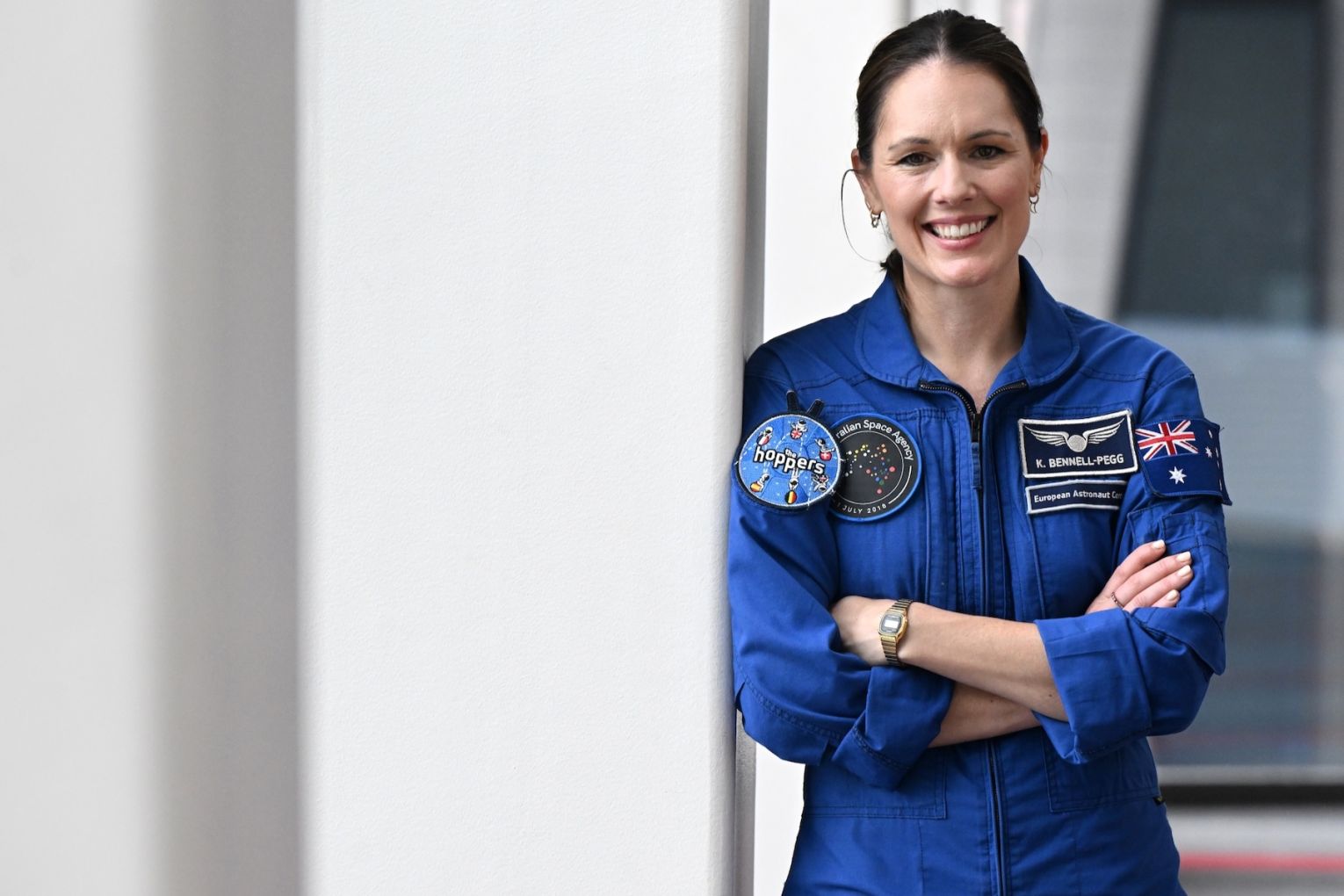
If you needed a reason the Australian Government should stump up $100 million to send South Australian astronaut Dr Katherine Bennell-Pegg into space, I’d argue the SpaceX share market listing last week furnishes you with about 2.5 trillion of them.
Dr Bennell-Pegg, who was named Australian of the Year in January, has been offered a seat on a European Space Agency mission to the International Space Station, but the catch is that it comes with the aforementioned $100 million price tag.
Graduating as an astronaut is an inspiring achievement in itself, with candidates selected from aspirant numbers in the thousands, and Dr Bennell-Pegg is doing a fine job as Australian of the Year, travelling around and talking to people about the opportunities and benefits which flow from a career in the sciences.
But where she belongs is in a space suit, supercharging inspiration for a generation of young Australians and declaring through her presence that our nation is going to be a part of this global generation’s forays into space.
And this is not just some feel-good marketing ploy, it’s about being part of an economy which is set to boom as reusable rockets become the norm and business ideas which still yet sound somewhat fanciful develop into a reality.
The SpaceX listing on the Nasdaq exchange in the US – a wildly successful one at that, with the company last valued at $2.5 trillion – is a massive bet on the future of the space economy.
You might like


Love him or hate him, you can’t deny Elon Musk’s ambition, as evidenced by this less-than-humble mission statement from the company:
Our mission is to build the systems and technologies necessary to make life multiplanetary, to understand the true nature of the universe, and to extend the light of consciousness to the stars. To do this, we have formed the most ambitious, vertically integrated innovation engine on (and off) Earth with unmatched capabilities to rapidly manufacture and launch space-based communications that connect the world, to harness the Sun to power a truth-seeking artificial intelligence that advances scientific discovery, and ultimately to build a base on the Moon and cities on other planets.
SpaceX is planning to put “orbital data centres” in space by as early as 2028, and if you were still unconvinced about the scope of the company’s goals, the word Mars is mentioned 63 times in the company’s prospectus.
This is not to pile plaudits upon Musk – he’s notorious for egregious puffery in his public statements – but it’s as strong a signal as you’ll get that the space economy is one Australia should be playing in.
Consultancy firm McKinsey & Co produced a report in April 2024 arguing the space economy was set to grow from US$630 million in 2023 to US$1.8 trillion by 2035.
The advances since then by SpaceX and other private companies such as Jeff Bezos’ Blue Origin will surely have inflated that figure further.
Stay informed, daily
The value of Dr Bennell-Pegg taking part in a mission has also been argued by former Defence Force chief and governor-general Peter Cosgrove and Nova Systems cofounder Jim Whalley, who wrote to Prime Minister Anthony Albanese in April, making the case that space was “now a contested and enabling domain, underpinning defence operations, national resilience, economic security, and technological sovereignty’’.
“Supporting Dr Bennell-Pegg’s participation would send a clear and compelling signal that Australia is prepared to invest seriously in becoming a capable, credible and enduring space nation,” the pair wrote.
“Early, deliberate engagement will shape Australia’s access to critical systems, partnerships and supply chains for decades to come.’’
It would also hopefully inspire a generation of young people to consider getting involved in space and aligned industries as, “Australia faces growing demand for highly skilled engineers, scientists and technologists, particularly in the lead-up to the AUKUS nuclear-powered submarine program and the expansion of advanced defence and space industries.”
Nova Systems has pledged $1 million in cash and in-kind support for Dr Bennell-Pegg while entrepreneur Dick Smith has also pledged $1 million.
Putting the economics aside for a moment, the symbolic and inspirational power of sending the first person to be qualified as an astronaut under the Australian flag to space mustn’t be underestimated.
The Artemis mission and NASA’s ambition to head back to the moon have captured the collective imagination around space and once again, it’s an aspirational space we should be playing in as a nation.
To date the Prime Minister and his ministerial colleagues have failed to utter more than general messages of admiration for our Australian of the Year when asked whether they’ll stump up the money needed to send her into space.
If we miss out, it’s likely to have been a generational opportunity gone begging.
Want to see more stories from InDaily SA in your Google search results?
- Click here to set InDaily SA as a preferred source.
- Tick the box next to "InDaily SA". That's it.