‘Full transparency on industry investment’ in SA developers’ election wish list
Exclusive: The boss of the state’s urban development peak body has given his verdict on Peter Malinauskas’ first term as Premier, saying more work needs to be done to deliver on an “unheard of” moment in South Australian history.
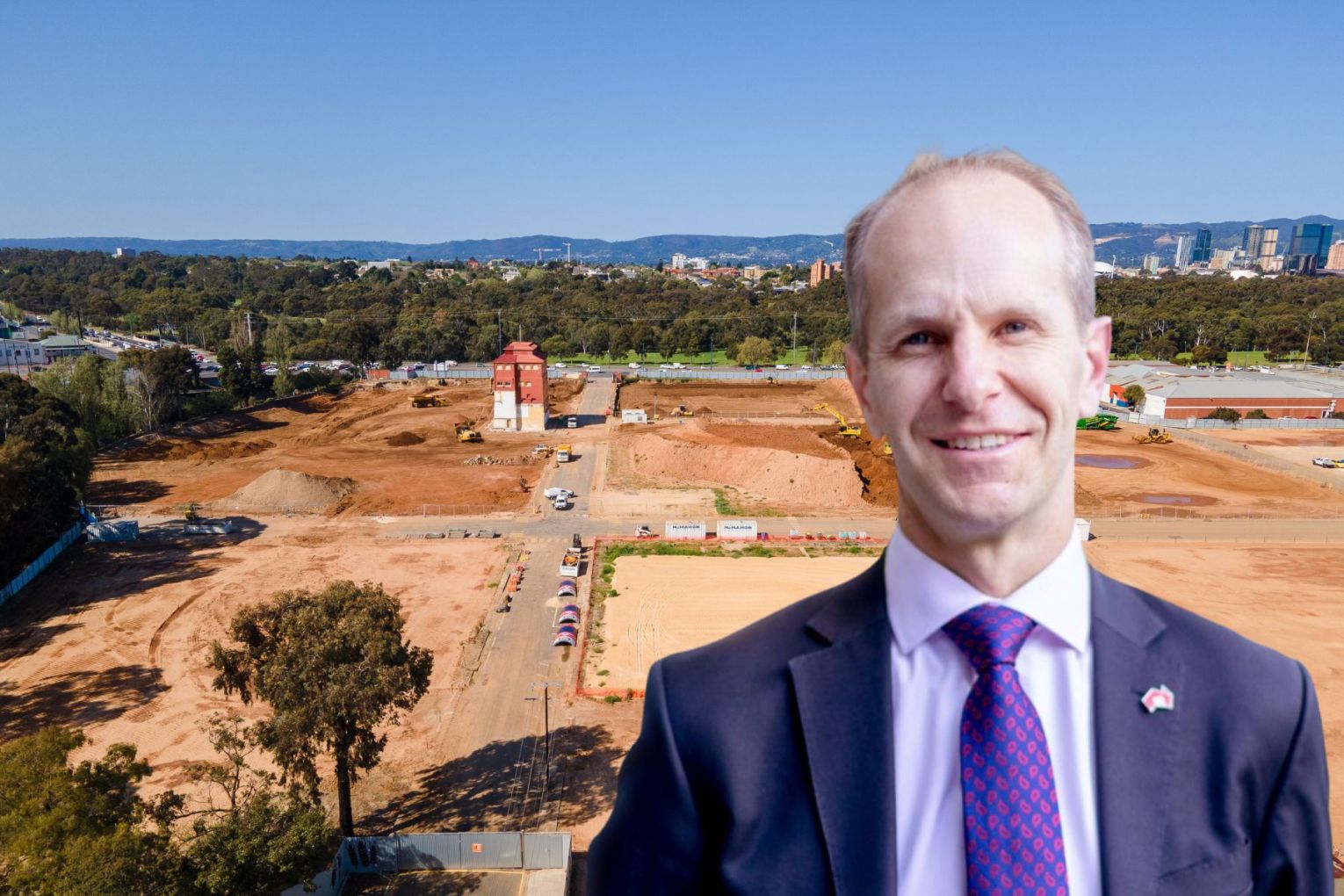
Seemingly never-ending demand for housing in South Australia has flipped the typical challenge of maintaining or promoting demand, with the state’s peak body for urban developers now calling for more rapidly delivered infrastructure,.
The group said this topped its list of pre-election priorities listed today while the organisation’s boss gave his verdict on how Peter Malinauskas rose to the housing challenge during his first term as Premier.
In a comprehensive 50-page wish list, the South Australian arm of the Urban Development Institution of South Australia called for investment in enabling infrastructure like water, sewerage and transport, and more transparency from government to incentivise private sector investment in infrastructure projects.
The organisation hoped the government would continue to take advantage of a “wave of demand in South Australia unheard of in generations”.
“This is positive for the state, however it leads to a challenge we have no choice but to meet.”
Major South Australian urban development firm Future Urban director Michael Osborne told InDaily that the government needed to invest further in ‘enabling infrastructure’ to ensure land is ready to be built on.
“For some period of time, there’s been a real lag in the water and sewer delivery,” said Osborne, who is also the vice president of the UDIA SA.
“It’s fair to say that SA Water has been playing catch-up and certainly still has some heavy lifting to do in that space.
You might like

“That’s really been a key constraint to actually getting housing on the ground.”
The UDIA said the state government had received $1.5 billion more in stamp duty revenue than forecast over the past four years.
It was hoped that money could be diverted to housing-related infrastructure projects. This would “demonstrate a genuine commitment to addressing affordability pressures and stabilising the market”.
Osborne said the government’s relationship with developers over the past four years has been “a positive one”.
But there’s an ongoing “significant” challenge, particularly in relation to infrastructure”.
Other key asks from the UDIA – which has called for 16 different points to be addressed by the next state government – include delivering “true contestability” for infrastructure delivery so the private sector can deliver projects alongside the state government.
UDIA SA CEO Liam Golding said another key priority was for the government to provide full transparency on industry investment, particularly around developer contributions paid into state and local government funds.
This includes augmentation fees, paid by developers to cover the cost of expanding infrastructure to meet new demand, he said.
“When we’re paying into local infrastructure funds at a council level, we need to see where those funds are going,” he said.
“If we’re paying into infrastructure funds through our augmentation fees, we want to see it being delivered. We want to see that infrastructure getting into the ground so it’s unlocking even more houses, which has a virtuous benefit.”
Stay informed, daily
Other calls include a moratorium on new property taxes and a cap on augmentation fees, “so we don’t see development as a piggy bank”.
Asked whether the Malinauskas government had risen to the challenge of delivering housing supply, Golding said the state government had “shown signs of appreciating the challenge”.
“I think there’s still work to be done,” he said.
“There are wonderful steps in the right direction. I would hesitate to give them full credit, because it may mean that they don’t realise that there’s still a lot of work to be done.
“I do think the government recognises that, and they are in the right frame, but occasionally I am concerned that some of the cost imposts and some of the challenges that they have, they’re going to seek to charge their way out of it, rather than invest their way out of it.”
Golding was on the record as an opponent of the state government’s plans to make it mandatory for new houses to include garage space for at least two cars if they have two or more bedrooms.
That legislative push failed last year, and the Labor party is bringing the vow to the state election.
But the CEO welcomed other Labor promises, such as the recently announced deal with the Commonwealth worth $800 million to build 6877 homes, which includes $534 million in concessional loans to give major homebuilding projects a foundation.
“This speaks to one of our reform policies about leveraging the Commonwealth’s balance sheet that there’s ways we can manage the risk associated with development,” he said.
“The Commonwealth balance sheet is enormous. They can wear that risk without having any impact on their credit rating.”
Similarly, he welcomed the Liberal Party’s recent commitment to give downsizers a one-off stamp duty concession of $15,000 if elected.
“Stamp duty is a regressive and punitive tax,” Golding said.
“It’s inefficient and it creates unnecessary friction within the market. We congratulate the Liberal Party for having the willingness to tackle stamp duty.”
Want to see more stories from InDaily SA in your Google search results?
- Click here to set InDaily SA as a preferred source.
- Tick the box next to "InDaily SA". That's it.