Clavell’s dangerous life on the run
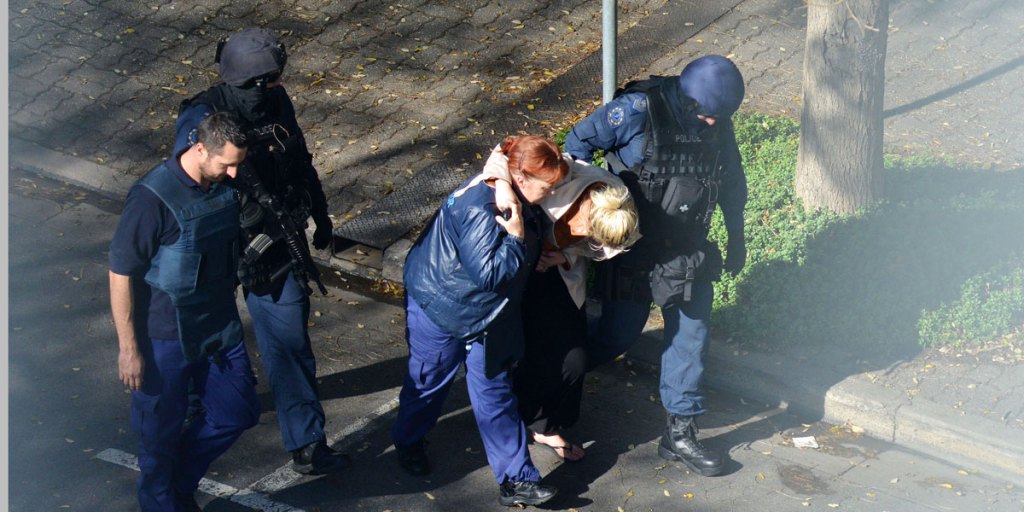
SA Police have revealed that Rodney Clavell’s life on the run included extorting other members of the criminal fringe and a range of crimes against innocent South Australians.
Assistant Commissioner Paul Dickson also revealed this morning some of the trauma suffered by workers at the brothel, where Clavell was found dead yesterday afternoon after a 12-hour siege that shut down parts of central Adelaide.
Dickson told ABC radio that four women kept hostage by Clavell had suffered horrific trauma while held hostage by the armed man.
At times, they were barricaded inside a room, Dickson revealed.
“They endured a horrific set of circumstances yesterday,” he said.
“They were held against their will, in fact they were barricaded at times [and] Mr Clavell had a firearm, so all of those instances would have been quite horrific.”
You might like

Dickson said police would continue to speak to the women about the incident over the coming weeks, but it would take some time for them to begin their recovery from the ordeal.
“We’ve got to get past the time of the shock, the absolute trauma, and then we’ll continue.
“It might take four or five different visits to actually talk to them.”
Police hunted Clavell for 14 days and made more than 80 raids before a tip-off led them to Marilyn’s Studio on King William Street during the early hours of Thursday morning.
Police believe the former prison guard committed several crimes while he was on the run.
“On the 25th of May at Elizabeth, he assaulted a female and used the shotgun when he did that and stole her car,” said Dickson.
Stay informed, daily
“Mr Clavell, we believe, was threatening other people. Some of those threats were being committed with a firearm, to receive money, to obtain mobile phones and just to be able to live in all these different locations.
“To some degree he was almost extorting other people who might be in that criminal fringe.”
Dickson said he expected arrests would made in relation to Clavell’s evasion of police.
The Assistant Commissioner said Clavell would be alive today if he had listened to police appeals made through the media.
“When the police finally went into the premises there was a television which was on and so that would indicate to me that he was listening to the media,” he said.
“He obviously had been shot before by the police, so his trust of the police was probably fairly minimal in relation to how he was going to be treated.”
He said that because Clavell’s apparent suicide was being treated as a death in custody, the Coroner would apply a high level of scrutiny to police.
“We had the control to say whether he was coming out of those premises or he wasn’t coming out of those premises, so no doubt he was under our control, therefore the incident and the consequence of his death fits the definition of a death in custody,” said Dickson.
“We had the premises that he was in surrounded. We had control of that, then he has taken his own life. That still fits the definition.”
Want to see more stories from InDaily SA in your Google search results?
- Click here to set InDaily SA as a preferred source.
- Tick the box next to "InDaily SA". That's it.