Leadership Lens: Why it’s time to retire the corporate machine
Workplaces are not factories, and people are not components, writes Specialised Assistance School for Youth (SASY) co-founder Nic Pellegrini.
In leadership, we’ve long been enamoured with the language of the industrial age. We talk about scaling up, fine-tuning the engine, and ensuring our staff are well-oiled cogs in a larger machine. It’s a comfortable way to look at a business because machines are predictable. If a gear breaks, you replace it. If the output is low, you simply crank the handle faster.
But there is a fundamental flaw in this logic that we must address. Workplaces are not factories and people are not components.
When I co-founded the Specialised Assistance School for Youth (SASY) at the age of 21, I didn’t have a decade of corporate indoctrination to tell me how a boss was supposed to sound. What I had was lived experience and a front-row seat to the reality that when you treat a human being like a tool, you eventually lose the human. More than ten years later, that lesson is still the most important one I’ve learned. Leadership isn’t about engineering a system, it is about tending to an environment.
The Underestimated Advantage
In my experience, there is a specific brand of scepticism reserved for young leaders. It is the quiet assumption that without decades of climbing the ladder, you lack the perspective to lead. However, I have found the opposite to be true.
Youth offers a beginner’s mind, which is a perspective unburdened by the way things “have always been done.” When you haven’t been taught the rules of the corporate machine, you are free to notice when that machine is actually broken. Young leaders are often the first to question the status quo, and introduce progressive, innovative ideas to a business.
You might like


In a world that is increasingly complex and volatile, having less experience isn’t necessarily a deficit, but an advantage. It allows us to ask the simple questions that often lead to the most profound realisations. Why are we sitting in this meeting? Why are we using this language? Can we do this better? Does this actually help the person standing in front of us?
The Buzzword Tax
If the workplace is a machine, then corporate-speak is the faulty wiring. We have reached a point where modern professional communication is almost entirely performative.
We spend fifteen minutes in alignment sessions to leverage synergies and circle back on key deliverables just to ultimately sunset initiatives that don’t optimise output. What does any of it really mean? We use buzzwords because they are safe. They sound professional, but rarely say anything of substance.
I call this the Buzzword Tax and it is expensive to a business. It costs us time, but more importantly, it costs us trust. When a leader spends fifteen minutes talking without really saying anything, the staff hears the subtext. They hear that you don’t trust them enough to be direct. In a living system, communication is vital. If it is clogged with jargon, the whole thing starts to wither. To lead effectively, we have to stop talking to roles and start talking to people. Clarity is an act of respect. It honours the other person’s time and intelligence, and moves a fifteen minute meeting to a two-minute conversation that actually creates collaborative change.
From Mechanistic to Organic
Stay informed, daily
The most dangerous idea in management is that a workplace is a mechanistic system. The logic of “if we do A, then B will happen” works for a toaster, but it fails miserably for a team of humans.
A machine is a closed system with limited variables that can be changed or manipulated predictably. A living system, like a workplace, is dynamic and has many unpredictable variables, some out of a leader’s control. It is influenced by the environment, the people within it, and the wider world around us. You cannot force a person to grow. You can only provide the conditions in which their growth becomes inevitable.
As leaders, we are not engineers. We cultivate a workplace environment. When a member of a team is struggling, a mechanistic leader asks what is wrong with the part and looks for a replacement. A more human approach is to first ask what needs to improve in the environment. Is there enough support? Is the culture toxic? Does this person have what they need to flourish?
This shift in perspective changes everything. It moves us away from control and toward cultivation. It recognises that our staff are people with families, anxieties, dreams, and complex lives. When we treat people as the living, breathing humans they are, we unlock a level of collaboration and innovation that a machine could never produce.
The Path Forward
Leadership doesn’t need more buzzwords, more complex hierarchies, or more fifteen-minute dances around the truth. It needs clarity, empathy, and the courage to treat a workplace like the living system it actually is. When we finally retire the industrial metaphors and start speaking to one another as people, we don’t just get better results. We get a workplace that is actually worth turning up to. By choosing human connection over corporate jargon, we create a culture where people can truly flourish rather than just survive the work week.
This shift requires us to be vulnerable enough to be direct. It means trading the safety of a meeting for the honesty of a direct conversation. When we stop hiding behind the machinery of management, we invite our teams to do the same. We move from a culture of compliance to one of genuine contribution. The corporate machine has served its purpose, but the future belongs to the living system. If we want to lead effectively in a world that feels increasingly disconnected, we must be the ones to bridge the gap. It is time to stop managing cogs in a machine, and lead human beings.
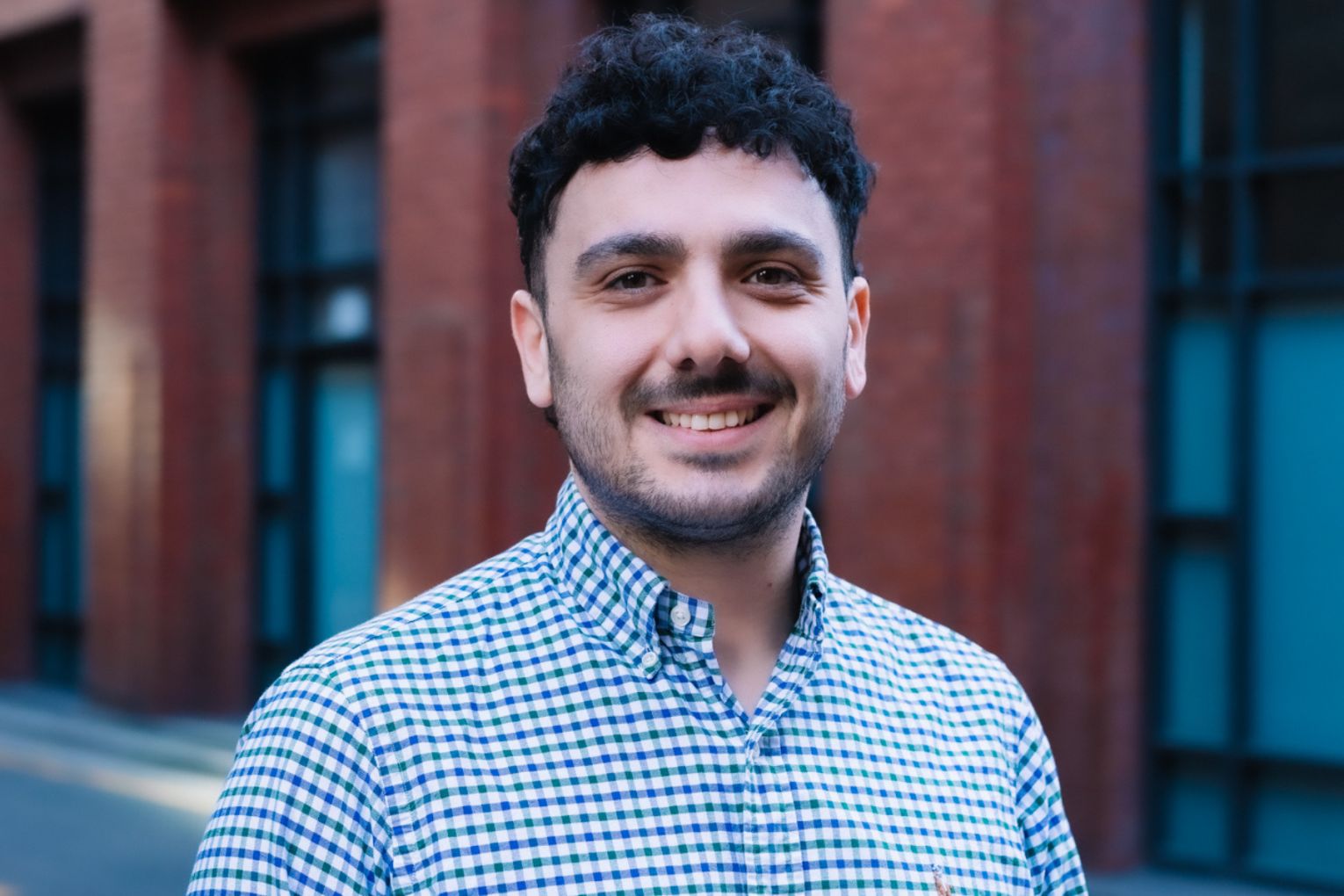
Nic Pellegrini is the Co-Founder and Head of Operations at SASY (Specialised Assistance School for Youth) in Adelaide. Having co-founded the organisation at the age of 21, he brings over a decade of lived experience in human-centric leadership within the education sector. Nic’s approach to operations is defined by a commitment to authenticity and the rejection of mechanistic management styles. He is a passionate advocate for treating workplaces as living ecosystems. He focuses on fostering environments where both staff and students can flourish through clarity and connection.
Leadership Lens is a monthly column produced alongside the Leaders Institute of South Australia. Click here to read the series.
Want to see more stories from InDaily SA in your Google search results?
- Click here to set InDaily SA as a preferred source.
- Tick the box next to "InDaily SA". That's it.