‘Unacceptable’: Former Attorney-Gen condemns Police Commissioner’s Crows board role
“A Police Commissioner can not serve two masters”. In the midst of the footy season, Chris Sumner argues Grant Stevens’ appointment to the Crows board “offends principles of public service ethics”.
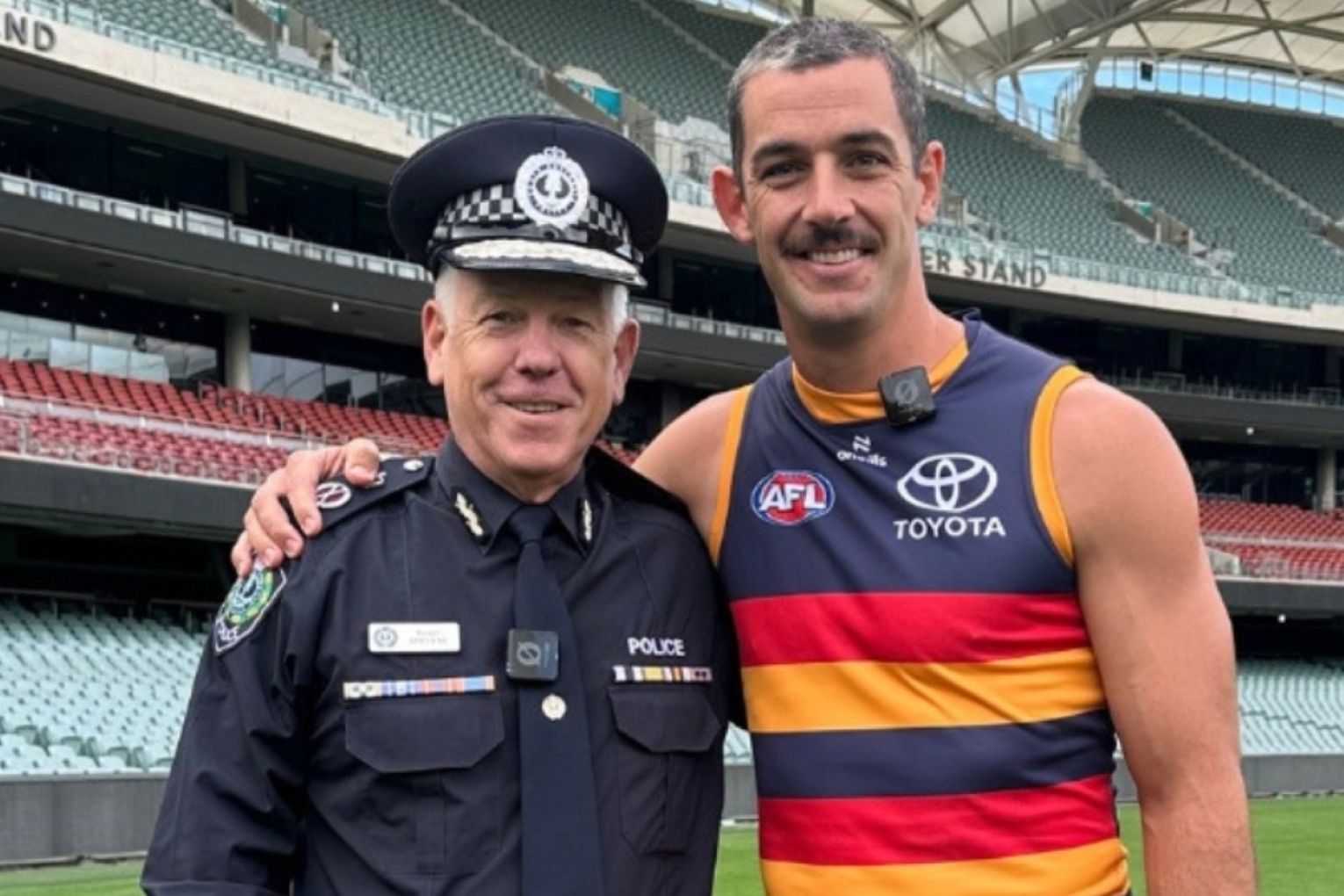
The appointment in December 2025 of Police Commissioner Grant Stevens to the Board of the Adelaide Football Club has occurred with little query from anyone including the government or the Opposition.
This is a curious state of affairs as there is an institutional conflict of interest between the Police Commissioner who is a public sector statutory officer with a mandate to run the police force and the Adelaide Crows which is a large commercial entity. The AFC is a public company governed by the Corporations Act where the primary responsibility of a director is to act in the “best interests of the corporation.”
This gives rise to an overarching obligation which cannot be resolved by a declaration of conflict of interest on particular issues. A Police Commissioner cannot serve two masters – the public interest as Police Commissioner and the interests of a large public company running a business enterprise.
Senior public officials should not be involved in a decision-making capacity in private commercial entities, and this prohibition holds with even greater force for a police commissioner because of the nature of their work and sensitivities of issues they deal with daily.
The Adelaide Crows have a revenue of over $60 million and is a franchise of the AFL which has revenue of over $ 1 billion in addition to that of its clubs. It is engaged in the development of facilities at Thebarton with a $100 million price tag and Government backing.
The AFL is commonly referred to as part of an industry and the AFC is not a small community football club. The appointment of the commissioner to the AFC Board was made by the AFL not the Crows members.
Would the government have approved the appointment of a Police Commissioner as a director of BHP? Self-evidently not, but there is no material distinction from a probity perspective for an appointment to the Crows board or BHP or any other large commercial organisation.
You might like


The AFL regularly interacts with governments over issues including the development and financing of stadiums such as the Adelaide Oval and the politically controversial Hobart stadium.
"How does a Police Commissioner reconcile his responsibility to advocate for adequate police funding with his obligation to act in the best interests of the AFC which is also seeking taxpayer funding?"
There are other inherent conflicts; the Police Commissioner has responsibility for policing Adelaide Oval, traffic control, counter terrorism operations at major events, alcohol and crowd control enforcement, emergency management, criminal investigations involving players, officials or supporters, gambling issues including those related to crime and criminal matters that may overlap with sport integrity issues.
The Adelaide Football Club is likely to be in conflict with the government over any number of issues, but it also has a history of direct and acrimonious dispute with members of the public and community bodies.
This was apparent when the Crows proposed to take over a large section of the Adelaide Park Lands for its administrative headquarters and training facilities. The proposal for the Thebarton facility involved a dispute with the local community and about relevant planning laws. It is not proper for a Police Commissioner to be involved in such controversies.
One of the constantly debated roles of the AFL is to expand the game of Australian Rules Football. According to its Constitution the objects of the AFC include promoting, developing and growing the playing of Australian Football.
"An AFC director is precluded from having an interest in a corporation or business involved in any other professional football code including soccer, rugby union or rugby league. Is it the role of a Police Commissioner to take a partisan position on the primacy of Australian Rules over other football codes?"
Apart from hotly debated issues about the state of the game there is often controversy about internal club issues including whether an underperforming coach should be sacked and his contract paid out.
A brief analysis of some of the AFL controversies over the last two decades illustrates the inadvisability of a Police Commissioner taking a board position on an AFL Club. Big money is often involved, and this was the case when prominent businessman John Elliott was President of Carlton in 2002. The club was found to be involved in deliberate, elaborate and sophisticated salary cap cheating.
It incurred substantial fines and draft pick penalties which have hampered the previously very successful club ever since. It has just been found guilty by the AFL of bringing the game into disrepute and fined $75,000 in relation to the Elijah Holland matter amongst wider allegations that the AFL and its clubs do not provide a safe workplace for its players.
Stay informed, daily
The Essendon drugs supplement scandal is another case study which has also severely affected a successful club. It is not necessary to traverse all the ins and outs of this tragedy for the personalities involved and particularly the players and the club generally for it to be obvious that a Police Commissioner should not be involved.
There was an independent inquiry into the saga conducted by the club, an AFL inquiry and eventually an adjudication by the international Court of Arbitration for Sport that the players had taken a banned substance. Much of what went on initially was without the detailed knowledge of the board but the consequence for everyone was catastrophic and would have been disastrous for the public standing of a Police Commissioner who had been a director.
The Crows are not immune from scandal. In 2012 Crows officials were found by the AFL to have entered into an illegal side agreement with player Kurt Tippett thus undermining the draft rules. The Club was heavily fined and lost draft picks. This case emphasizes the risks for a Police Commissioner.
Even if the board was not fully aware that its officers had gone rogue that is no comfort to a board member. In politics (real or football) a defence that those in charge were unaware of what was going on fails dismally and the mud sticks. Reputations are damaged.
Port Power has recently had to take the highly controversial step of removing one of its legendary players and elected member Warren Tredrea from its board because of his unacceptable personal views. Again, hardly the sort of controversy that a Police Commissioner should court.
There has been a lack of transparency with the Police Commissioner’s appointment. The government has had nothing to say but there must have been involvement from the Police Minister (then Blair Boyer) and Premier. It is contrary to public service practice for a public servant including a Police Commissioner to hold a position on a private company without approval.
If this appointment was approved what were the conditions attached to it? Will the Police Commissioner be able to attend to his Crows duties in normal working hours, has he been given leave to attend to them in lieu of his primary statutory duty? I understand there is no entitlement to any remuneration, but what other emoluments result from the appointment?
Has the minister issued any directions to the commissioner in respect of this outside employment? The government should answer these questions. Before approving the appointment did the Premier and minister check with the integrity agencies such as the Office of Public Integrity and Commissioner for Public Sector Employment as to the appropriateness of this appointment? The Attorney General and Solicitor General should have been consulted.
This issue is not about the individual concerned who is highly respected and popular – but is a case of muddying the waters between the person involved and general principle and the overriding need for probity to not only exist but be seen to exist.
The issue is not difficult, the role of Police Commissioner is incompatible with appointment to the board of a large commercial organisation, whether football club or otherwise. It offends principles of public service ethics and good practice.
Chris Sumner was the Attorney General in the Labor Governments led by Des Corcoran, John Bannon and Lynn Arnold.
SA Police Response
An SA Police spokesperson said all necessary notifications of the appointment were made by the Police Commissioner.
SAPOL regularly manages applications by employees, including executive members, for secondary employment.
This appointment is classified as secondary employment even though it is without remuneration and will be managed appropriately in line with SAPOL policy.
The appointment has been included in the Police Commissioner’s statement of pecuniary interests, notwithstanding that it does not meet the threshold for disclosure under government requirements.
If any potential conflicts are identified during the course of his Board tenure, the Police Commissioner will take the appropriate steps to ensure they are mitigated. This is a well-established practice of good governance for any board.
Want to see more stories from InDaily SA in your Google search results?
- Click here to set InDaily SA as a preferred source.
- Tick the box next to "InDaily SA". That's it.