Dozens of sport supplements failing SA food code
New testing reveals numerous sporting supplements being sold in SA are failing safety standards, the SA Health Minister announcing a crackdown.

A statewide audit conducted by SA Health has found 27 sporting supplements sold through supermarkets, pharmacies and health food stores have breached Australian food safety standards.
The audit of 28 supplements, which found breaches in pre-workout supplements, protein powders, nutrition bars and beverages has prompted the state government to push for stronger national food safety standards.
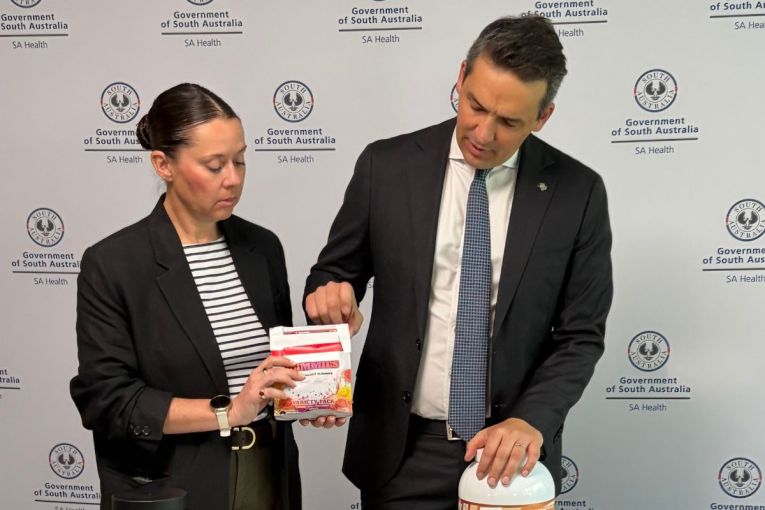
Health Minister Blair Boyer said there had been a “massive explosion” in the number of supplements including peptides and protein powders, raising concerns manufacturers may be exploiting regulatory requirement boundaries.
“We have now seen over the last few years a massive growth in the number of products in the number of products that fall under that sports supplement category, some which fall between what is a grey area between food and a sport supplement,” Boyer said.
“I raised my concerns very early on upon becoming Minister for Health and Wellbeing that I didn’t think regulation nationally was keeping up with this and that some of the claims made on some of the products to South Australians were not actually based on evidence and were misleading.
“It’s important that we draw a line in the sand here given how much this segment in supermarkets has actually grown.”
You might like


Among the products breaching the Australia New Zealand Food Standards Code include a hydration salt sachet made in SA and a carbohydrate supplement made from waxy maize starch were non-compliant.
A sports supplement manufactured in NSW contained 300mg of caffeine per serve, 50 per cent above the maximum level permitted under the food standards code, which limits sports foods to no more than 200mg of caffeine in a one-day quantity.
The product packaging also carries warnings advising it is not suitable for children under 18 years of age or pregnant women and should only be used under medical or dietetic supervision.
Boyer said products found to be non-compliant have been referred to the Therapeutic Goods Administration, with penalties reaching up to $250,000 for corporations and $50,000 for individuals.
“These rules are in place for a very good reason and in South Australia we intend them to be followed,” Boyer said.
“I don’t want to hear stories about South Australians who use these products who have some kind of really adverse outcome to their health.
Stay informed, daily
“The rise of fitness culture, social media influencers and body image pressures means more Australians are turning to sports supplements than ever before.”
 Flinders University associate professor and nutrition expert Andrew Rowland said sporting supplements had become normalised among teenagers.
“There are genuine quality control issues with the broader sports supplements, particularly products that are bought online, and the products like pre-workouts, fat burners, and muscle-building supplements,” Rowland said.
“The concern isn’t the people using protein powder itself, so much as the culture that leads to where a young person can go from a relatively benign supplement like the protein powders to more complex products.
“Especially some of these more complex products that promise greater muscle gains or fat loss or energy or performance.”
Rowland said he would welcome the government cracking down on supplements if it was “done in a sensible way”.
“I’d always advocate for purchasing supplements that have undergone independent batch testing,” he said.
“At the end of the day, most supplements are just that they are supplementing what we should be deriving from our diet anyway.
“For most healthy people, including recreational athletes, definitely teenagers, those core nutritional requirements can actually be met pretty effectively just through their food, without needing these extra supplements.”
SA Health director of health protection and regulation Kerin Montgomerie said the evidence suggested the breaches in food compliance was prevalent “across the board”.
“We had one out of 28 products that actually met the code, I think that suggests it is extremely widespread,” Montgomerie said.
“The message is the message that we’ve been hearing for a long time, the best place to get your nutrition is from a healthy diet.”
Boyer will call for greater regulatory clarity at the next Food Ministers’ Meeting, a joint forum of Australian and New Zealand ministers that oversees the food regulation system.
Want to see more stories from InDaily SA in your Google search results?
- Click here to set InDaily SA as a preferred source.
- Tick the box next to "InDaily SA". That's it.