Death toll revealed: New report on tiny birds forced out of popular Adelaide dining spot
A new report has revealed the death toll of tree martins in city centre.
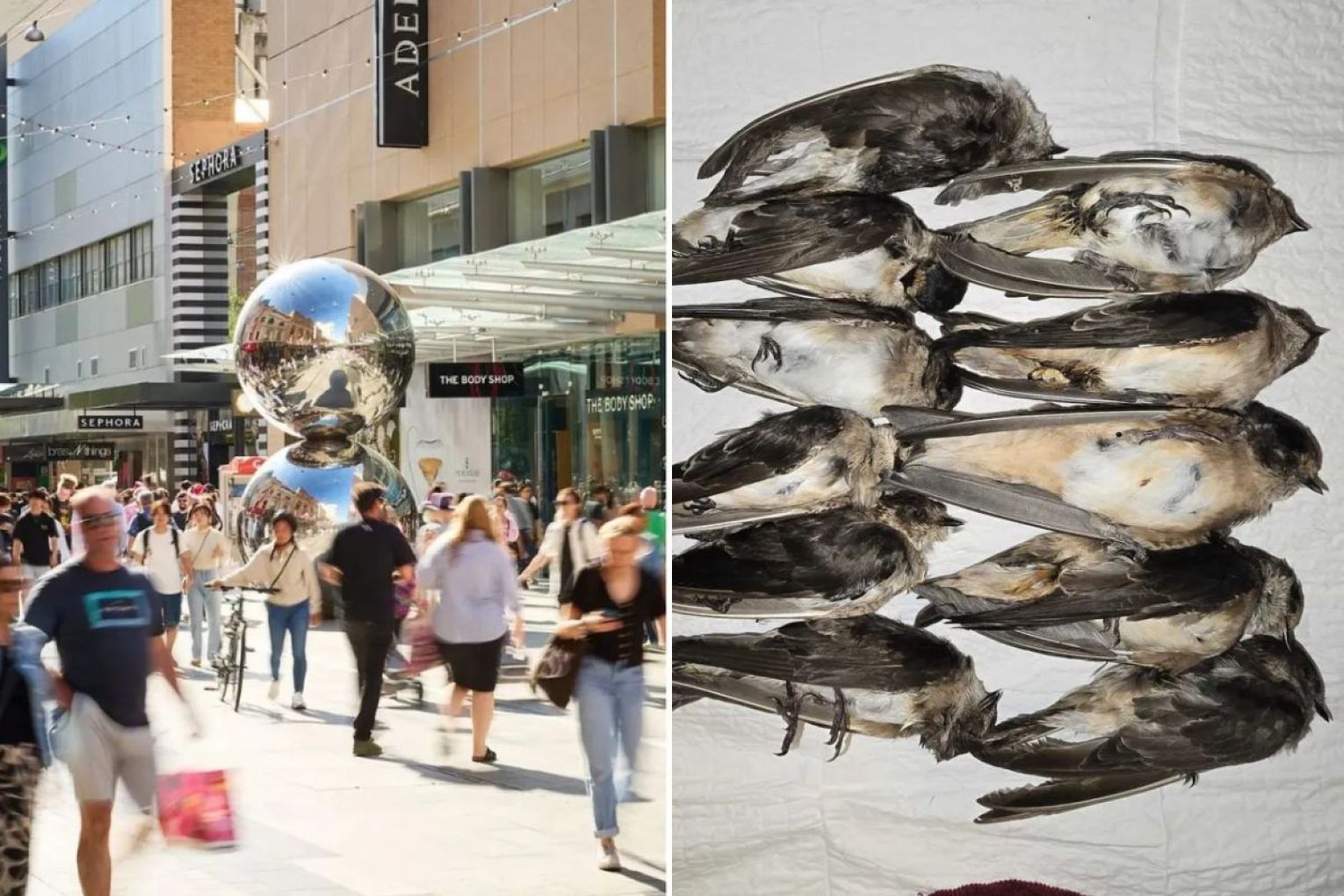
A new report from wildlife hazard management company Avisure has revealed 670 tree martins have died, 256 have been injured and more than 800 have been stunned in the Rundle Mall since December last year.
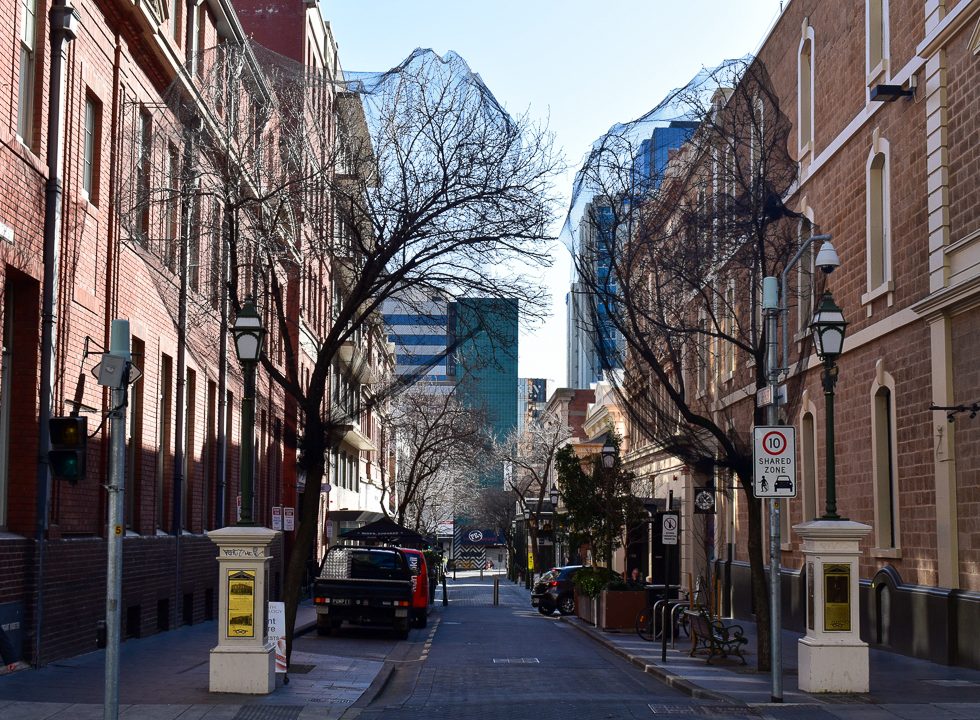
The birds were forced out of their usual home in Leigh Street by the Adelaide City Council after netting was installed over street trees in 2024 following local business owner complaints over bird droppings and disruption to business. This meant the birds could not access the area for the roosting season.
During the 2025-26 roosting season, which runs from December through to May, 1511 individual tree martins were killed, injured or stunned in the evening fly-in period with the first indication of problems emerging in April 2025 when dozens of tree martin bodies were pictured lying alongside the glass-fronted Apple Store in the Rundle Mall.
The report said there were 555 bird deaths recorded with most dying upon impact with 221 hitting shop windows, 160 striking wires, while another 162 died after entering buildings and a further 12 dying from stress related causes.
Daytime hours had its own share of problems, with another 262 birds recorded in the numbers including 115 dead and 83 more injured resulting in transfer to veterinary care.
There was also 847 tree martins that were stunned and immediately released in the six month period.
You might like
For the past decade, tree martins have travelled annually to SA from northern Australia, Papua New Guinea and Indonesia, to roost at sites within the city centre.
In February, more than 20,000 tree martins were counted in Rundle Mall during the peak roosting season, with Avisure managing director Phil Shaw estimating three per cent of the roosting population had died.
“We’ve got a lot of really good data in this first year, but we’re dealing with a species that hasn’t occupied an urban setting like this anywhere in the world before now. So you’re the guinea pigs I’m afraid,” Shaw said.
Adelaide City Council has revealed it spent $362,205 in operational and capital costs during the roosting season, with more than $344,000 allocated for “strategic and operational items” and the remaining $18,000 for the purchase of equipment including tree netting.
The birds first created havoc in popular dining strip Leigh Street in 2024, with council installing tree netting on callery pear trees to prevent bird faeces from affecting businesses following a number of health and safety concerns from traders.
Stay informed, daily
The tree martins then flocked to Chinese Elm trees in Rundle Mall in April of last year, leading to a mass death toll in the popular shopping district when the birds flew in to roost in trees outside Adelaide’s Apple Store.
Businesses including the Apple Store have since installed reflective window films in a bid to reduce the number of birds colliding with the storefront.
The report found the window film increased the visibility of reflective glass surfaces and was “highly effective” in reducing bird collisions with shopfronts and the likelihood of “birds misinterpreting windows as open flight paths or habitat”.
Avisure’s report says the tree martins “generated a range of impacts for nearby businesses throughout the season”, including increased cleaning requirements, odour and amenity issues, business disruptions, additional expenses, customer complaints and impacts on the trading environment.
The council introduced its Tree Martin Management Plan last year to improve safety for birds and traders in Rundle Mall, while improving public hygiene and amenity.
Bird droppings have been cleaned at least twice a day to mitigate associated odours council revealed last night, with City of Adelaide’s director of city shaping Ilia Houridis saying it will “adopt and adapt in a stronger way next season”.
“I think the straightest way that I can put this is on particular days where it gets heavy, it’s a little bit like clearing a bin. It fills,” Houridis said.
“We are there to collect it, but there is a moment where you might get that increased odour.
“The team, I think, was incredibly diligent across what were some 200 days of the season to just actively monitor the site, including smells that weren’t associated with tree martins, so that’s something that we’ve learned from this season.”
Concerns surrounding the potential of H5 bird flu were also raised on Tuesday night, but Houridis said “no birds within the current colony have presented with avian flu” with most cases remaining in coastal species.
Council confirmed it was working alongside PIRSA and Green Adelaide to monitor bird flu risks in the tree martin colony.
Want to see more stories from InDaily SA in your Google search results?
- Click here to set InDaily SA as a preferred source.
- Tick the box next to "InDaily SA". That's it.