CSIRO chief defends job cuts as SA pain continues
The head of Australia’s national science agency is defending mass job cuts as its SA business continues to slash staff.
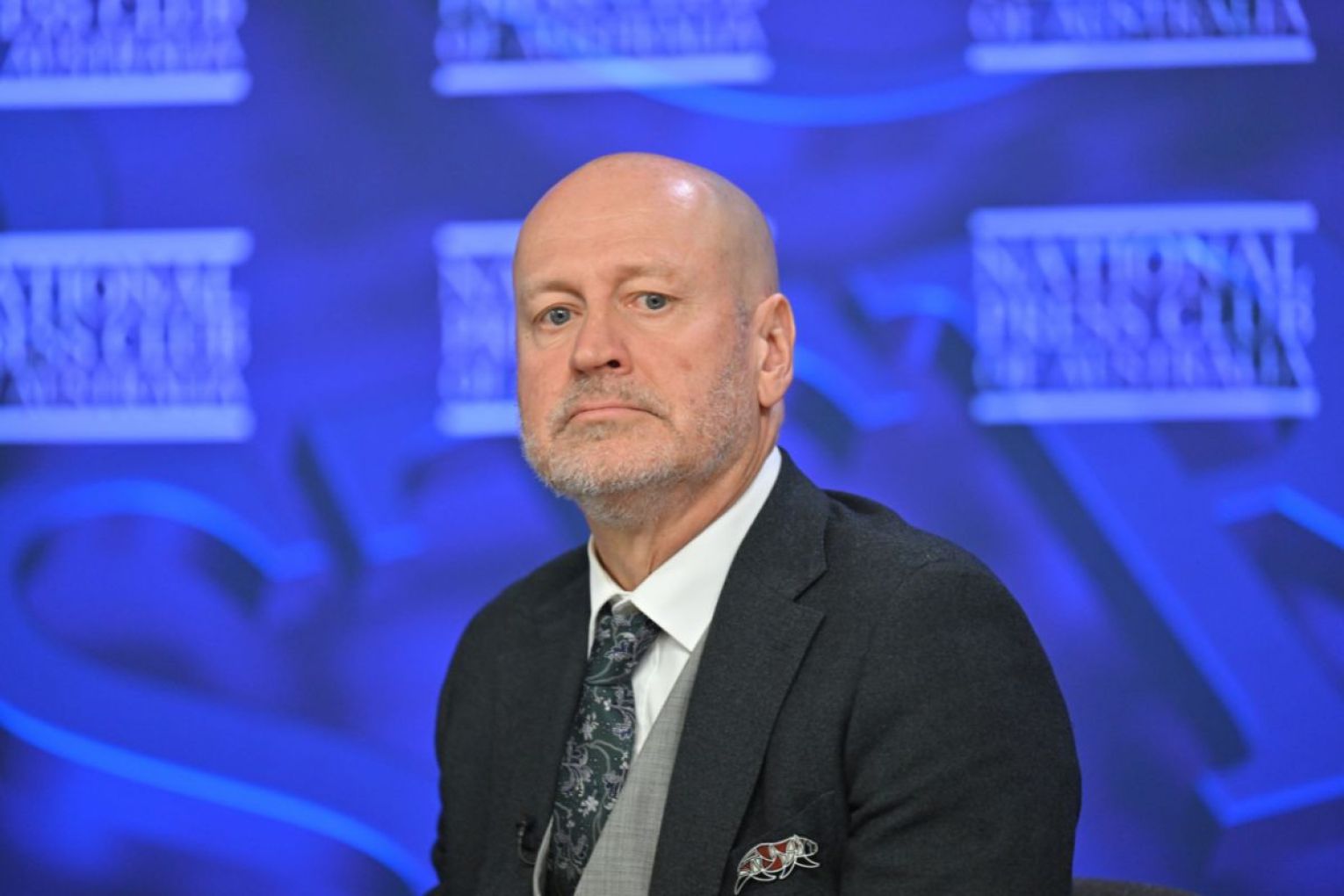
CSIRO chief executive Doug Hilton has defended the organisation’s slashing 350 jobs despite receiving about $387 million in federal government funding, in his address to the National Press Club on Wednesday.
A CSIRO spokesperson told InDaily figures could not be provided on how many staff would be lost from SA operations because the process was not complete.
“The impacts to these roles may take the form of early cessation of term contracts, redundancies or redeployment,” the spokesperson said.
“Until this process concludes, we cannot provide a specific number by location.”
SA researchers were behind the CSIRO Total Wellbeing Diet, and nationally researchers were behind inventing wi-fi, plastic bank notes, extended wear contact lenses, Aerogard and the Hendra Virus vaccine for horses.
Currently, the CSIRO – which is marking 100 years of operations in 2026 – employs about 250 people in South Australia across its research units and enterprise support roles, the spokesperson said.
You might like

In his address to the National Press Club in Canberra today, Hilton said the organisation faced a sobering repairs backlog and that his leadership team chose to exit some areas of science and narrow its focus rather than risk “doing nothing at scale”.
About 1150 staff had been cut from the CSIRO since 2024, according to the Community and Public Sector Union.
The Union’s CSIRO staff association secretary Susan Tonks said Hilton needed to “stop the games, rule out further CSIRO job cuts, commit to genuine consultation with staff and start the process of rebuilding trust and confidence”.
Asked about the “level of nervousness” among staff on Wednesday, Hilton said he understood job cuts were “devastating”, but he thought the organisation had “turned a corner”.
“I don’t want to overstate that, but I think we can provide that stability to staff, but also allow them to work in buildings and facilities that are modern, similar to those that are being worked in by their peers in China and the U.S. and Europe, I want that for Australian science,” Hilton said.
Since taking the CSIRO top job in 2023, Hilton said he faced challenges of “funding and a capital budget that had not kept pace with inflation, aging and sprawling infrastructure, and the rapidly escalating costs of doing science”.
Stay informed, daily
More than 80 per cent of CSIRO’s 800 buildings were no longer fit for purpose, he said.
“Over the past two years, the difficult choices we’ve made at CSIRO have been scrutinised, as they should be,” Hilton said.
“To chart a new course into unfamiliar terrain…we’re going to need to make uncomfortable, sometimes invidious decisions that will impact the way we work, the things we value, and the communities of which we’re a part.
“After holistically reviewing all of our science for the first time in many years, we made the choice, the hard choice, to exit some areas of science and narrow our focus in others rather than tip pruning and running the risk of doing nothing at scale.”
The science agency first revealed up to 350 research positions would be slashed in November.
Originally, almost half of those jobs were expected to come from the agency’s environmental research unit, which includes climate adaptation science.
A spokesperson told InDaily today the CSIRO had made research staff reductions across its agriculture and food, environment, health and biosecurity and mineral resources research units.
“It has meant saying no to some great ideas. It’s meant scaling back or stopping work that talented people have devoted their careers to, and care deeply about. It’s had a profound impact on staff, their teams, their families, and in some cases, communities,” Hilton told the National Press Club.
“Those impacts are real, and they can’t ever be underestimated.
“But despite these difficult choices, what fills me with incredible optimism is that CSIRO is full of researchers with passion, creativity, and conviction… If we can provide them with a safe, secure, and cutting-edge facilities, they will succeed.”
Hilton said the CSIRO’s funding injection of $387 million in the last federal budget, “places us for the first time in decades on a path to recapitalisation”.
He said the funding would go towards “well overdue” repairs, management, and aging IT systems.
The CSIRO would also upgrade its “nationally significant facilities”, including a $1 billion leading Australian Centre for Disease Preparedness based in Geelong, which is at the forefront of H5 bird flu testing.
Want to see more stories from InDaily SA in your Google search results?
- Click here to set InDaily SA as a preferred source.
- Tick the box next to "InDaily SA". That's it.