US launches fresh strikes as blockade of another key oil route declared
The US military is carrying out its 10th consecutive night of strikes on Iran in a push to reopen the Strait of Hormuz.
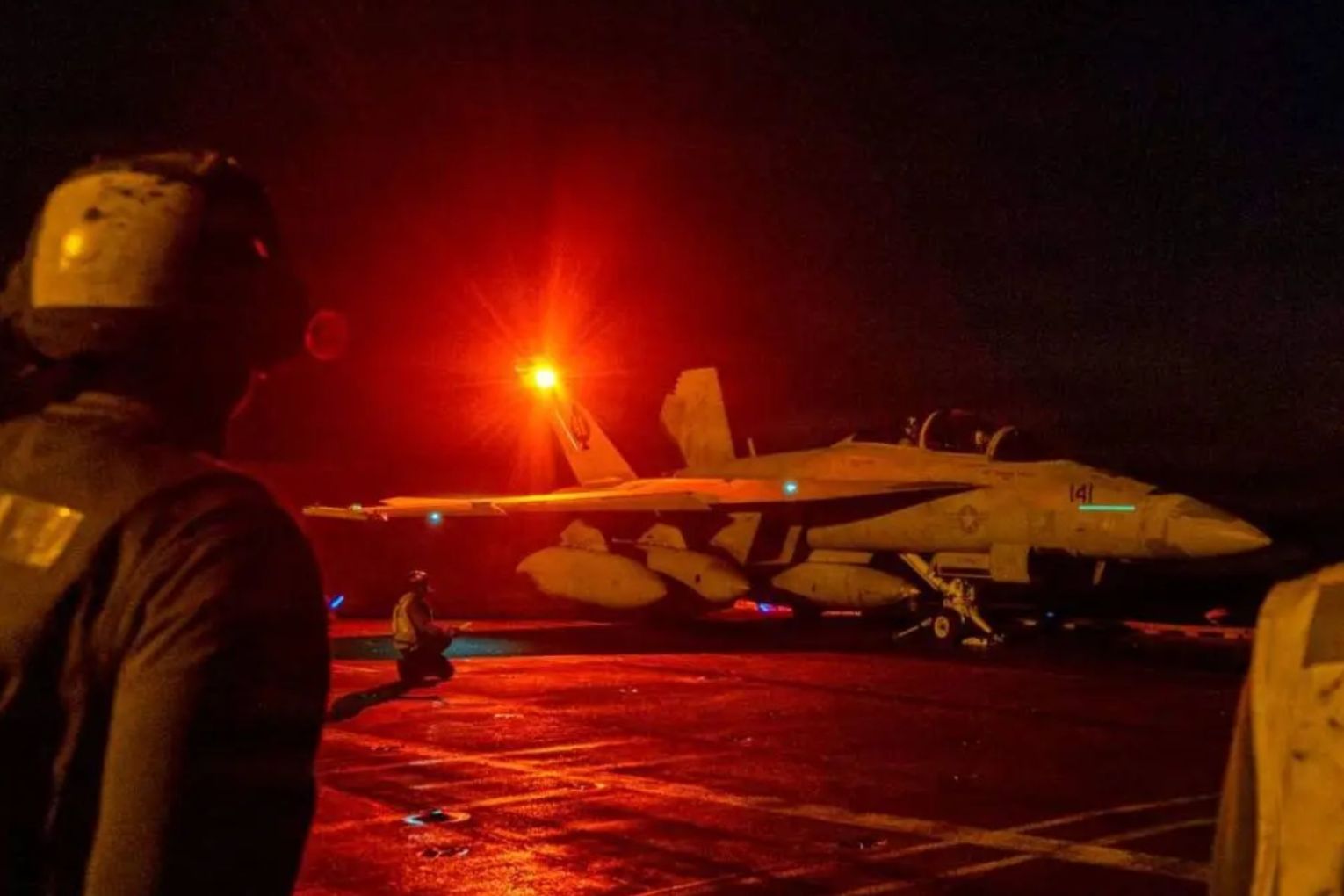
The US military has launched a 10th round of strikes against Iran, saying the attacks were aimed at degrading Tehran’s capability to target commercial shipping in the Strait of Hormuz.
US Central Command (CENTCOM) said on X the strikes began at 11.30pm local time in Iran on Monday (Tuesday AEST).
CENTCOM said the latest strikes “are designed to further degrade Iranian military capabilities used to attack commercial shipping” in the strait.
It did not disclose the specific targets.
The strikes have escalated as the US and Iran vie for control of the crucial Strait of Hormuz shipping route, with Tehran retaliating by launching attacks on American allies Kuwait, Jordan and Bahrain.
You might like


President Donald Trump earlier warned on social media that “Every time Iran kills an American Soldier they will pay for that killing many times over!”
Meanwhile, Yemen’s Houthi rebels said they will impose a naval blockade on Saudi Arabia, opening a potential new front against the US in its war with Iran and raising the threat to global energy supplies and trade.
The Iran-aligned Houthi movement made their announcement despite signs that Iran and the United States want to resume diplomacy to halt a worsening cycle of attacks that has all but wrecked a fragile interim agreement signed last month.
Iran’s foreign ministry said mediators had presented “proposals” to Iran, signalling that diplomatic contacts remain active but gave no details.
Stay informed, daily
Oil prices rose briefly after the Houthi statement but later fell back as traders held out hope of a diplomatic breakthrough.
The insurance cost of shipping goods through the Red Sea rose on the increased risks for merchant shipping.
Iran had been pressing the Houthis to close the Bab el-Mandeb gateway to the Red Sea if the US continued to attack Iranian power infrastructure.
The full closure of the Bab el-Mandeb strait would reduce global oil supply by seven per cent as it would leave most of Saudi oil exports unable to leave the region.
The disruption would add to the huge cut to oil flows from the war in the Gulf, which has already reduced shipments by 10 per cent of global supply.
In their statement, the Houthis’ armed forces said they were declaring “a maritime embargo against the criminal Saudi enemy, based on the equation of ‘an eye for an eye’, effective immediately” in response to what they called “an unjust and oppressive siege” imposed on Yemen by Saudi authorities.
A senior Iranian official told Reuters that Iran had received a proposal from mediators for a 10-day ceasefire in efforts to salvage the interim deal, intended to pave the way to a lasting agreement to end the war that began on February 28 with US-Israeli attacks on Iran.
Neither the ministry nor the official who spoke to Reuters gave any details on the putative ceasefire discussions.
Two Pakistani government sources said separately that Iranian Interior Minister Eskandar Momeni had asked Pakistan to resume its mediation role in the conflict.
He later arrived in Islamabad for further talks.
-with AP and DPA
Want to see more stories from InDaily SA in your Google search results?
- Click here to set InDaily SA as a preferred source.
- Tick the box next to "InDaily SA". That's it.