Australia’s best beaches you may never have heard of
Lonely Planet has compiled a list of some of Australia’s most stunning beaches – including some you may have never heard of.
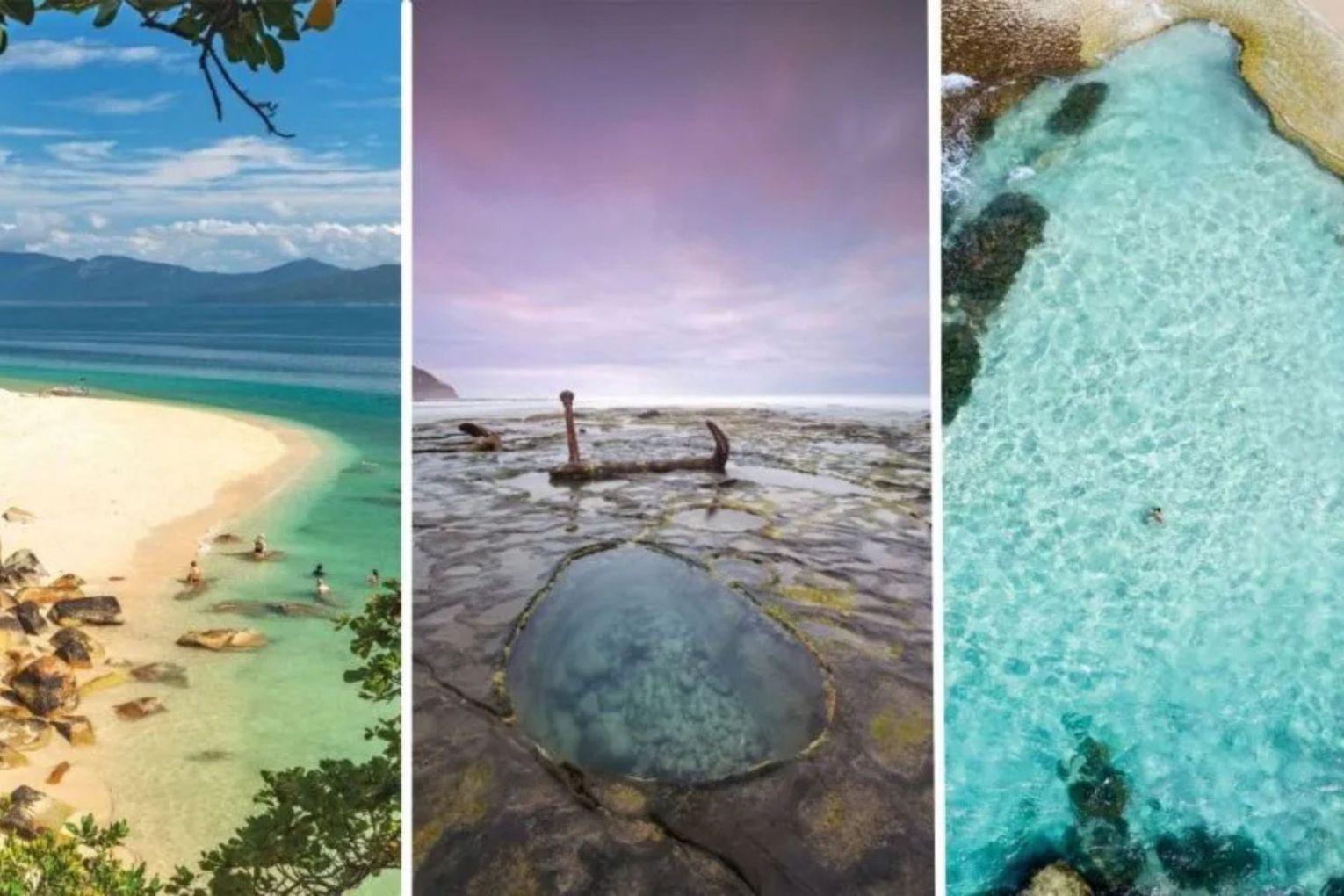
Dreaming of a beach holiday, minus the crowds? Then we have some options for you.
Travel publisher and all-round information hub Lonely Planet has compiled a list of some of Australia’s most stunning beaches.
But, head beyond Bondi and the Gold Coast, because these fabulous beaches fly under the radar – and many you are unlikely to have ever heard of.
1. Nudey Beach, Fitzroy Island, Qld
It might surprise first-time visitors to this Great Barrier Reef gateway hub to discover that Cairns is not a beach destination – its muddy foreshore is more popular with coastal birds. But with Fitzroy Island on its doorstep, it doesn’t need to be.
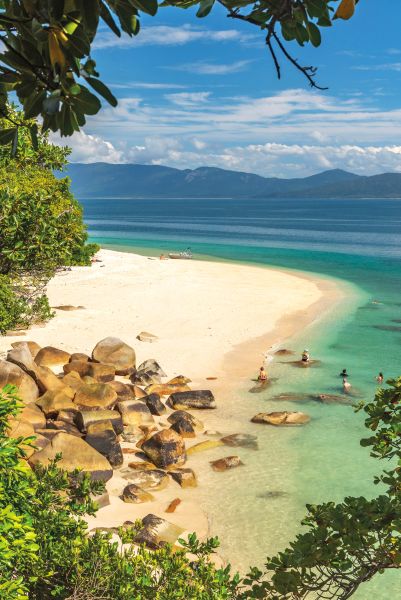
Despite its name, Nudey Beach is not clothing optional. Photo: Lonely Planet
The island, which is a national park, offers a classic tropical‐island experience just 45 minutes from Cairns.
Ferries arrive at Welcome Bay, where a 1.2 kilometre-return shaded rainforest track leads to small, undeveloped Nudey Beach which, despite its name, isn’t clothing‐optional.
Bookended by granite boulders, with turquoise water lapping its crunchy white‐coral sand, the setting is sublime. There’s good snorkelling off the northern end of the beach, with pretty patches of hard and soft corals visited by angelfish, butterflyfish, parrotfish and wrasses, along with the odd green turtle.
Getting there: The Fitzroy Flyer ferry runs three daily services between Cairns and Fitzroy Island. There is a resort with two restaurants and a campground on the island.

The wrecked SS Maheno is a highlight of the drive along 75-Mile Beach.
2. 75-Mile Beach, Great Sandy National Park, K’Gari, Qld
Spanning the east coast of the island national park of K’gari (formerly Fraser Island), 75 Mile Beach is one of Queensland’s wildest coastal frontiers.
Stretching over 120 kilometres, it’s a sand highway, a living museum, a free‐range zoo and a beach‐fisher and camper’s nirvana rolled into one.
Look out for wild dingoes as you drive north (4WD essential) along the honeycomb‐hued beach in search of attractions, such as the rusting wreck of the SS Maheno, washed ashore in 1935.
Unpredictable ocean currents and marine life make the freshwater Eli Creek and the natural rock pools (the Champagne Pools) the safest spots for a swim, and with nine camping zones, there is no shortage of scenic spots to pitch a tent. Respect the island’s Butchulla Traditional Custodians – and the next island visitors – and leave no trace of your adventure.
Getting there: A car ferry shuttles between Inskip Point and the southern tip of K’gari from 6am to 5pm daily (10 minutes). Another makes three daily trips between River Heads, just south of Hervey Bay, and Kingfisher Bay Resort on K’gari’s west coast.
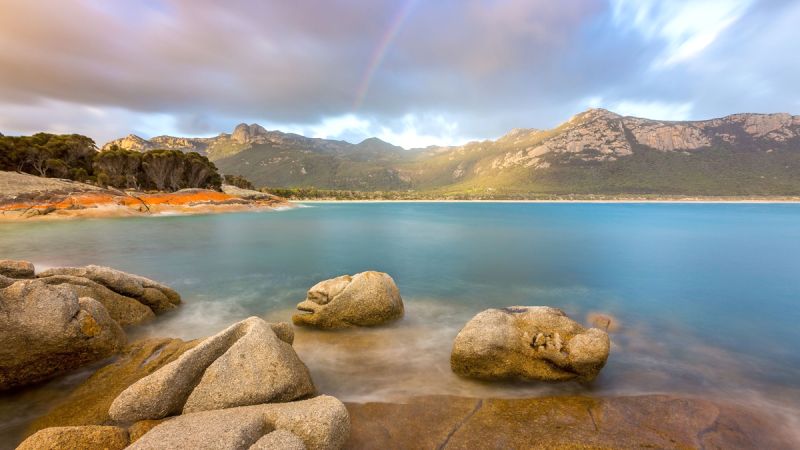
A rainbow over the very special Trousers Point Beach on Flinders Island. Photo: Tourism Tasmania/Dietmar Kahles
3. Trousers Point Beach, Flinders Island, Tas
You might like


More than 100 beaches have been scalloped out of the rugged coastline of Flinders Island, the largest island in the Furneaux Group off the north-east coast of Tasmania.
There’s something extra special about “Trousers”, which is sheltered from the prevailing westerly wind and backdropped by the hulking granite peak of Mount Strzelecki.
The shallow waters surrounding Flinders Island mean the water is warmer than you might expect at this latitude, and there’s good snorkelling around the picturesque headland.
On the foreshore you’ll find toilets, a campground, and the trailhead for the two-kilometre return Trousers Point coastal walk, one of Tasmania’s 60 Great Short Walks.
Getting there: Trousers Point Beach is 18.5 kilometres south of Whitemark, the island’s main town. A weekly car ferry runs between the island and mainland Bridport and takes about eight hours. Charter flights from Bridport take about half an hour.
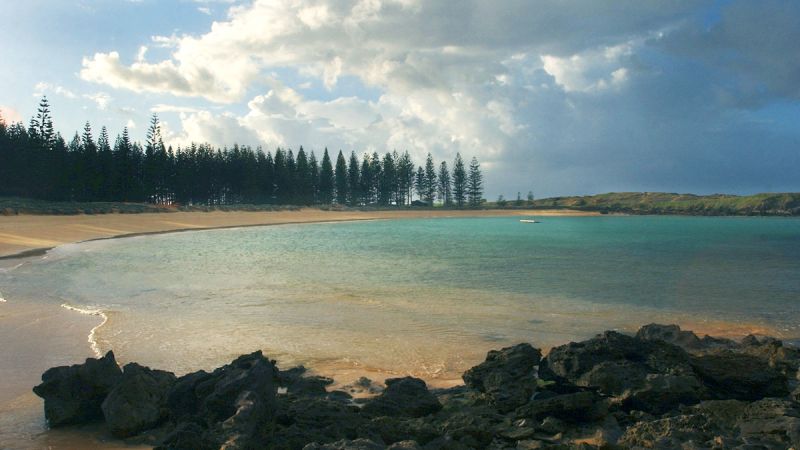
Emily Bay on tiny Norfolk Island, which shares its latitude with Byron Bay. Photo: AAP
4. Emily Bay, Norfolk Island, NSW
At first, this small Australian island looks like a chunk of New Zealand’s bucolic North Island that has broken off and drifted 1100 kilometres north.
But tiny Norfolk Island is vividly, defiantly, more than just a mini‐me of its two largest neighbours. For one thing, its history reads like an epic adventure tale: From the seafaring Polynesian settlers to two brutal convict eras, to the arrival, in 1856, of 194 Pitcairn Islanders descended from HMS Bounty mutineers and their Tahitian families.
Ringed by high volcanic sea cliffs and surrounded by deep ocean trenches and undersea mountains, Norfolk Island is also ruggedly natural. It all comes together at Emily Bay. One of the island’s best swimming beaches – and picnic spots – just happens to be within
the Kingston UNESCO World Heritage Site, surrounded by Norfolk Marine Park.
You can swim in water that’s as clear as a glacial stream but warm year round, because Norfolk is at the same latitude as Byron Bay in northern NSW. The sandy beach isn’t patrolled, but low headlands partially enclose the bay, keeping its waters calm and family friendly.
Swim out a little way and you can even snorkel over a coral reef, though the snorkelling is arguably better at neighbouring Slaughter Bay (which is more inviting than its name).
Getting there: Norfolk Island is 1400 kilometres east of Byron Bay. Flights to the island depart from Brisbane/Meanjin, Sydney/Warrane and Auckland. Emily Bay is less than 10 minutes’ drive from the main township of Burnt Pine (be mindful of the island’s cows, which have right of way).

Beautiful but dangerous Childers Cove Beach on Victoria’s south-western coast. Photo: Lonely Planet
5. Childers Cove, Great Ocean Road, Vic
Like a pot of gold waiting at the end of a rainbow, Childers Cove is a secluded spot just before the end of Victoria’s famed Great Ocean Road driving route.
From the small carpark at the top of the escarpment, steep wooden steps descend to a narrow crescent of sand bookended by hulking cliffs that thrust towards Bass Strait.
When the tide is out, you can poke around in the rock pools, but swimmers should be wary. A combination of a shallow beach, which drops off suddenly at the cove’s entrance, and the encircling cliffs mean the cove is home to a near‐constant rip. There are no facilities onsite and the beach is not patrolled.
Childers Cove was the scene of one of Victoria’s most tragic wrecks when the ship Children lost direction in hurricane‐force storms and smashed into the cliffs. Salvaged items, including an anchor, cannon and bricks, can be seen at Flagstaff Hill Maritime Museum and Village in Warnambool.
Getting there: Childers Cove is in Nirranda, about 25 minutes east of Warrnambool by car. On the way there, you’ll also pass Sandy Cove, where you can see a trio of limestone stacks just offshore.
6. Wreck Beach, Great Otway National Park, Vic
Descending the 366 steep steps from the cliffs down to Wreck Beach is a gamble. At high tide you’ll find just a short belt of sand and heaving surf, with nowhere to go but back the way you came.

Wreck Beach is another stunning, but unswimmable, delight on Victoria’s Great Ocean Road. Photo: Lonely Planet
But time your visit for low tide and you’ll discover an abundance of history in the rock pools. In the mid‐19th century, decades before concrete was first poured on Victoria’s Great Ocean Road, this infamous stretch of shallows and hidden reefs was feared among sailors, who dubbed it the Shipwreck Coast.
Today, stories of ruin and survival are scattered like flotsam from Anglesea to Port Fairy, including the remains of two shipwrecks at Wreck Beach.
The steep staircase leads down to two kilometres of beach backed by a natural amphitheatre of wind‐buffered golden cliffs. There are no facilities, and the rough surf makes the water unsuitable for swimming.
Getting there: Wreck Beach is a three‐hour drive from Melbourne along Great Ocean Road. From the car park, a short bush trail leads to a staircase to the beach.

Take the weight off with a night at the campground at Blanket Bay, a favourite on the Great Ocean Walk. Photo: Lonely Planet
7. Blanket Bay, Great Otway National Park, Victoria
Even more scenic than Victoria’s Great Ocean Road is the Great Ocean Walk, a 110-kilometre hiking route hugging the wild and dramatic coastline between Apollo Bay and the Twelve Apostles.
For many hikers, Blanket Bay is a favourite stop. Framed by the forested hills of Great Otway National Park, it is a small blond beach with an intertidal reef that makes its shallow waters safer for swimming than many other beaches on this treacherous coast, but always take care.
It also has rock pools to investigate, and views along the rugged coastline to lap up.
Stay informed, daily
But you don’t need to hike in to enjoy this spot, as there’s an access road and a day‐use area next to the beach.
Blanket Bay’s basic campground also ranks among the best on the Great Ocean Walk, popular for its protected location, proximity to the beach and pretty setting fringed by ferns.
Getting there: Blanket Bay is 232-kilometre or a 3½‐hour drive from Melbourne. The final six kilometres is a 2WD‐accessible dirt road.
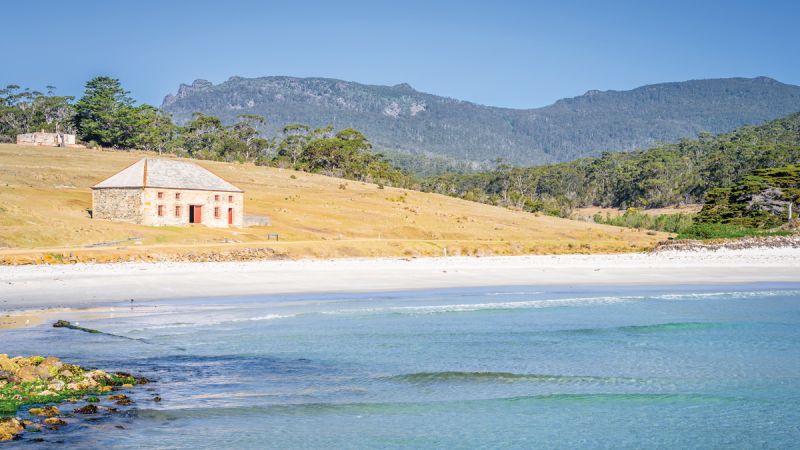
Once an unhappy home to convicts, Hopground Beach is full of history. Photo: Lonely Planet
8. Hopground Beach, Maria Island, Tas
Protected by the surrounding Maria Island National Park, 115.5-square-kilometre Maria Island has many beautiful beaches.
Given there’s a hulking quartet of concrete silos rising up from the northern end of Darlington Bay, not everyone would immediately pick Hopground Beach as the island’s best. But its prime position, surrounded by history and wildlife, gives it an edge.
A less subtle relic of the island’s history is the Darlington Probation Station, a convict settlement founded in 1825. Now a World Heritage-listed convict site, the settlement’s 14 intact buildings and ruins are just a short walk from the beach, where ferries arrive from the mainland.
The silos are the legacy of Italian entrepreneur Diego Bernacchi, who secured a long‐term lease of the island in 1884, planted a vineyard on the sloping hillside above Darlington Bay, and set up a cement works to use the island’s limestone deposits. Bernacchi’s island business empire eventually went belly‐up, with the silos left standing as reminders of his ambitious pursuits.
Getting there: Maria Island is a 45‐minute ferry ride from Triabunna, which is 86 kilometres or a 75‐minute drive north-east of Hobart.
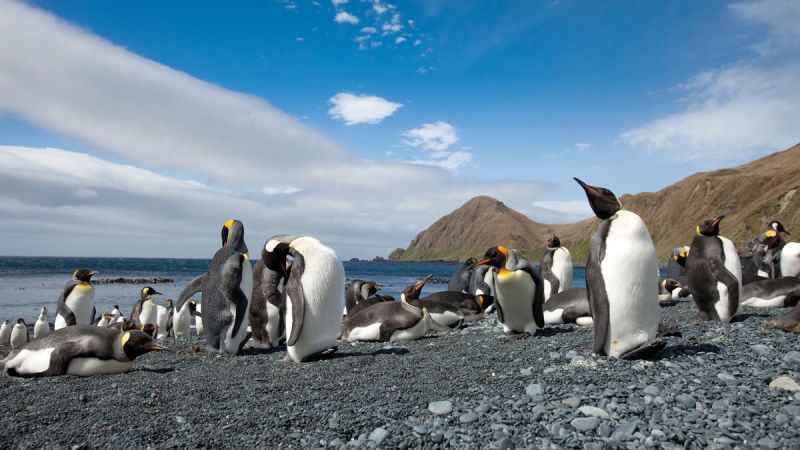
It’s not exactly your typical sandy beach, but Macquarie Island’s Landing Beach is still magnificent. Photo: Lonely Planet
9. Landing Beach, Macquarie Island, Tas
There is no squeaky white sand. The water is hypothermically cold. It’s likely to be raining or blowing a gale. But Landing Beach is one of Australia’s best for other reasons, like the sheer magnificence of its Southern Ocean location, its mountains – the island is an uplifted undersea mountain range – and the astounding abundance of wildlife that envelops you as soon as you step ashore.
This World Heritage-listed wildlife sanctuary is home to countless fur seals; as many as four million penguins – kings, royals, gentoos and rockhoppers; and up to 90,000 elephant seals, great boulders of flesh that roar at each other on the beach itself.
Then there are its estimated 3.5 million seabirds, including skuas and giant petrels that accompany you like feathered drones as you wander the island’s rocky paths. It’s no wonder Antarctic explorer Sir Douglas Mawson described this little island as “one of the wonder spots of the world’.
Getting there: Macquarie Island is 1500 kilometres south-east of Hobart. The only way to get there as a tourist is to join a small‐ship expedition cruise run by operators such as Aurora Expeditions or Heritage Expeditions, departing from Hobart, or Dunedin in New Zealand.
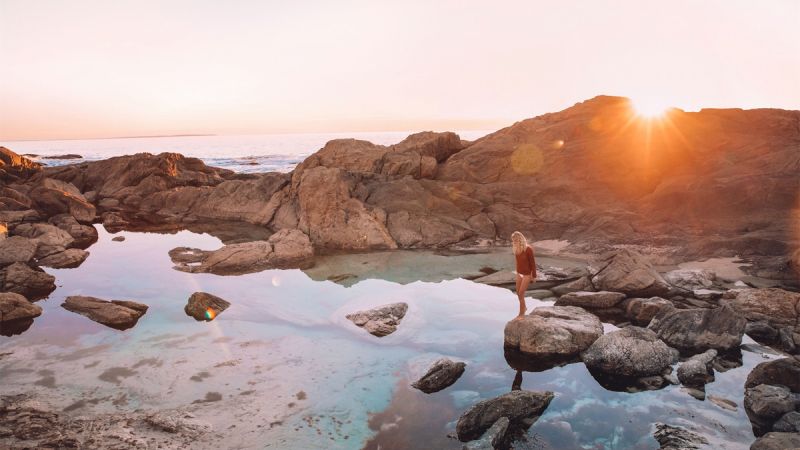
Greenly beach offers its own kind of wild paradise. Photo: Ben Goode
10. Greenly Beach, Coulta, Eyre Peninsula, SA
Lashed by the Southern Ocean’s squall, Greenly Beach is a wilder kind of paradise tucked along the Eyre Peninsula’s west coast beach crawl.
A refuge for solitude‐starved surfers, its waves peel off a central reef, offering the first consistent swell north of Coffin Bay.
Back on shore, soft sand and salt‐washed pools make for cool
plunges and envy‐inducing photos. Flanking the dunes, sandstone
bluffs crumble to the sea, carving calm recesses for patient anglers
to await nibbles from Australian salmon, trout, mullet and the odd Tommy Ruff (Australian herring).
Greenly Rock Pool, at the beach’s northern edge, is a natural saltwater spa, refreshed twice daily by the turquoise tide. Just south, no‐frills campsites overlook the beach, delivering front‐row seats to raw coastal sunrises.
Getting there: Greenly Beach is 638 kilometres west of Adelaide, the journey looping around the St Vincent and Spencer Gulfs via the Lincoln Highway. The nearest town, Coffin Bay, is 42½ kilometres south of the beach – about a 35‐minute drive.
11. The Basin, Rottnest Island, WA
A three‐minute cycle (or 10‐minute walk) from Thomson Bay, Rottnest Island’s main township, and even closer to its campground, The Basin elliptical lagoon carved into the limestone reef is one of the island’s most beloved natural swimming pools.
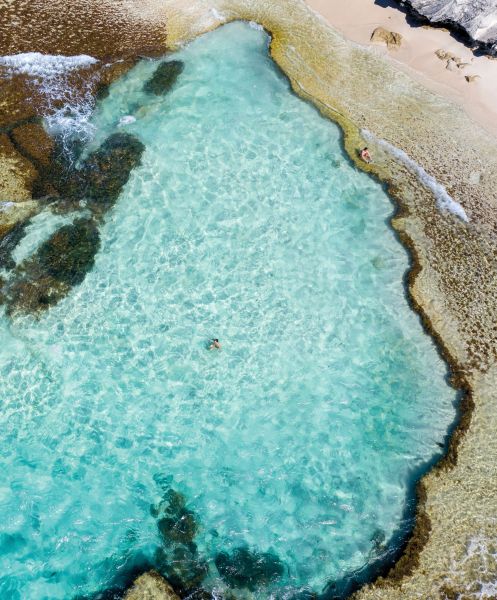
The Basin is a highlight of the already delightful Rottnest Island. Photo: Lonely Planet
Its north‐facing position protects it from strong swells, providing ideal conditions for snorkelling and leisurely swims (though keep an eye on kids at this unpatrolled spot). Its reef is home to a swirling symphony of marine life, from blue‐barred parrotfish to western buffalo bream and the striped stingaree, a small species of stingray.
You’ll also find newly refurbished outdoor showers, barbecues and toilet facilities.
Getting there: Multiple daily ferries connect Rottnest Island with Fremantle (25 minutes), Perth (90 minutes), and Hillarys
(45 minutes).
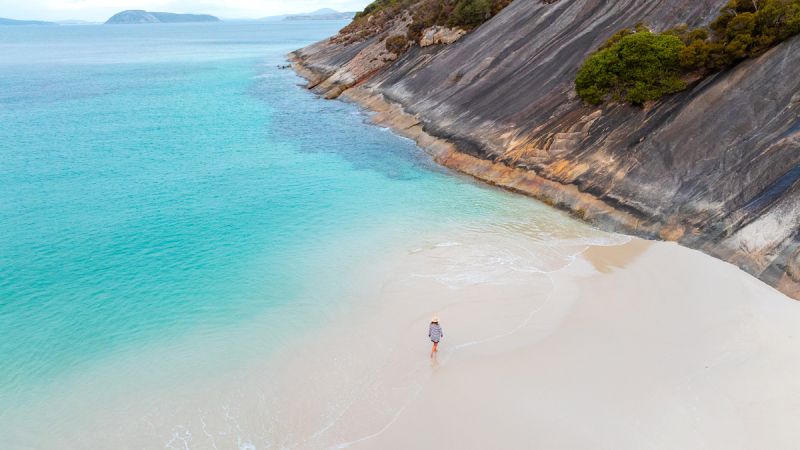
Misery Beach is anything but – and was named the country’s No.1 beach a few years ago. Photo: Tourism Western Australia
12. Misery Beach, Albany/Kinjarling, WA
Lapped by the glassy waters of King George Sound, this secluded ribbon of powdery white sand on the traditional lands of the Menang people feels like a hidden paradise.
It wasn’t always this way, having been named for the stinking whale remains dumped here by a nearby whaling station that operated until 1978. Today, the only splashes of red come from the crimson‐streaked sky above the tranquil bay at dusk.
Misery Beach’s allure is no longer a secret: In 2022 it was named by the national tourism board as Australia’s best beach. Protected from the Southern Ocean’s wild swells, the 200-metre bay offers calm waters for swimming and snorkelling. The surrounding granite outcrops create natural windbreaks, making it an ideal spot to linger with a picnic or take in the stillness. Be on the lookout for its resident seals, dolphins and migratory whales.
Getting there: Misery Beach is 22 kilometres or a half-hour drive south of Albany in Torndirrup National Park. There’s a small car park, with a short walk to the beach. There is no public transport.
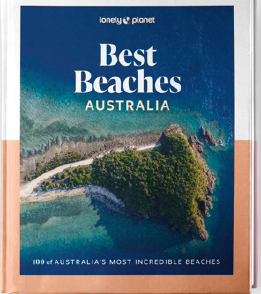
Information taken from Lonely Planet’s Best Beaches Australia.
Want to see more stories from InDaily SA in your Google search results?
- Click here to set InDaily SA as a preferred source.
- Tick the box next to "InDaily SA". That's it.