State Govt commits $674m in family violence commission response
The Premier today announced a multimillion-dollar funding package to address South Australia’s “scourge” of domestic violence in response to the state’s landmark Royal Commission report. Read how the money will be spent.
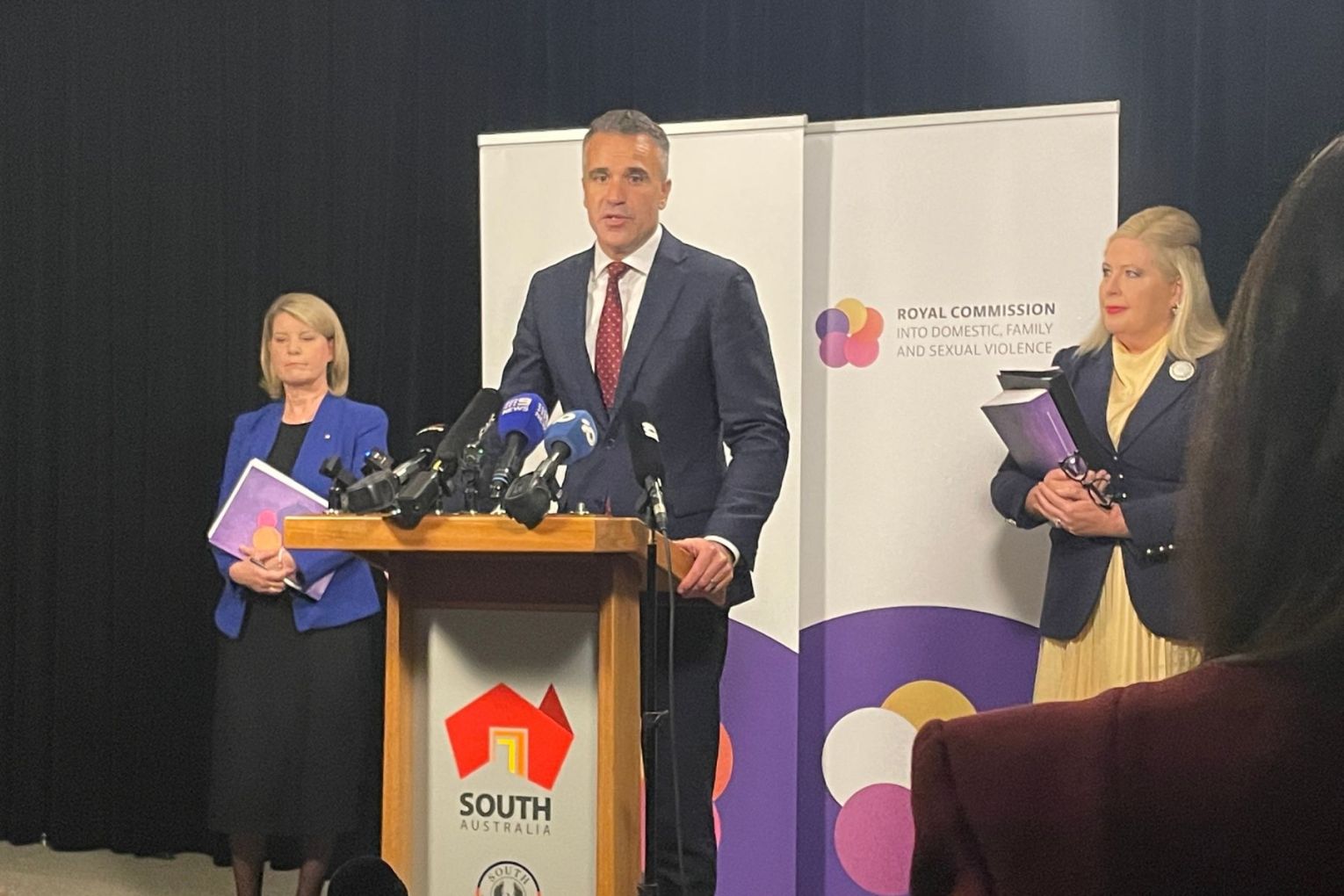
The state government has committed $674 million over 10 years to address the state’s “scourge” of domestic, family and sexual violence raised in a landmark Royal Commission, Premier Peter Malinauskas announced today.
Among a raft of responses, a new service within SA Police will be created to elevate domestic, family and sexual violence with a dedicated Assistant Commissioner to be appointed and more than 100 full-time employees added by 2031-32.
“$674 million is a significant budget commitment, but it is one that will deliver significant dividends in protecting South Australians,” Malinauskas said.
“Domestic violence is a scourge. The report delivered by Royal Commissioner Natasha Stott Despoja sets a clear roadmap for us to act.
“As a government, we have carefully considered the recommendations and set about developing a comprehensive response.”
The commission – headed by Natasha Stott Despoja AO – handed down 136 recommendations in August, with seven committed to by the state government at the time.
You might like

The state government has committed to implementing 129 of the 136 recommendations in full and accepted four others “in principle”.
With its recommendations, the Royal Commission did not put a price on implementing them – when asked in August how much the commission was seeking, Stott Despoja said, “I can’t put a dollar on it, and that’s not the role of this commission”.
To start with, the state government said it would allocate further funding to the state’s existing domestic violence crisis line and establish a 24/7 central telephone and digital support line to access trauma-informed care and connect callers with specialist support services.
A new website will also be created for domestic, family and sexual violence information, including the nature, drivers and impact of it and access to support services.
It will also develop a strategy dubbed “SAFER” – SA Framework for Evaluating Risk. This would identify, evaluate and manage risk, especially to children and young people, and be used by SAPOL, child protection and family support systems.
Domestic, Family and Sexual Violence Minister Katrine Hildyard said the government had an “ambitious vision to reduce domestic, family and sexual violence” and that the approach would be “sustained, collective and focused”.
Stay informed, daily
“Domestic, family and sexual violence is a challenge for our whole state and advancing impactful change through the Royal Commission roadmap will require every agency of government, every sector and every community, and we invite everyone to play their part in the generational task ahead,” she said.
“Together, and only together, we will make a difference.”
More than 5000 people informed the work of the Royal Commission, spotlighted in a secondary document dubbed ‘Voices’ with stories from victim-survivors alongside its main report and recommendations.
When asked about the government’s response earlier on Friday morning, Liberal Leader Ashton Hurn said she would have more to say once she had seen the detail but “we support the government’s view on this”.
She was asked specifically about a recommendation to ban parents “smacking” children, which the Premier has said he would not adopt.
“We do think it’s a bit of an overreach for government to get too involved in what’s going on in family households,” Hurn said.
“Of course, we do need to do more to address family and domestic violence. More broadly, we’ll be very interested to see what the government has to say.
“I wouldn’t smack my child, but ultimately, we don’t think that government should interfere too much in what happens in the family household, that’s something that the family should be focused on.”
The state government has only rejected three of the 136 recommendations handed down, relating to the reasonable chastisement defence – a legal defence where parents may use moderate force to discipline children. The state government said the reccomendations they would not implement were matters for the courts.
Want to see more stories from InDaily SA in your Google search results?
- Click here to set InDaily SA as a preferred source.
- Tick the box next to "InDaily SA". That's it.