Scathing inquiry findings put SA uni consultancy spends under spotlight
A damning Senate inquiry into Australian universities has found systematic governance failures, an insecure work environment and declining education standards across the country. Its report also revealed the multimillion-dollar cost of consultants at SA unis.
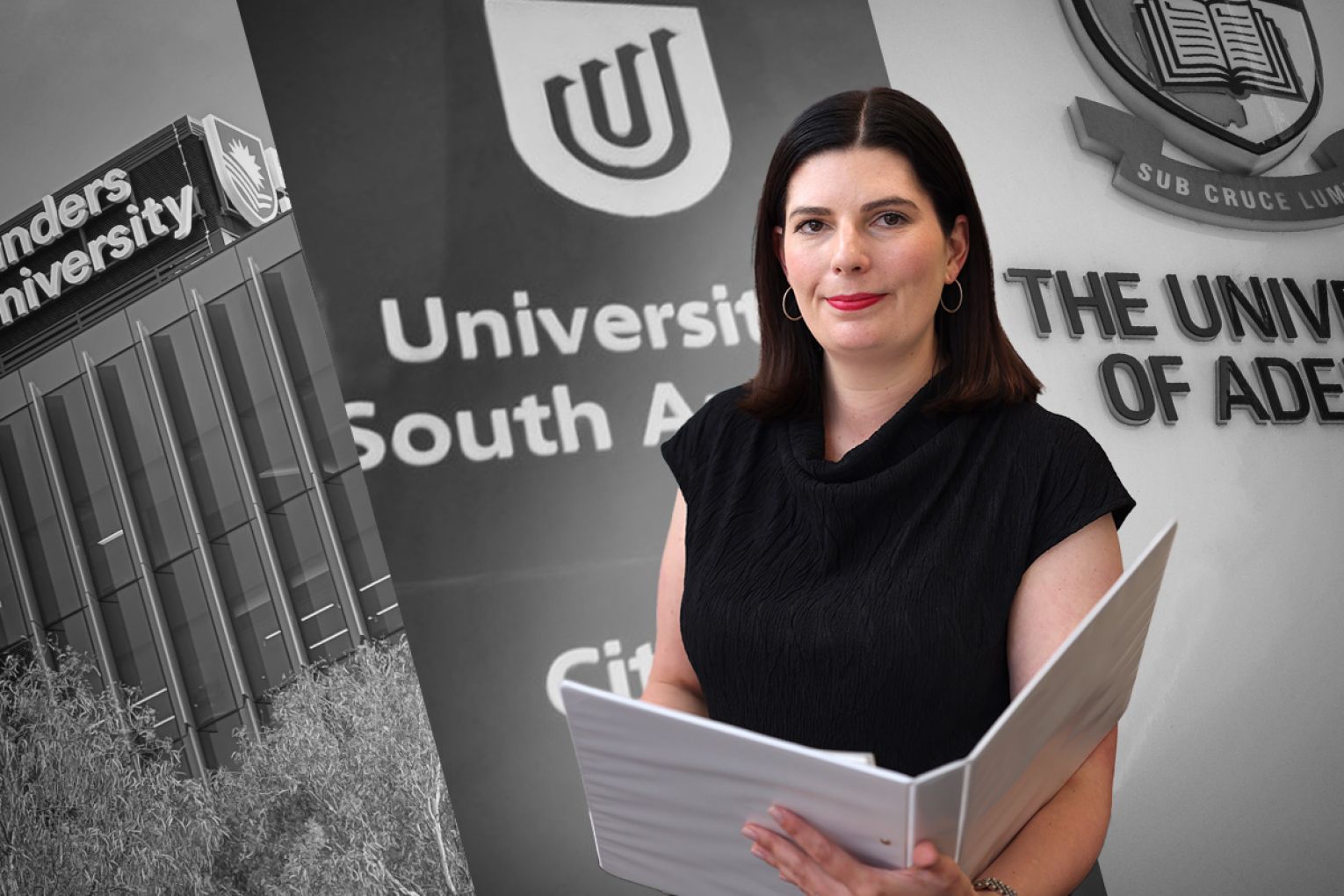
The Senate Education Employment Legislation Committee tabled its scathing, 183-page Final Report into the Quality of Governance at Australian Higher Education Providers yesterday.
A total of 346 submissions, including 81 from higher education providers and peak bodies in the university sector, were sent to the committee that conducted five public hearings across Australia.
According to the report, “[v]arious participants raised concerns about consultancy spending at Australian universities”, saying concerns were raised over a lack of public clarity about the nature of consultancy expenditure in evidence provided to the committee.
The report said Australia Institute data found that the University of Adelaide spent $35.5 million on consultants and specialist services in 2023, while the University of South Australia spent $83 million on “external services”.
It heard of “troubling evidence of a ‘revolving door’ between universities and major consulting firms, creating real and perceived conflicts of interest” including during the creation of Adelaide University, when Deloitte’s Asia-Pacific CEO sat on the University of Adelaide council, with Deloitte later being appointed as the integration partner for the university merger.
Meanwhile, the Stretton Health Equity research unit at the University of Adelaide raised concerns about “increasingly fewer members of university councils with tertiary experience, and dilution of academic staff and student voices on councils” and the “adoption of new public management approaches that have led to growing staff casualisation and short-term contracts”.
You might like

It also raised concerns about “continual restructuring of universities that are stressful, opaque, result in extensive job loss and insecurity, undermine collegiality, and disrupt quality research”, as well as “increasing precarity of academic freedom due to fear of these restructures or reprisals from corporatised management”.
Adelaide University co-vice chancellors, professors Peter Høj and David Lloyd, gave evidence to the committee at its Adelaide hearing on November 10, with Lloyd saying that the merger between the universities of Adelaide and South Australia was “unprecedented in scale and complexity”.
The merged Adelaide University is scheduled to open in January 2026 and is expected to have around 70,000 students, with international students making up roughly 25 per cent of all enrolments.
Flinders University chancellor John Hood, president and vice-chancellor Colin Stirling and general counsel and university secretary Marc Davies also fronted the committee in Adelaide.
Committee chair Senator Marielle Smith said there was consistent evidence from staff, students and experts on systematic governance failures at Australian universities.
This included poor governance practices, a lack of transparency and corporatisation, contributing to a growing loss of trust across university communities, she said.
Stay informed, daily
“It is painstakingly clear that governance failures at our universities have let staff, students and the public down,” she said.
“Over the course of our inquiry, we heard from students and staff who told us they felt betrayed, undermined and let down.
“Our inquiry has exposed governance issues within the sector that more than warrant our call for clearer accountability and stronger governance to match the trust that the public places in universities.”
Smith said the inquiry highlighted the scale of insecure work in the higher education sector, with up to 70 per cent of teaching staff at universities either casual or sessional staff.
In the University of Adelaide’s submission, it said that casual staff help to “address short-term needs, support academic delivery, and contribute contemporary industry knowledge”, while also enhancing “responsiveness to operational demands and new opportunities”.
The report included data that in 2023, 17.9 per cent of academic staff at the University of Adelaide were on casual contracts compared to the nationwide average of 21.6 per cent, while 10.6 per cent of professional staff were casuals compared to 10.1 per cent nationally.
The inquiry also identified declining education quality as a significant concern, with evidence of inadequate staffing levels, reduced contact hours and inconsistent academic standards across institutions.
Among the committee’s eight recommendations, it made clear that public research and education should be the primary purpose of higher education institutions.
Other recommendations included that academic boards conduct an annual review of the “academic staffing profile” for each course and that the Tertiary Education Quality and Standards Agency develop a statement of expectations that includes ratios of continuing to casual staff and the experience of staff.
An Adelaide University spokesperson said the university welcomed the inquiry “and will carefully consider it, along with the committee’s interim and final recommendations, and the recommendations from the Expert Council on University Governance”.
A Flinders University spokesperson said the university is “committed to ensuring the highest standards of governance while continuing to deliver for our students and the communities we serve”.
“Flinders will carefully review the senate report and consider any recommendations relevant to the university’s operations,” he said.
Want to see more stories from InDaily SA in your Google search results?
- Click here to set InDaily SA as a preferred source.
- Tick the box next to "InDaily SA". That's it.