Controversial plan to end pokies in pubs unveiled
SA Greens want pokies removed from pubs and clubs as net revenue from gaming machines reaches record highs – but the Australian Hotels Association called the idea “well-intentioned but misguided”.

The SA Greens announced today it wanted to phase out pokies machines in pubs and clubs by 2030, called for a 65 per cent flat tax on all gaming machines to pay for the removals and said the Betting Operations Tax should be raised to 30 per cent.
Greens Leader Robert Simms said the party wanted to create a $400 million transition fund over four years for venues to invest in music, events and other income streams, and for there to be a moratorium on new pokies machines along with a licence buy-back scheme.
Simms said the party would establish an independent panel to investigate, model and enact the tax and appoint an independent commission to develop a pokies licence buyback scheme and to consider options for replacing potential lost revenue.
It comes as data from Consumer and Business Services showed that net revenue from gaming machines in South Australia reached more than $1 billion for the first time last financial year, with InDaily also reporting that some pubs were starting to rethink their gaming rooms.
Simms told InDaily that the policy has been informed by extensive research “that demonstrates the social harm caused by pokies”.
“In this recent financial year alone, South Australians lost $1 billion to pokies – a grim milestone for our state,” he said.
“We also know that for every dollar the government makes off pokies revenue – they end up spending more to deal with the social harm caused.”
Simms said that the Greens were only proposing to phase out pokies in clubs and pubs rather than in casinos, saying that the $400 million fund would help them transition their business model.
You might like
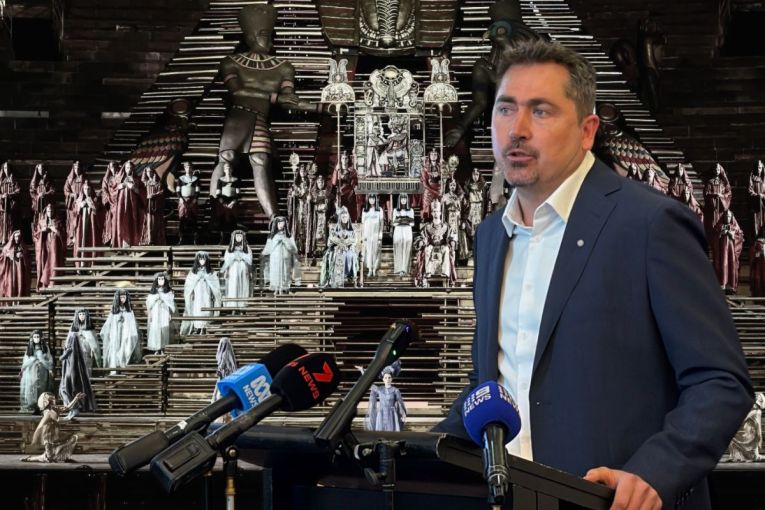
“This money could be used to support live music, upgrades to facilities, promotion of the venue and investing in play equipment to make pubs and clubs more inclusive of families,” he said.
“We are also proposing a buy-back scheme to get pokies out of pubs and clubs. We are suggesting that the government could fund these measures by increasing the tax applied on pokies profits to 65 per cent.”
Asked if he expected the major parties to support the Greens’ policy, Simms said it was an opportunity for Labor and Liberals to show leadership on the issue.
“Peter Malinauskas has made much of his push to restrict social media for under 16-year-olds – that’s something many would have thought was impossible years ago, yet it’s happened,” he said.
Simms said he would be introducing a private members’ bill to the upper house after the March 2026 State Election to place a moratorium on new pokies and to phase them out in pubs and clubs by 2030, urging the major parties to support the proposed legislation.
“Pokies are destroying lives. There are some SA children that will go hungry this Christmas because their parents have lost money to pokies,” he said.
“I’ve met with many constituents over the years who have had their lives torn apart by pokies addiction and lost everything.
“This is a moral test for our political leaders – how can they turn a blind eye to this misery?”
Today’s policy announcement comes after SA-Best MLC Connie Bonaros’s bill to legislate extended restrictions on gambling and advertising on television and radio successfully passed the Legislative Council in October.
However, Bonaros criticised her major party colleagues for the defeat of two other gambling bills – the Statutes Amendment (Gambling – Mandatory Pre-Commitment System) Bill 2024 and Statutes Amendment (Gambling – Opening Hours and Signage) Bill 2024.
Stay informed, daily
The first bill would have further regulated the use of cashless gaming machines, while the second would have banned the use of gaming machines between 2am and 8am and a further six hours for gaming venues, as well as restricting advertising near the premises.
Australian Hotels Association South Australian CEO Anna Moeller told InDaily that the Greens’ policy proposal was “well-intentioned but misguided”, saying that “it would decimate a large number of pubs”.
“It would mean that pubs couldn’t do things like provide sports bars, upgrade their dining rooms, upgrade their beer gardens, have the wonderful kids’ playgrounds that they have in some hotels because there simply wouldn’t be the money to do that,” she said.
She said a large number of pubs would close and “for regional communities, that would be a disaster”.
“In country towns, pubs are more than just a place to go and have a meal and a drink; they are the cornerstone of the community,” she said.
“They’re often the largest employer in the community, and they are often the largest sponsor in the community.”
Asked if there was a way to balance keeping gaming machines while addressing concerns about social harm associated with them, Moeller said, “We are literally the pin-up state here in terms of harm minimisation measures”.
She pointed towards the early intervention agency, facial recognition for gaming rooms and the government’s Take a Break campaign.
“We could burn all of the poker machines tomorrow, but people would continue to gamble,” she said.
“Everybody has a poker machine in their pocket – it’s called their mobile phone, and it will mean that people are pushed to unregulated, unsupported, non-transparent platforms, which will increase the dangers for those people that are at risk of harm from gambling.”
The SA Liberals declined to say if they would support the policy.
A spokesperson for Consumer and Business Affairs Minister Andrea Michaels said that “the state government remains committed to reducing the number of poker machines in SA, noting that we are well below the maximum number permitted”.
“SA has some of the strictest laws in the country when it comes to poker machines, including mandated facial recognition and automated risk monitoring of each session of play,” she said.
Want to see more stories from InDaily SA in your Google search results?
- Click here to set InDaily SA as a preferred source.
- Tick the box next to "InDaily SA". That's it.