Dredged out of existence: why shellfish reefs are vital to fighting algal bloom
Science writer Sarah Keenihan tells how SA’s native oyster reefs have been decimated and why getting them back is vital in fighting the devastating algal bloom.
It’s now been nine months since tiny algal lifeforms launched a hostile takeover of South Australia’s pristine marine environment. Hundreds of thousands of ocean creatures are dead, and grief and economic impacts continue to be felt through our communities.
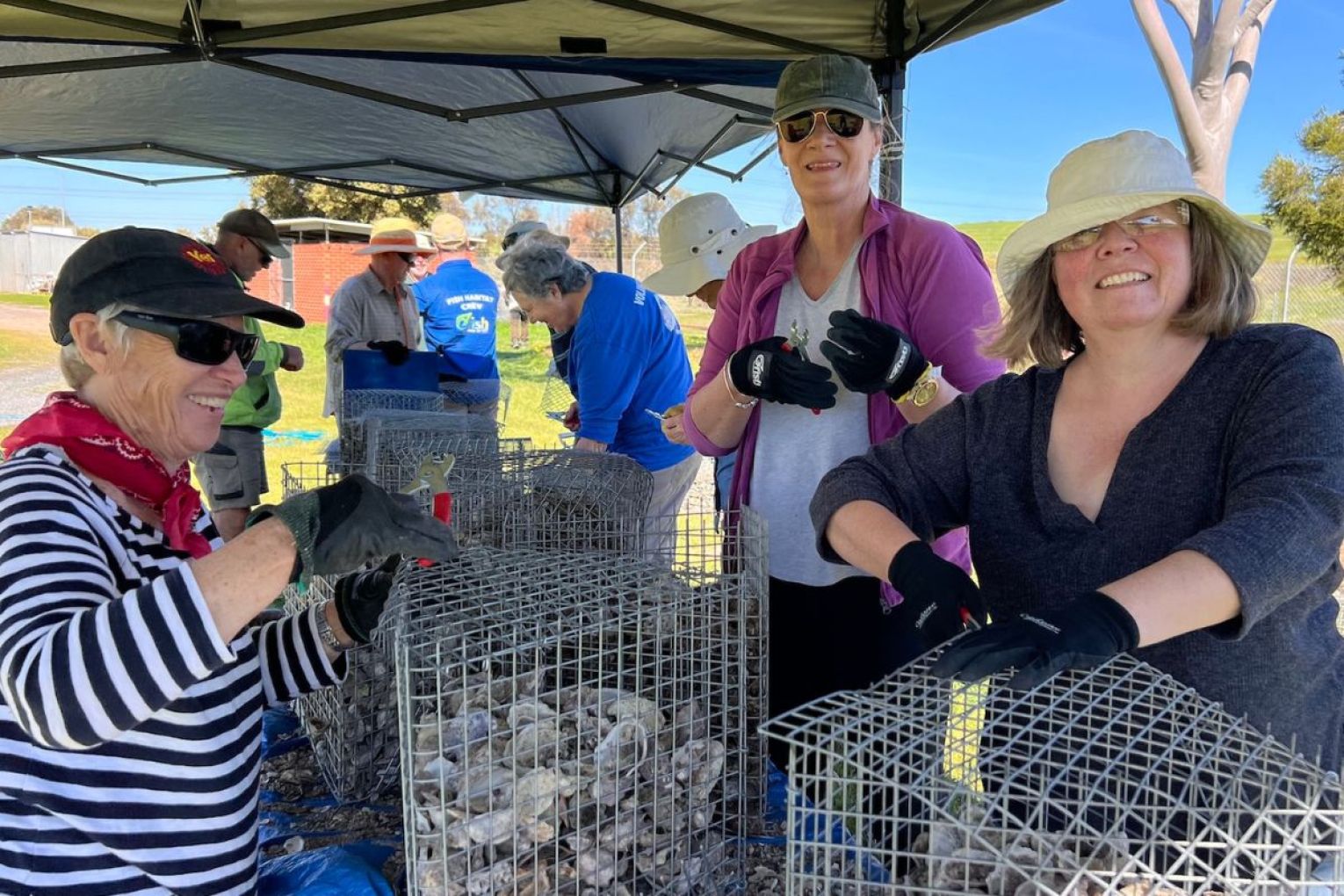
In the most recent update to its Summer Plan aimed at countering some of the impacts of the harmful algal bloom, on Sunday the State Government held a Shells for Reefs Family Fun Day.
The idea is to encourage people to donate shells from seafood meals, which will be cleaned, sorted and used as natural building blocks for an OzFish reef restoration project at Largs Bay.
“Restoring shellfish reefs will help create healthy, resilient marine ecosystems – and everyone can get involved in supporting these projects,” said Lucy Hood, Minister for Climate, Environment and Water.
But what’s a shellfish reef, and how is it supposed to help?
The answer lies in science, and in history. It’s a story that started in the distant past, encountered a hiccup around 115 years ago, and picked up momentum again thanks to the publication of a critical research paper in 2015.
One of the authors of that seminal paper was Professor Sean Connell from The University of Adelaide’s Environment Institute.
“My colleague Heidi and I used historical records to reveal a forgotten chapter in the natural history of South Australia,” says Sean.
“Our 2015 paper established that living reef structures dominated by native oysters were growing across 1500kms of our state’s coastline around the time of colonisation in 1836.”
You might like

Encountered by Europeans in the 19th century, of course those reefs had been thriving for thousands of years prior.
Native oysters (scientific name Ostrea angasi) are a species with a flat, brownish, ragged-edged shell, quite distinct from introduced Pacific oysters.
In massed colonies that snapped, crackled and popped with vibrancy, in pre-colonial times native oysters captured algae, plankton and other particles through filtering trillions of litres of sea water a day.
Their presence linked food webs of the water column and the seafloor, as poo and undigested materials released by oysters acted as a fertiliser, supporting the growth of seagrass and many animals.
Oyster reefs were a physical foundation upon which kelp and other sea plants became established. They provided nooks and crannies for a collage of sea animals to shelter, reproduce and gather food.
Native oysters were an important food source for Aboriginal peoples too. Along our coastlines, local communities ensured oyster reef sustainability through carefully managed practices over millennia.
But once they arrived, European settlers quickly initiated a new kind of fishing activity, operating commercial fleets that dredged over large distances. Iron bars and a mesh bags were employed with devastating success, until each location was ‘worked down’.
“With the highest native oyster catch recorded in 1890, by 1944 no men were engaged full time in native oyster fishing in our state,” says Sean.
The reefs were gone – and it wasn’t long before most South Australians started to forget that native oysters had even existed in our waters. A state of collective amnesia set in, strengthened by the arrival of each new settler generation.
Until that research paper of 2015.
It’s what happened next that was particularly crucial; the research didn’t just live inside an academic silo. Instead, Sean and his Environment Institute colleague Dr Dom McAfee reached out to policymakers to kickstart the state’s first oyster reef restoration project.
With evidence such a reef would support ocean biodiversity and boost fishing opportunities, community buy-in soon followed thanks to public forums, meetings with recreational and commercial fishers, and school-based education programs. International expertise strengthened the approach thanks to not-for-profit The Nature Conservancy.
Stay informed, daily
Windara native oyster reef was built over 2017 and 2018 on Narungga Sea Country at Rogues Point on the Yorke Peninsula.
With sea floor foundations built with local limestone, juvenile native oysters grown in SARDI hatcheries were released to settle and become established. The reef has grown with each new generation of oysters.
Subsequently, similar native oyster reefs have been established at Kangaroo Island, Onkaparinga and Glenelg. These were funded by South Australia’s Department of Environment and Water, and The Nature Conservancy, along with other partners.
“In South Australia, native oyster communities have been brought back within three years of reefs being constructed, after more than a century of functional extinction,” says Dom.
“Nature really can recover when it’s given the opportunity.”
Since that first paper of 2015, Sean and Dom have published a string of scientific articles that tell a ten-year success story of native oyster reef restoration in South Australia.
Not only do the papers report on the science, but also on the importance of community involvement in making such projects work.
“Ultimately, community-led restoration puts local people at the heart of rebuilding nature, ensuring the work reflects their knowledge, values, and long-term commitment,” Sean says.
“When communities lead, restoration is founded in care, connection and shared purpose.”
Investing funds to create native oyster reefs isn’t a ‘suck-it-and-see’ punt. It’s an informed decision made possible thanks to a more than a decade of collaborative scientific and community work in Adelaide, and involving research and not-for-profit partners across the world.
Beyond Largs Bay, the Summer Plan also includes investment in 25 new community reefs across the Yorke and Eyre Peninsulas and Kangaroo Island.
Led by The University of Adelaide working with conservation charity EyreLab (Educating Youth in Restoration Ecology Lab), reef sites will be chosen in partnership with local councils, community groups and Traditional Owners.
It’s not the only step we need to take, but going back to the future with oyster reefs is an evidence-based approach to help build resilience into our oceans and help protect against threats such as future harmful algal blooms.
Sarah Keenihan, PhD, is a science writer based in Adelaide. She is on the Advisory Board at the Environment Institute, The University of Adelaide and a member of the Environment Advisory Committee, Surf Life Saving SA.

Want to see more stories from InDaily SA in your Google search results?
- Click here to set InDaily SA as a preferred source.
- Tick the box next to "InDaily SA". That's it.