‘Only a matter of time’: Battening down the hives as tiny mite threatens SA’s food bowl
A tiny parasite that can kill entire beehives and colonies is increasingly being found in SA, one apiarist fears it will decimate bees living along the River Murray.

Riverland apiarists and the horticulture industry are strengthening their defences against the devastating varroa mite as more worrying discoveries of the pest continue in SA.
The tiny reddish brown external parasites of honeybees were first discovered in SA in September at Pooginook, east of Waikerie in the Riverland.
All impacted hives associated with this detection were moved out of the state by their Queensland owner in compliance with their SA entry permit conditions.
However, Loxton beekeeper Ian Cass has a feeling that the discovery of varroa mite in September is just the beginning of uncovering more of the pest in the region.
Since the initial discovery, more detections were found last month in other parts of the state, at Taratap on the Limestone Coast and at Sellicks Hill in the upper Fleurieu Peninsula.
The Primary Industries and Regions Department has warned that varroa mites can kill any beehive or colony they infect and can be quickly transferred to other hives through contact between bees.
Detections at Salt Creek and Taratap in the Limestone Coast, Sellicks Hill in the southern Fleurieu, Woodside in the Adelaide Hills, and Waitpinga near Victor Harbor were also confirmed in follow-up tracing.
| Sponsored |
Cass said it was a relief for Riverland beekeepers and primary producers that the Pooginook discovery appears to have been contained.
You might like

He said if the varroa mite had spread, the situation could have been detrimental to apiarists and many horticulturists.
“Once they build up numbers, then they become very devastating, they live on the bee and they actually suck the fat out of the carcass of the bee,” he said.
PIRSA has warned the pest can spread via beekeepers and equipment shared between hives and apiaries.
But Cass believes it is only a matter of time before more are found in the Riverland.
“I suspect they would be here now in very low numbers; you only need one, as they can breed on their own, they can change sex,” he said.
Cass is fearful about what will happen once the varroa mites start infesting the hives of wild European honeybees.
He said in the Riverland these wild bees play a vital role in the production of many types of crops including almonds, watermelon, cherries, vegetables, and canola.
Cass said a massive population of bees live in native vegetation and trees along the corridor of the Murray River.
“I went up the Katarapko Creek (between Loxton and Berri) during the 2022/2023 flood and if you were in a boat and you looked up at the top of the red gums, probably every second or third tree had bees in them,” he said.
Cass said these bees could be wiped out if varroa mite took hold and primary producers would soon notice a decline in crop yields.
“All of a sudden they will have to pay to get beekeepers to come in and do their job because they won’t be able to rely on those feral hives because of course they won’t have the numbers,” he said.
The Riverland’s almond industry mainly relies on apiarists to pollinate their trees during late July and early August, but over the past few years has been increasing the number of self-pollinating varieties being grown in the region.
Stay informed, daily
Cass said if varroa mite spreads across South Australia almond growers would find it even harder to find enough hives to pollinate their crops.
He said presently the region’s almond industry needs about 70,000 hives and SA apiarists can only provide about 55,000 of them.
Almond company Century Orchards has 700 hectares of almonds based at Loxton and executive director Brendan Sidhu said the discovery of varroa mite in SA and the Riverland was something the industry had expected to happen eventually.
“Everyone was pretty devastated about the arrival of the varroa in SA,” he said, but added that the Australian almond industry had been preparing for its arrival years before it arrived in the country in 2022 in NSW.
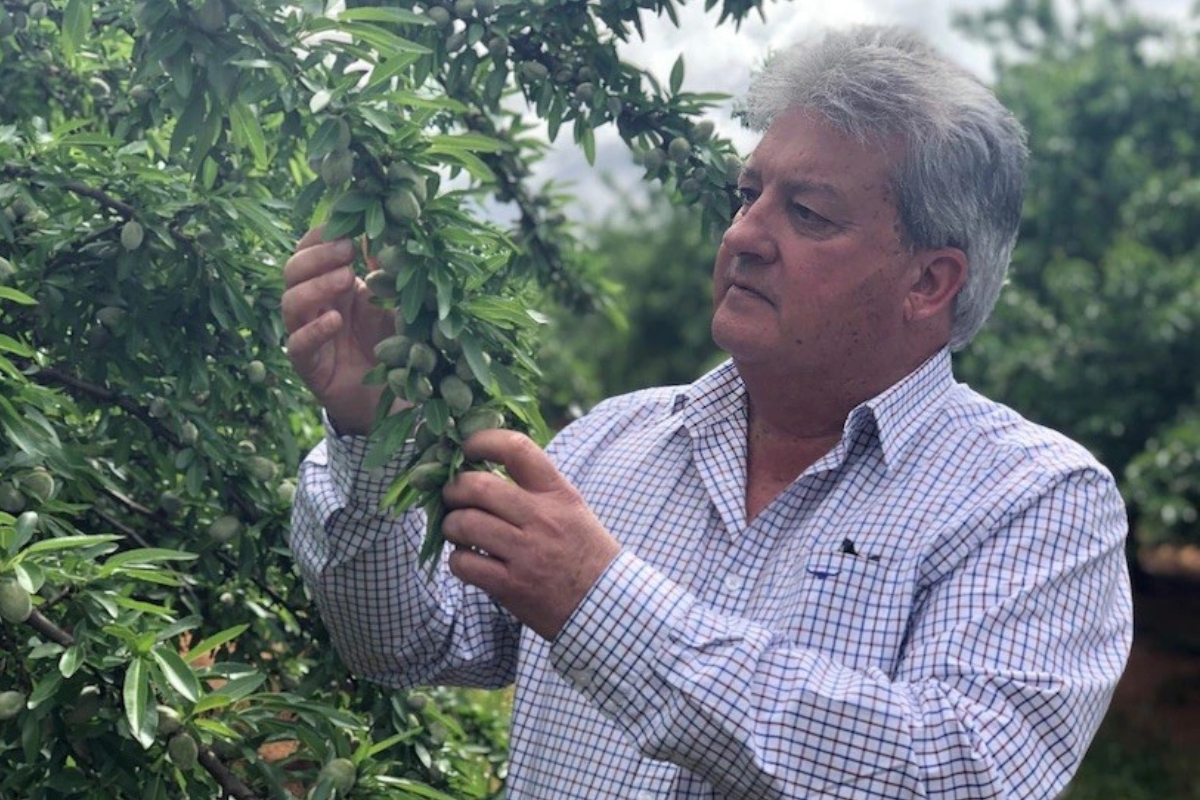
Sidhu said he learned about the impact varroa mite had on the beekeeping and almond industry when he visited New Zealand when he was Almond Board of Australia Chairman about a decade ago.
“We travelled to New Zealand where varroa mite had already taken hold and they told us it was just a matter of when,” he said.
“Fortunately, we had 10 or so years before it actually arrived in Australia.”
Sidhu said the discovery of varroa mite was another blow for SA beekeepers who had already been struggling with maintaining their bee numbers due to the drought.
The dry weather over the past two years has reduced the availability of nectar and pollen for bees.
Sidhu said the discovery of the varroa mite in SA would possibly enable the state’s almond growers to eventually access more apiarists from other states to address a hive shortage.
He said the SA almond industry was presently negotiating with the state government to have less stricter conditions imposed on the use of bee hives from other states where varroa mite already existed.
Sidhu said Riverland almond growers over the past decade or so had also started planting more self-fertile varieties of almonds, which did not rely so much on bees for pollination.
Despite the arrival of the pest in the Riverland, Cass is optimistic about his future as an apiarist and is hopeful he will be able to weather the storm.
He is planning to increase the number of hives he has to address the bee shortage.
Cass said the discovery of varroa mite in SA is encouraging the state’s beekeepers to work more closely together in consultation with PIRSA to develop strategies to keep their hives varroa mite free.
Want to see more stories from InDaily SA in your Google search results?
- Click here to set InDaily SA as a preferred source.
- Tick the box next to "InDaily SA". That's it.