Economists make their calls on SA in 2026
Economists peer into their crystal balls to make their 2026 predictions for South Australia outlining pain ahead for the state’s housing affordability, fishers, the wine industry and farmers.
The outlook for the state’s economy is positive, with Adelaide University economists expecting a better cropping year and a recovery in disposable incomes for households.
But significant pockets of distress will persist across the state, including for home buyers, grape growers, fishers and farmers.
The latest economic briefing report from Adelaide University’s SA Centre for Economic Studies (SACES) said the state’s labour market performed well in 2025, with employment rising far stronger than the population.
Household spending has strengthened as a result of improved incomes, while government spending was strong due to major infrastructure works.
This is in contrast to the international economy, according to SACES deputy director Jim Hancock.
“There was a downturn in grain exports, but this stemmed from poor seasonal conditions and is temporary,” Hancock said.
You might like
“Exports of services increased strongly, and copper exports benefited from strong prices on international markets.”
He said it was “almost inevitable” that employment growth would slow this year, “but the demand for labour appears to have solid underlying support from both stronger household spending and the large ongoing infrastructure build currently in progress”.
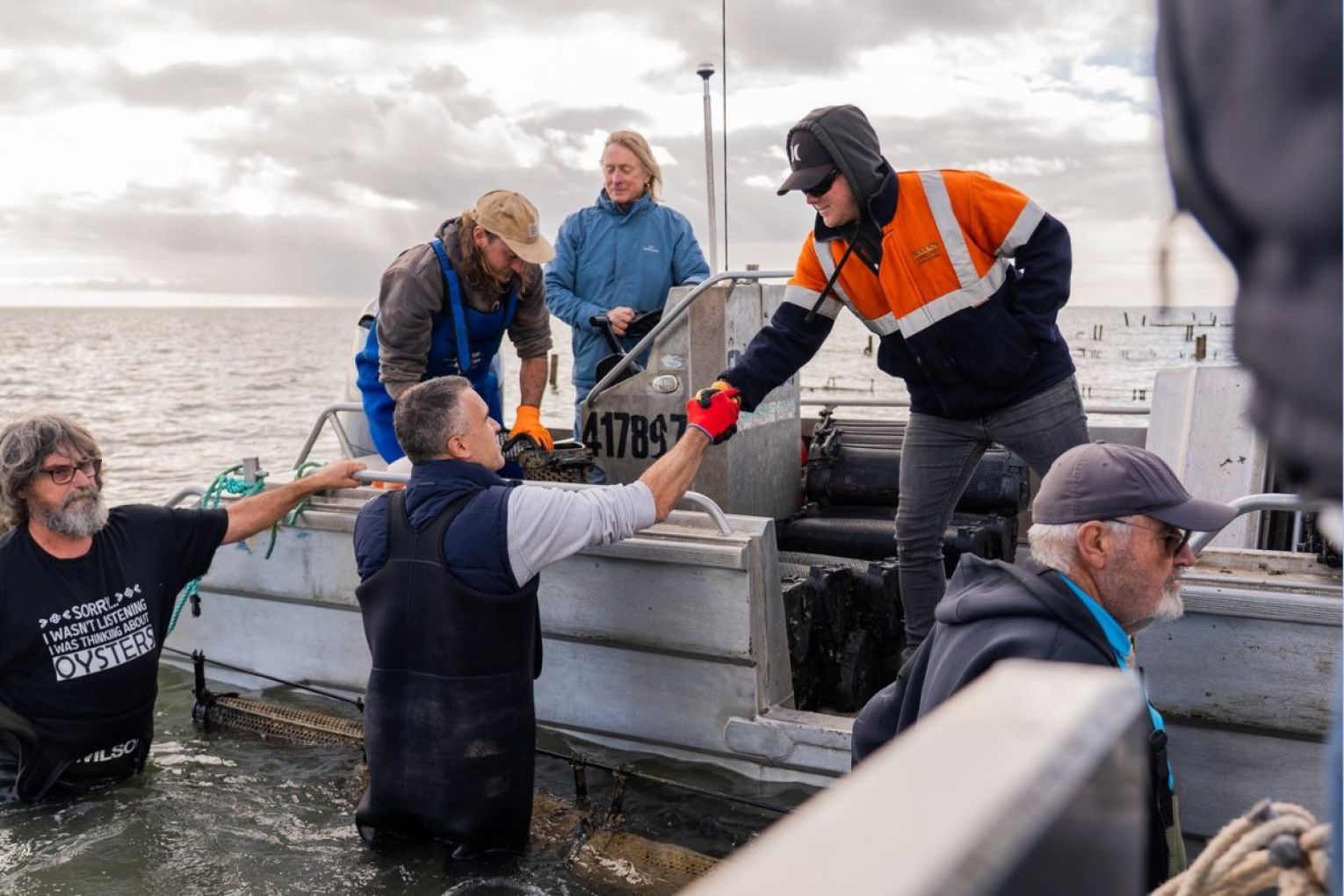
There was more positive news for farmers but dire predictions for the wine industry, particularly in the Riverland, along with commercial fishers still grappling with the fall out of the state’s devastating algal bloom.
In positive news for farmers and the agriculture sector, the economists expected exports would strengthen in 2025/26 as the winter crop returns to more typical levels under improved seasonal conditions, with estimates that the state’s winter crop would reach 8.7 million tonnes – a 63 per cent increase on last year’s drought-affected harvest.
A substantial backlog of construction works means activity levels in the economy will hold, even if growth slows more broadly, the report found.
“In the medium term, South Australia shares the fundamental challenge faced by the Australian economy – the need to restore stronger rates of labour productivity growth,” Hancock said.
Stay informed, daily
“This needs to be done in a way that is consistent with other societal goals, such as environmental protection, equitable distribution of income and opportunity, and the need to strike a balance between Australia’s security interests and realising the gains that come to Australia from international trade, investment and migration.”
The report predicted state economic growth would rise by 2 per cent in 2025/26. Materially faster economic growth is constrained by capacity factors and productivity trends, and there is little wriggle room in the labour market with participation rates at record highs.
“Housing shortages continue to push affordability measures to high stress levels,” the report reads.
“In addition, the prospect that interest rates will remain on hold, or even possibly rise, in response to the recent national uptick in inflation, is likely to act as an additional dampening factor for growth.”
But “significant pockets of stress persist”, the report reads.
“Housing affordability remains a major source of cost-of-living pressure, affecting both prospective home buyers and renters,” it reads.
“Grape growers in key wine-growing regions, including the Riverland, continue to face severe adjustment challenges stemming from entrenched demand-supply imbalances, with prices expected to soften further.
“Commercial fishers and coastal communities remain adversely affected by algal blooms, while some regional farming communities are still contending with the residual impacts of drought.”
There is “considerable uncertainty” about global growth and trade volumes in 2026, and there were concerns that interest rates could rise again.
“Recent Australian inflation outcomes have also presented a significant challenge for monetary policy and unless there are some more reassuring signals on the inflation front early in 2026 there is a real prospect that official interest rates could go up,” the report reads.
Want to see more stories from InDaily SA in your Google search results?
- Click here to set InDaily SA as a preferred source.
- Tick the box next to "InDaily SA". That's it.