Your views: on a CBD crackdown and more
Today, readers comment on “anti-social” people being removed from the CBD, and mental health funding.
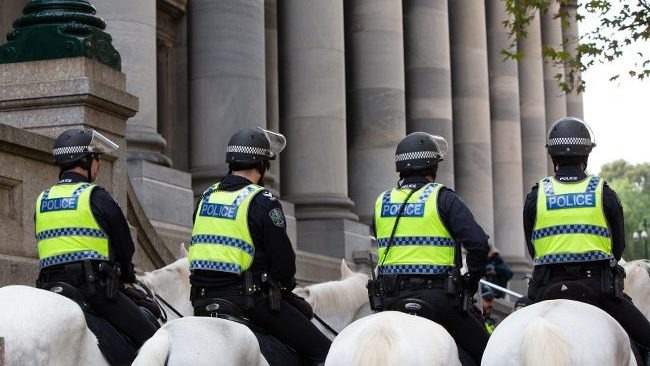
Commenting on the story: CBD crackdown: Arrests, removals as police shift ‘anti-social’ problems
As a CBD resident and worker, I acknowledge that Hutt Street Centre CEO Chris Burns is perhaps correct when he states the current issue of anti-social behaviour in the city is not necessarily a homelessness issue.
Inarguably though, it is an alcohol and drug issue.
I want my girls to be able to walk home safely from Adelaide High School. I want their peers to walk safely to the train station, tram stop, or bus stop, without getting shouted at by someone high on meth or similar stimulants.

I have repeatedly had to dodge groups of drunk people acting aggressively toward each other across an entire footpath with smashed bottles on the ground; it’s not a safe way to walk home from work.
So yes, Mr Burns, this intervention may mean that “they will return to overcrowded housing in the suburbs”, but logic then implies that is where assistive services should exist. Disincentivise the city as a place for collective behavioural offences and install services for rehab, housing and work pathways in the areas where people actually live. That is not “shifting the problem on”, it would be dealing with it at the source. – Julie Quimby
I am astounded at the level of complacency shown by South Australians about these new police powers.
The Law Society of SA says “the solution needs to be far more sophisticated than giving police greater power to infringe on a person’s right to occupy a public place.” It has written to the Police Commissioner to request “the evidence that has been relied upon to seek these expanded powers”. SA Police have responded that the enquiry should be re-directed to the Attorney-General.”
This ‘pass the buck’ approach could only gain legitimacy if local communities see these extraordinary powers as ‘normal’ — when they are far from ‘normal’. Moreover, I agree with Hutt Street Centre CEO, Chris Burns, who noted: “Why would you take indigenous people who are in the city out to an asphalt carpark on the side of Anzac Highway away from any public transport and away from any civilisation and say this is where you are living now?”
Stay informed, daily
This arrangement arises from permission given by Adelaide City Council on 6 July, which is hiding all detail behind secrecy clauses and avoiding any transparency about the matter. These are socially red-alert issues, yet if you consume News Corp drivel, there’s “nothing to see here”. – John Bridgland
Commenting on the story: SA’s $125m mental health gap leaves 19,000 with unmet needs
This is a classic example of who really pays the price when a government, especially of a small State with an underweight economy, spends and borrows big on monumental and vanity projects that pander to medical, academic and financial elites.
Remember, on the Government’s own figures, total debt of $37.5 billion by 2026-27 will come with interest costs of $4.5 million per day ($1.64 billion per annum).
Our politicians make choices every day as to where our money is spent. Minister Picton is reported as saying that there is “enough money out there”. But, apparently, not for the vulnerable with mental health issues. – Stephen Trenowden
Want to see more stories from InDaily SA in your Google search results?
- Click here to set InDaily SA as a preferred source.
- Tick the box next to "InDaily SA". That's it.