Your views: on a uni merger and Conlon resignation
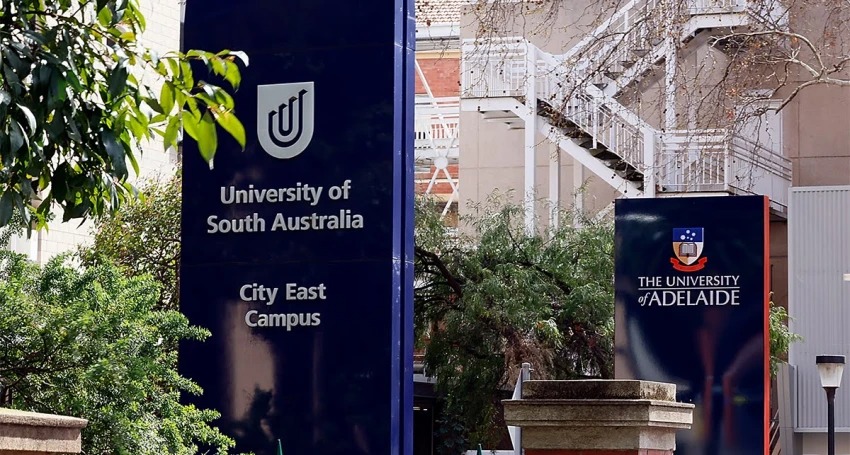
Today, readers comment on a push to merge the University of Adelaide and UniSA, and the fallout of a state heritage site demolition order.
Commenting on the opinion piece: Adelaide uni merger plan a study in wishful thinking
A cogent, persuasive and well-informed analysis. The case against merger is further strengthened by an essay ‘Why are Australian universities so large?’ which Glyn Davis AC, former Vice-Chancellor of Melbourne University, now Secretary of the Department of Prime-Minister and Cabinet, has recently published.
Davis concludes as follows: ’Some Australian universities will soon enrol 100,000 students. Such an institution will be barely recognisable as a scholarly community, a conversation among students and academics, a place where professional staff hope to know each class and support learning. Scale already shapes much that happens at the Australian public university: we might hope it is not the only choice’. – Wilfrid Prest
Thank you for this illuminating article. My initial reaction to Peter Malinauskas’s post announcing the merger was I would only support it if in this case, if 1 + 1 = 3. Not if 1 + 1 ends up equalling 1.5.
UoA is already a top 100 university. That goal is met. These universities are quite different, with different strengths and nuances. So often mergers and acquisitions do not deliver the value purported. It would be a travesty and great loss to SA if that was to occur, particularly in the case of these two amazing universities. That still stands. – Sandra Vallance
As a former academic of the University of Adelaide, I fully understand and agree with Professor Geoff Hamner’s views. – Andrew Yap
As a graduate of both the University of Adelaide and the Flinders University of South Australia I have watched with interest over the years as various merger proposals have been put forward.
You might like

Professor Hanmer is to be commended for his clear explanation as to why the merger should not go ahead. Let’s hope no funding is forthcoming and it dies a natural death like all the previous proposals. – Rodney Davies
Bigger is not necessarily better. The strength of working as an academic in South Australia is our ability think outside of the square and to be creative.
I can see that in some areas merging universities will lead to gains, but in other areas it will lead to a demise of courses and programs that set us apart.
Let’s stop trying to compete with the bigger universities in the eastern states and support what makes us unique. – Steve Milanese
The case against the proposed merger of the University of Adelaide and University of South Australia could not have been expressed more clearly or cogently than that outlined in Professor Hanmer’s article. I agree with him.
It is simply not true to say, for example, that the University of Adelaide does not perform well internationally. Both universities could no doubt do even better – but then that is true for almost all universities across the globe.
But size of institution is not the determinant of such things. The creation of one gigantic university risks destroying the very considerable and particular strengths of each of these two existing universities. In the long run it is unlikely to appeal to either staff or students, and our state will be diminished further in the higher education sphere and beyond.
Discussion of higher education is often bedevilled, in my view, by misguided and confused conceptions of excellence, elitism and function. While it is important for our state to have a university that is a global leader with a focus on research, and also to have research-led teaching in that institution, it is equally important to have highly educated thinkers and researchers teaching in a university where the focus is more on educating students for the wide and diverse range of functions and work our society needs.
Stay informed, daily
Both institutions need to be excellent in their different focus and function – and the epithet ‘elite’ should have no place when distinguishing between them. Equity of access is in that sense the single most important issue for us to address as a state. That is, of course, a complex issue. But when a child is prevented from fulfilling their potential, we are all diminished.
Speaking as one who was the first in my family to attend university and who benefitted from the state paying for my tertiary education, it seems to me that it is of prime importance for our governments, both federal and state, to invest more in education, not only in the form of scholarships to undertake tertiary studies (at any of our universities), but also with greater investment at every level of education (pre-, primary and secondary school), especially focusing on those in greatest social need.
While that is not the end of the story (building philanthropy and investment from the private sector is also, no doubt, an important strategy), in the shorter term it is the obvious place to start both for South Australia and Australia. This is also because, while the inclusion of international students in Australian universities should be welcomed, the over-dependence of our tertiary institutions on their fees that occurred in the past is inequitable and, ultimately, will nothing to enhance our reputation globally. – Rosemary Owens, Emerita Professor, The University of Adelaide
Commenting on the story: ‘Gut-wrenching’: Police barracks demolition spurs Conlon’s Heritage Council resignation
There are two vacant positions on the Heritage Council now, but what would be the point after the Malinauskas Government’s wanton vandalism? – Sandra Kanck
Proponents of built heritage, including many members of the National Trust and related organisations, voted en force (some for the first time) for a new Labor government last year as they believed the Marshall/Speirs government had badly failed them.
Indeed, the seat of Adelaide was certainly secured for Labor due to this swing in mood. Unfortunately, it is now apparent that the new government misled the electorate in respect to its commitment to built heritage and I doubt if the votes will be there next time.
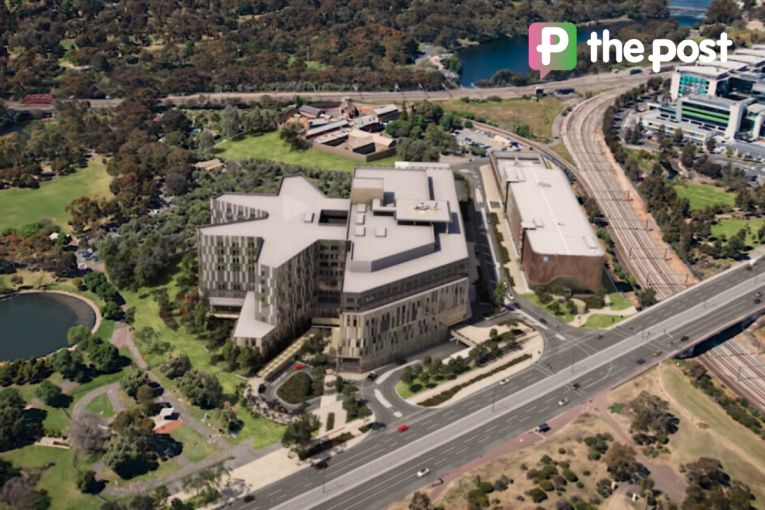
If one accepts that there was no alternative site to build the replacement (which I don’t), a way the government might partially redeem itself would be by turning the old Women’s and Children’s Hospital into a park which joins Brougham to the Torrens Park. This would be in keeping with the notion of returning an equal amount of land to park as was alienated by the new hospital development.
But that won’t happen as the agenda is clearly to pinch free park land so that the old hospital can become sold to developers. No wonder people are so disillusioned with politics and most politicians (I still believe there must be some good ones out there … somewhere…) – Garth Owen
What a sad day! But who can blame Keith following the decision by the Malinouskas Government to blatantly over-ride heritage provisions and allow the heritage-listed Thebarton Police Barracks to be doomed.
What’s the use of championing heritage in South Australia when it means absolutely nothing to the government? – Ray Goulter
The loss of Keith Conlon from the Heritage Council is, for Premier Malinauskas, just another affordable cost of pursuing an appalling and easily avoidable bid to use the park lands for major infrastructure development and heritage-listed site demolition.
Politics is a ruthless game, and the Premier’s media minders are gambling that the people of SA will forget this episode. But sometime this year the Police Minister will announce a related park lands plunder when the park lands site for construction of the new police barracks is announced.
It will only remind us all that Labor’s hospital decision has other equally appalling consequences. It is simply rubbish to claim that the only land in the metropolitan area for a hospital must be in the National Heritage listed park lands. It’s a terrible look for Labor, whose candidates before March 2022 were all over the electorates pledging a commitment to ‘protecting’ the park lands.
Labor’s hypocrisy is worn like as a badge of honour. It illustrates how out of step Labor’s back-room political hacks are from the views of ordinary South Australians. That a new Premier would play along says something disturbing. – John Bridgland
Want to see more stories from InDaily SA in your Google search results?
- Click here to set InDaily SA as a preferred source.
- Tick the box next to "InDaily SA". That's it.