Adelaide’s underground network of entrepreneurs
Adelaide is home to an underground network of young entrepreneurs slowly emerging into the broader community. I call this network Adelaide’s “startup ecosystem”.
An early picture of this entrepreneurial ecosystem can be found on the website, Adelaide Startups, put together by the important coworking site, Majoran. Adelaide Startups lists 80 startups, three incubators, four accelerators, two co-working sites, seven investors, eight consultants, and one hackerspace.
A later listing (on the Startup Adelaide website, also put together by Majoran) notes 14 networking groups, six industry education providers, nine formal education providers, five incubators/accelerators, 13 co-working spaces, nine government funding agencies, six equity investors, and seven advisory services.
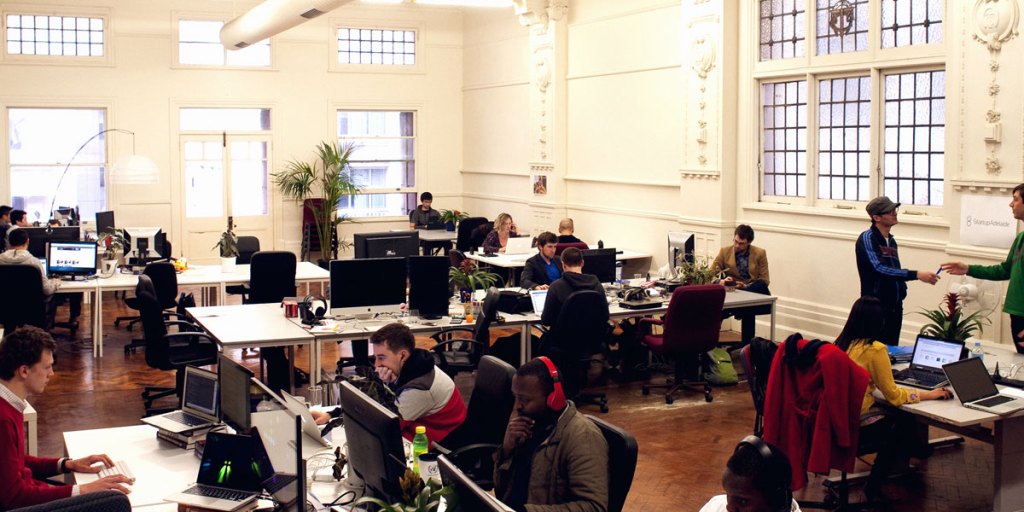
Majoran is a key element in Adelaide’s startup ecosystem. It is essentially a big hall filled with trestle tables, wooden chairs and power points located above Harry’s Bar at 14 Grenfell Street. It was founded by Michael Reid, Chhai Thach and William Chau on 30 July 2012.
Majoran is a not-for-profit organisation funded by membership fees ($300 per month for full time access to a desk, with power point, access to printing, Wi-Fi, meeting rooms, and coffee and tea), without government support. Its capacity is about 50 people. At the moment there are 30 people in residence.
The person presently running Majoran is Aainaa Rahman. Aainaa told me that hundreds of people have passed through Majoran in the three years since it opened. Many people have come back a number of times to try out new ideas, if their previous ideas failed.
You might like

Majoran’s graduates also come back to help newcomers with advice, mentoring and events (mostly workshops). There are four or five regular monthly workshops where people meet others who can help them with their ideas.
Aainaa says that Majoran works because it is essentially a support network. Many of Majoran’s clients, like others in Adelaide’s startup community, have a “day job” in business or the public service, but have become interested in starting their own business.
Getting feedback on what they are proposing from people who have done it themselves is exceptionally useful. It is a scary thing to start something new. The average age of Majoran’s members is late 20s – mid 30s. Young entrepreneurs need encouragement.

Fortunately, people who have been successful at starting their own businesses also like being mentors, helping newbies and participating in startup workshops, conferences and events. These entrepreneurs and budding entrepreneurs effectively form “communities” of like-minded and like-spirited people, who are the real backbone of the startup scene throughout the world.
Majoran would like to move into shared accommodation with two other three-year old organisations – Hackerspace and FabLab Adelaide – to form a bigger collaborative space where people can work together on electronic software and hardware ideas.
Stay informed, daily
Hackerspace is a community-operated group meeting at Majoran on Wednesday evenings and Saturday afternoons, and at Flinders University’s School of Computer Science, Engineering and Mathematics at Tonsley Park on Tuesday evenings. At Hackerspace, people meet, work on their projects and learn from each other. They have built a 3-D printer, robots and created a lot of software.
FabLab is similar to Hackerspace with 1500 “makers” in their community (who have also built a 3-D printer, among other things). FabLab have had to move out of their home in the Adelaide College of the Arts and are looking for new funding, as well as new accommodation.
An annual SouthStart Conference, for startups, has been held in Adelaide annually since 2013. In the last two conferences, 50 per cent of the startups presenting have been new. These conferences show that amazing things can happen in Adelaide.
Aainaa says that Adelaide CBD is a good location for startup businesses, because members of the startup community can travel in and out cheaply by bus and bicycle. Cheap rent is very important for startups, and this is possible in Adelaide’s heritage buildings, provided major fit-outs are not required (for example, to provide for disabled access).
Aainaa says that the present rate of expansion of Adelaide’s startup community is not very fast. Many people are moving out because there are better opportunities elsewhere. Majoran’s key ambition is to persuade Adelaide’s startup entrepreneurs that you can do it in Adelaide. The main way forward is to make it easier for people to start tiny, new, businesses. Adelaide needs the dynamic of many more entrepreneurs crowding together, to encourage each other and make everyone try harder.
The formal steps in commercialisation of a startup are, first, to work them up into a validated idea, typically in a co-working space, like Majoran. Second, training programs are then provided for people with validated ideas. Venture Dorm Powered by Mega provides such a training environment for people who want to learn how entrepreneurs have built new ventures and to create a startup for themselves. Venture Dorm Powered by Mega is a collaboration between Majoran and the New Venture Institute at Flinders University.
Finally, new ventures typically then go to an incubator like Venture Catalyst (associated with the Centre for Business Growth at UniSA) for startup funding and advice or to an accelerator like Innovyz to make their startup into a real company with serious capital funding. Another way is intrapreneurship – trying to create a new business inside an existing business.
Traditional business teaching is unsuitable for startup ventures, just as building a new product in itself is insufficient for commercial success. Co-working spaces, training, incubators and accelerators provide a typical, core, pathway.
A model of how the startup ecosystem in Adelaide might be stimulated into making a greater contribution to the economic rejuvenation of South Australia is provided by the amazingly successful (and affordable) Start-Up Chile program.
Start-Up Chile has transformed the entrepreneurial scene in Santiago since 2008. I will write more about Start-Up Chile (as a model on which South Australia’s economic renewal policy might be at least partly based) soon.
Richard Blandy is an Adjunct Professor of Economics in the Business School at UniSA.
Want to see more stories from InDaily SA in your Google search results?
- Click here to set InDaily SA as a preferred source.
- Tick the box next to "InDaily SA". That's it.