Richardson: Libs need to shine a light on themselves
Last week the Opposition took the relatively easy opportunity to ridicule Jay Weatherill’s highfalutin rhetoric on Reforming Democracy.
Fair enough, I guess; the pompous grandeur of the Premier’s plan seemed to invite scorn, even without the lofty language therein, which came across as some bizarre cross-pollination of a boardroom briefing and a first-year politics lecture.
Moreover, as I discussed at the time, there is a level of hypocrisy whenever the State Government talks about transparency and accountability. This is a Government, after all, which took a decade to be convinced of the merits of an ICAC and then established one so secretive that it has (we’ll charitably say inadvertently) become less a champion of accountability and more a tool to intimidate potential whistleblowers.
So attacking Labor’s po-faced nod to community engagement was a bit of a no-brainer for the Libs.
Except.
If you’re gonna rail against Labor for seeking deliberative democratic engagement (whoops, I just had another flashback to my first-year politics tute), maybe don’t do it the day before you hold your annual party conference … and ban the media from attending.
On Friday night, the missive went out to the fourth estate’s representatives who were waiting with breathless anticipation.
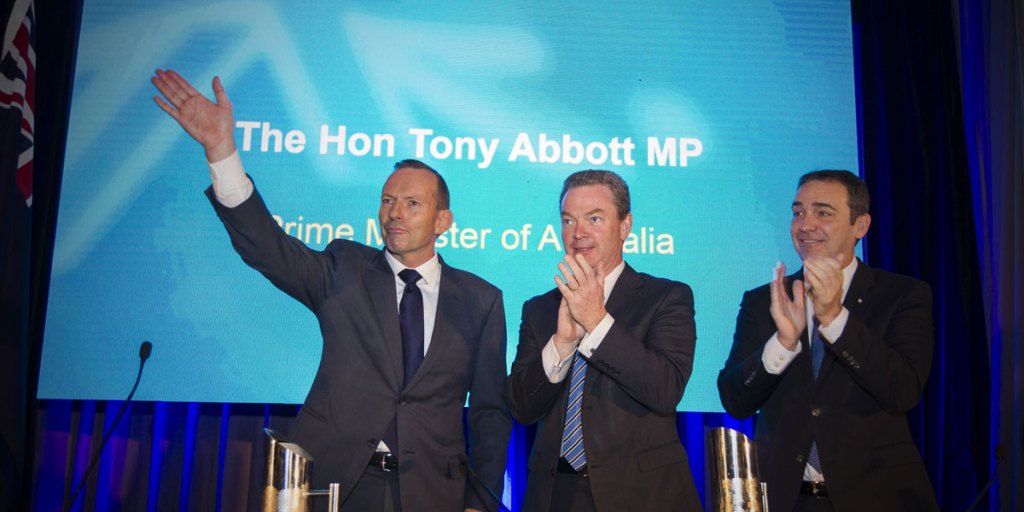
They were cordially invited to cover the Libs’ Saturday AGM, which kicked off at 8.45am with a keynote speech from Steven Marshall (in which, as he had already flagged, he did not intend to say anything he had not already said before) followed by a rousing recital from PM Tony Abbott.
You might like
The alert was footnoted with a strange instruction: “Media must be seated inside the venue by 8.30am and will be asked to leave at the conclusion of the Prime Minister’s speech.”
Huh? So in other words, no-one would be allowed to actually cover the AGM, merely the finely-workshopped set-pieces that preceded it.
The deliberative, democratic party processes would be conducted behind closed doors.
"Ironically, though, the Greens’ preselection process is far more inclusive and open than that of either of the major parties. But it nonetheless has its flaws, one of which has now been dramatically exposed."
Outgoing Liberal president Robert Lawson argued that none of the TV cameras would have stuck around for the arid political stuff in any case, and might have interrupted proceedings by “noisily” exiting at their leisure.
Perhaps. In which case perhaps an instruction to wait for a break in proceedings before exiting would have been more pertinent than holding the entire event in camera (or off camera, in this case.)
The Labor Party, still stinging from the mockery of its Reforming Democracy gambit, was quick to return the favour. Treasurer Tom Koutsantonis tweeted that Steven Marshall’s convention was, like his policies, secret (a dubious sledge given that Marshall has in fact flagged a few policy prescriptions of late), and the SA Labor Party’s official account boasted that the Libs’ clandestine gathering was notably “unlike Labor Party conferences”.
But, like that one-time Labor luminary Peter Garrett used to sing, “they must have a short memory”.
Labor’s annual SA convention was once one of the more exclusive gatherings. An archaic rule forbid entry to any journalist who didn’t carry a union card, a rule gleefully enforced by grinning party hacks standing guard at the doors.
It wasn’t until the local branch’s commitment to this tradition caused national embarrassment for its visiting federal leader Kim Beazley back in 2006, when he was forced to hold a doorstop media conference in a carpark out the back of the venue to accommodate the media who had been denied admittance, that the party reconsidered its strategy.
Stay informed, daily
And guess what? Most years, the TV cameras turn up to film keynote speeches by the state and federal leaders, and then quietly move on.
But attendees are aware that they are representing themselves and their party not merely to their colleagues but to the electorate, and debates are conducted accordingly.
The Libs argue that their AGM was ever thus, so why should it change now? Labor used to argue the same thing about its union-only policy at annual conventions. The answer is, it should change because you cannot argue for transparency and open Government while conducting your own affairs in secret.
It should change because it is in the public interest to do so.
And it should change because, at the end of the day, it will make very little difference to the workings of the Liberal AGM, but it will provide a potent symbolic shift for a party desperately trying to reinvent itself as an institution fit for government.
Perhaps that is the rub; the Liberals have never been called out on their furtive predilection because, in perpetual Opposition, no-one really noticed.
That would explain the incredulous reaction of some Greens’ members today, after InDaily yesterday revealed an internal “report card”, essentially a How To Vote card for the party’s membership, on the six candidates for Penny Wright’s soon-to-be-vacated Senate seat.
Only a party unused to anything more than a marginal public interest in its inner workings would think it was a good idea to effectively ‘grade’ its own candidates and distribute its assessment to hundreds of people, happily assuming the information would remain in-house. Or that a candidate for a casual senate vacancy can remain anonymous simply because he wants to remain anonymous.

Ironically, though, the Greens’ preselection process is far more inclusive and open than that of either of the major parties. But it nonetheless has its flaws, one of which has now been dramatically exposed.
One can only assume the process will be consequently reviewed, and will be more robust in future. This is a good outcome.
Being held to public account tends to produce good outcomes. The Liberals should try it.
Tom Richardson is a senior journalist with InDaily. His political column is published on Fridays.
Want to see more stories from InDaily SA in your Google search results?
- Click here to set InDaily SA as a preferred source.
- Tick the box next to "InDaily SA". That's it.