Whitey continues his blasphemous sermon about Grenache being a bit like Pinot noir.
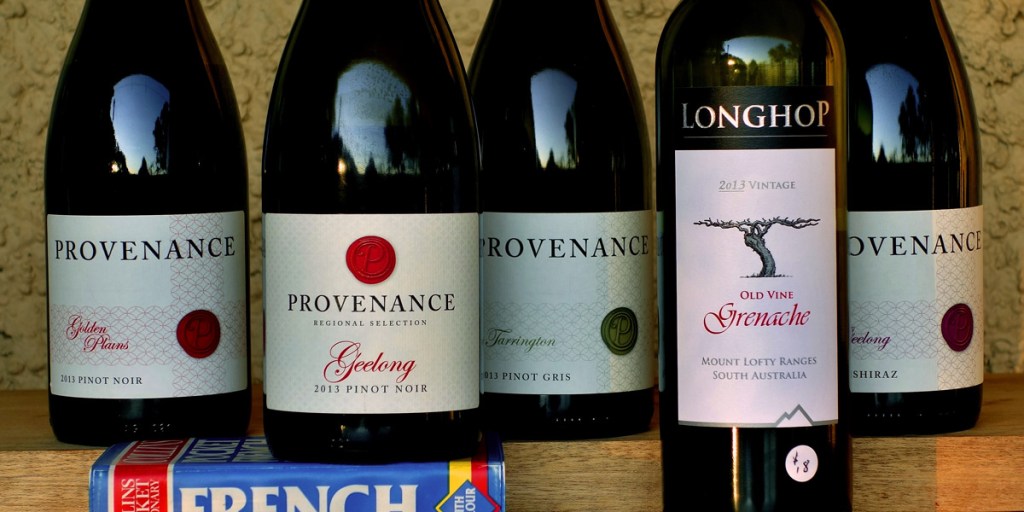
Longhop Old Vine Mount Lofty Ranges Grenache 2013
$18; 14.5% alcohol; screw cap; 92+ points
Still dribbling about that price, my response to this wine turned into a total gusher once I got some in my glass and loosed my hooter on it. It’s another of the exciting new-wave, more elegant Grenache models, which is not to say it shows the slightest hint of anorexia. It smells a bit like smoked cherries. Which is one thing I’ve never smoked. And then it’s chubby and ruddy-cheeked and maybe a little sullen in one way – give it time – but on the other hand it’s flush with life and a kind of self-satisfaction, as if it knows you’ll be pleased.
It also smells slightly like dark chocolate, as if a great chef like Cheong had reinvented the Cherry Ripe, using proper maraschino cherries and Valrhôna cooking chocolate, which is the best I’ve eaten. In fact I’ve eaten it with Grenache near that remarkable Tain-l’Hermitage chocolatier with my dear Rhône mentor, the late Gerard Jaboulet. With a Gauloise or six, of course, joking about how much Rhône Hermitage and Grenache historically found its way north into Burgundy, where it’s not permitted, but was used to beef up the Pinot. Of course they wouldn’t do that now, would they.
It’s the same yarn in the drinking bit: it has just the right drip of syrup to balance its bright, provocative acidity. It’s long and tantalising: with all that sass, more provocative than satisfying.
You might like


It’s wines like this that have me lately firming my theory that properly made, with the right levels of natural acidity, Grenache can be South Australia’s alternative to Pinot noir, as very few parts of our sunbaked state are cool enough to make really good Pinot. Ashton Hills is the noted exception.
I also suspect that the South Australian consumer’s cellar palate is prejudiced by the big ripe jammy Shiraz things we’ve become accustomed to, and often doesn’t take readily to the slender austerity and often pale nature of good Pinot.
I can see my fingers through this wine, which is encouraging. Compared to the Grenache of 15 years back, it could come from a different variety, especially if taken from 50-year-old vines like this was. It’s not Pinot, of course, but in the sensory sector, and the spaceframe, it could share some genes with that felicitous Burgundian delight. If only there were Burgundies at $18 …
Tea-smoked duck, please.
Stay informed, daily
Provenance Regional Selection Geelong Pinot Noir 2013
$47; 13% alcohol; screw cap; 93+++ points
Maybe it’s a little unfair stepping into this more spendy bottle after the Longhop bargain, but it was there on the bench and triggered this train of blasphemy, so why the hell not?
I was introduced to Geelong Pinot at the two hectare Prince Albert vineyard by Stephen Hickinbotham in 1982. He was then making radical wines on the Anakie volcano a stubby’s drive distant, Bacchus rest his young soul. François Albert Tétaz writes charmingly of planting the first Prince Albert vines in his letters of 1863 – you can read them in John Tétaz’s lovely book, From Boudry to the Barrabool Hills – the Swiss Vignerons of Geelong, which Peter Downie of Barwon Booksellers kindly found for me.
Scott Ireland and Sam Vogel made this wine from selected parcels of Geelong fruit.
It’s not as plush and fleshy as the Longhop, but it has the cherries – without smoke this time – and the faintest hint of dark chocolate, and maybe some redcurrants. And it has that faint billy tea tin aroma, which usually leads me to expect black tea tannins. It is wholly the most provocative and solicitous fragrance. It’s very obviously Pinot noir.
The weight of the wine is also akin to that Longhop; acidity too. But it’s a finer, more taut, almost brittle thing in this its infancy. It has the grilling cashew flavour common to many Burgundies, and like other Geelong Pinots, reminds me of the late ’70s vintages of Domaine Dujac’s Morey-Saint-Denis, before that other Geelong vigneron, Gary Farr went there to work, taking his Australian oak philosophy – more wood – with him.
This would do the tea-smoked duck proudly, but I’d prefer to go for something a little lighter, like marron baked in fresh herbs and butter.
Its tannins, by the way, are nowhere near as clunky as billy tea. They’re much finer, more discrete, and totally entwined with that crunchy natural acid. And the oak here is hardly here at all: it’s just right.
So whatter we got? We have an austere, bright Pinot for those who understand Burgundy but can’t possibly squeeze the extra one or two hundred bucks that’ll cost. And we have a slightly plump ripe year Burgundy which is made from old South Australian Grenache in the Barossa Tops.
Tops in both cases. Take a bottle of each to Chinatown and boogie. If you see smoke on the horizon, it’s not the duck oven. It’ll be me taking heavy flak from the Burgundy fetishits.
drinkster.blogspot.com

Want to see more stories from InDaily SA in your Google search results?
- Click here to set InDaily SA as a preferred source.
- Tick the box next to "InDaily SA". That's it.