Investigators lectures shine on Science Week
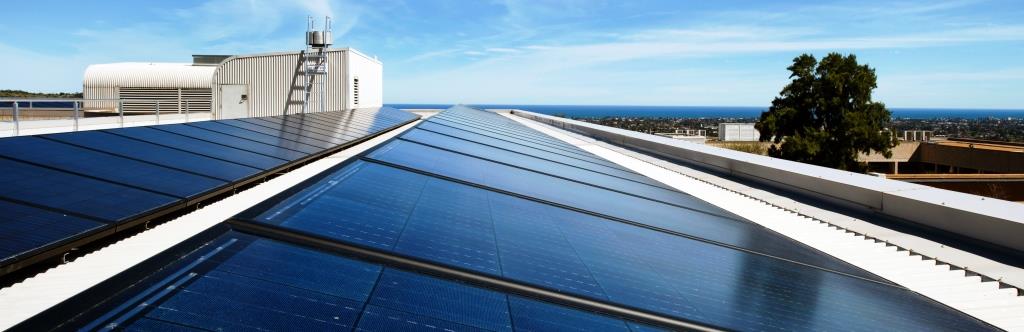
It powers our homes, dictates when and how well we sleep – and can even be harnessed to map the environment around us. However you look at it, there’s just no making light of light.
That’s why it will be the hot topic of this week’s ‘Flinders Investigators’ public lectures to celebrate National Science Week.
Wednesday’s lecture (19 August), in collaboration with Flinders University’s Faculty of Science and Engineering, will focus on the use of the sun’s power to map the environment around us.

Robert Keane, from the School of the Environment, and Andrew McGrath, from Airborne Research Australia, will lay out how Light Detection and Ranging (LiDAR) technology can be used.
Mr Andrew will show how LiDAR is having an impact on airborne research, while Mr Keane will bring his audience, at Flinders’ Science Innovation and Learning Centre (Bedford Park campus) back to Earth by identifying some of its more unexpected and eye catching terrestrial applications.
Today’s lecture (Tuesday, 18 August), at Flinders’ Tonsley facility, turns the focus on the eyes – shedding light on how the windows to the soul may also hold the key to a good night’s sleep.
Ben Olsen, Managing Director of Re-Timer Pty Ltd, the South Australian company behind the body clock shifting Re-Timer glasses, will talk about how the technology invented by Flinders University’s Professor Leon Lack harnesses the power of LEDs to adjust our internal body clocks.
Stay informed, daily
Mr Olsen will share how Re-Timer’s green light technology helps people with everything from jetlag to delayed onset sleep disorder, following its evolution in Flinders research labs from a research dream to a viable commercial reality.
The first lecture (Monday, 17 August), sees Professor Joe Shapter and Professor David Lewis reveal the latest and most incredible ways in which solar power can be harnessed to meet the world’s growing energy demands.
Professor Shapter is Dean of Flinders University’s School of Chemical and Physical Sciences, while Professor Lewis is a Professor of Materials Science, and the Director of the Flinders Centre for NanoScale Science and Technology.
For more information, or to register for any of Flinders Science Week Flinders Investigators lectures, click here.
Want to see more stories from InDaily SA in your Google search results?
- Click here to set InDaily SA as a preferred source.
- Tick the box next to "InDaily SA". That's it.