Citizen juror savages “undergraduate” democracy reforms
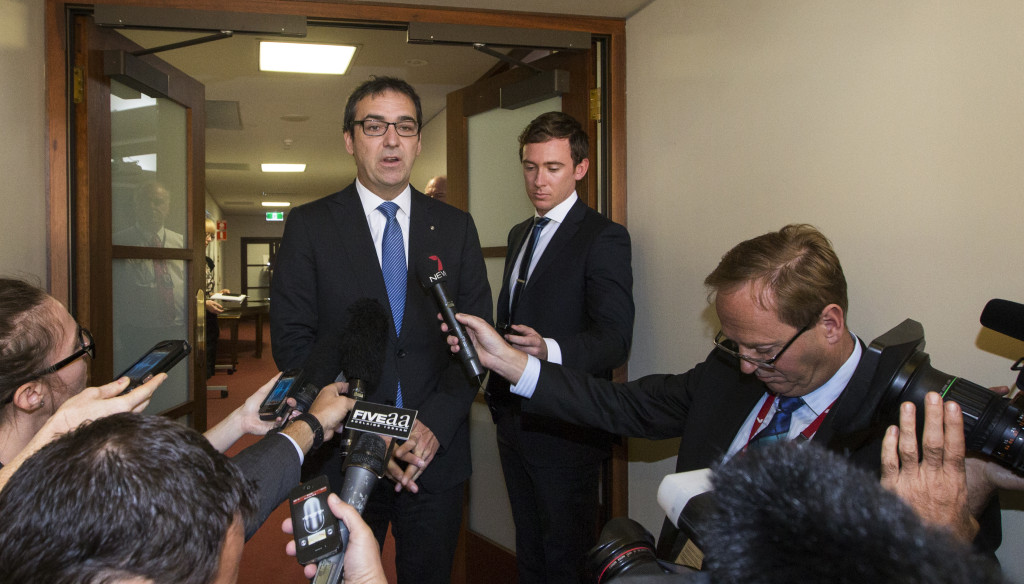
A member of the Weatherill Government’s inaugural citizens’ jury has described the process as “undergraduate” and “substandard”, with jurors encouraged to focus on “headline” recommendations rather than consider policy questions more deeply.
InDaily yesterday revealed Premier Jay Weatherill’s policy plan for “Reforming Democracy”, which promises at least two more citizens’ juries by the end of 2017.
There have already been three such engagement processes, with the first in 2013 seeking input from 43 randomly selected voters on how to ensure a “vibrant and safe Adelaiode nightlife”.
Awkwardly for Labor, one of those selected was Daniel Gannon, who was then senior media adviser to Opposition Leader Steven Marshall. Gannon has since moved on to become executive director of the SA Property Council.
“My opinion was we had 69 members of the house of Assembly and Legislative Council democratically elected to make decisions, and that position was maintained throughout the course of the process for me,” Gannon told InDaily.
“I thought that the process by which we prepared that report on vibrancy and nightlife was probably a little undergraduate.”
The participants were chosen after a direct mailout campaign to 22,000 recipients randomly selected, according to Gannon, based on location, gender and age. They were invited to register for the jury, with the final 43 whittled down from the 1200 who did so.
You might like


“I was disappointed in the standard of the report that was produced,” Gannon reflected.
“We were reminded consistently by the facilitators that we shouldn’t drill down into too much detail when compiling recommendations … that seemed a little counter-intuitive to me.
“We were essentially encouraged to provide headline recommendations.”
At a time Gannon was masterminding the Liberal strategy to oppose Labor’s “toxic” carpark tax, one recommendation of the jury was to “withdraw measures, including cost barriers, that discourage people from driving into the Adelaide CBD and therefore discourage them from contributing to vibrancy”.
The report noted, however, that one juror dissented on that point, and the Government deftly avoided the recommendation in its response, merely pointing out some of its existing integrated transport measures.
“I thought one good way to improve the process would be to raise the standard of the report component,” Gannon said.
“I felt that the level of research and evidence, and that leadership with those who presented to the citizens’ jury, wasn’t at the standard it could or should have been (although) that process might have improved in the two or three subsequent juries that took place.”
The inaugural jury was selected and moderated by the Sydney-based New Democracy Foundation, a not-for-profit research organisation.
Stay informed, daily
Foundation executive director Iain Walker told InDaily Gannon was “great all the way through” the process.
“(A Liberal staffer) was one of those fun things to have as an anomaly,” he said.
He defended the depth of the process, arguing “we’re keen to not turn people into subject matter experts, no more than when you attend a criminal jury you can’t become a ballistics expert”.
However, he insisted, citizen jurors “learn and consider far more on a topic than the average voter, and I’d argue than most elected representatives”.
The sessions were conducted across five full days spanning around three months, but Walker says “people will use as much time as we give them”.
“We think 40-50 hours on a single area of policy is substantive … this is the opposite of an opinion poll,” he said.
“We operate on two simple principles … can we make decisions more representative and less adversarial.”
He said new approaches to democratic participation were gaining traction, such as the push by Federal Liberal MP Craig Laundy to spearhead the cross-party Friends of New Democracy group.
Walker says processes such as this have been necessitated by a “low level of trust” in the community.
“If you want to start to criticise the jury methodology – how’s the status quo? I ask people to consider how substantive is political discussion today?”
In his capacity as head of the Property Council, Gannon yesterday responded to Weatherill’s Reforming Democracy plan in a statement, which read: “The property sector is left wondering, are citizens’ juries the right vehicle in which to deliver jobs and build business confidence? The answer is no. Confidence is built on the back of tax reform, planning reform, and a clear plan to transition our economy.”
Gannon said jurors were offered around $100 for each of the five sessions of ‘jury duty’, although he elected to have his fee donated to charity.
Want to see more stories from InDaily SA in your Google search results?
- Click here to set InDaily SA as a preferred source.
- Tick the box next to "InDaily SA". That's it.