Wine, as a fair percentage of our rural population knows, is a tricky business and treacherous.
When you have the Winemakers’ Federation of Australia admitting that only 15 per cent of the nation’s grapegrowers made a profit last year you must soon realise that the #1 glamour business in agriculture leaves a bit to be desired.
Pay particular attention to a major problem province like the South Australian Riverland, where the vineyards spread from one horizon to the other, and that figure’s a damn lot worse and worsening.
One of the, er, problems is the infernally slow time frame involved in properly planning and setting up a professional purpose-built vineyard.
By purpose-built, I mean an outfit designed to make a profit. To do this, one usually must build a wine of particular gastronomic allure, which means something whose quality must fit in, what? – the top 15 per cent of bottles on the shelves?
How much of that percentile has particular gastronomic allure?
This writer is infamous among his friends in the winemaking business for suggesting most alcohol categorises pretty much in line with Keith Richards’ theory of music quality: “The ratio of good stuff to bad stuff doesn’t change – 97 bad; three good”.
To make a wine to fit that top 3 per cent from scratch, the prospective grower should first realise just how long and slow and infuriating that scratch is likely to be.
First, one must think of a flavour and discover the variety, or varieties, that would blend to achieve that flavour.
You might like


Then you must find a site where those selected varieties will best achieve that goal, giving regard to climate, soil, geology, aspect, proximity to market, transport and other sundries, and purchase the land.
There goes at least a year. Add another for soil preparation and the procuration of cuttings of the suitable clones and with some luck you’ll have wine plants in your ground. Three years later you’ll get your first crop. If it’s premium red it’ll be three more years before your launch. If it’s a cellaring red like, say, Grange, it’ll be at least a decade until you, or your bank manager, really knows how close you’ve got to your target.
If your vines are in tricky ground, as most vineyards are, it may take them 10 or 15 years to get their roots into where they should be for maximum flavour and provenance.
Very generally you’re talking about a 10 to 20-year timeframe. Not much agriculture works like that.
Newcomers to this glamour industry are slow to admit that it takes a whole suburban liquor barn to offer a range of flavours as wide as you’ll find in, say, the average roadhouse cool drinks fridge.
When this does sink in, these folks become desperate to discover the next big flavour, like the next Sauvignon blanc. In the last 15 years this search has seen the haphazard planting of a confounding mob of varieties new for Australia, mainly from the north-west Mediterranean coasts. Varieties that end in O.
So in a mad disorganised scramble, the buyers collectively pressure the growers, most of whom are outside of that top 3 or 15 per cent in the quality stakes, to suddenly change the flavours of their vineyards.
What can’t go wrong?
For the consumer, this brings certain confusion. There are far too many average and below-average products of types not seen before.
But even sadder is the news that this ideal product we’ve been aiming for is going to cost you, what? Between $4 and $10 per standard drink?
Which leads us to vodka.
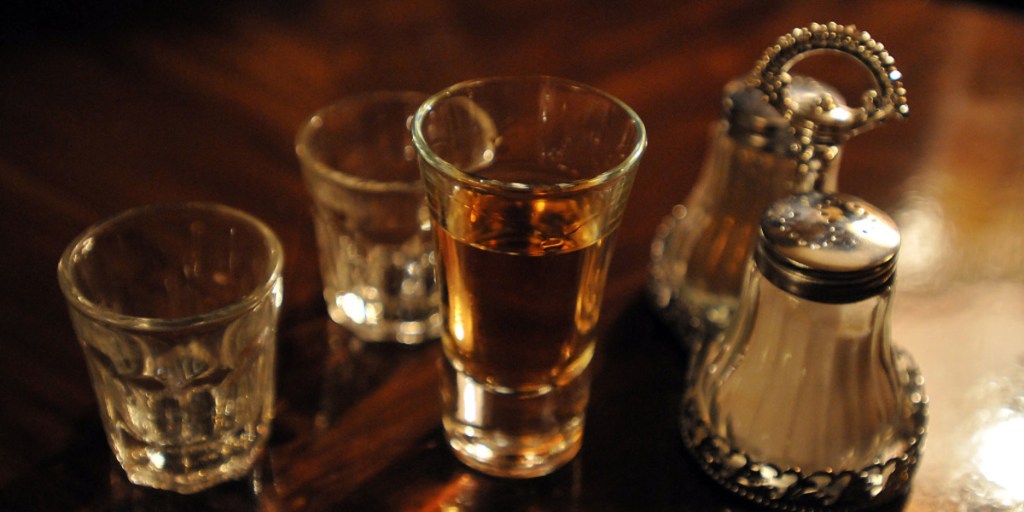
You can walk into a Hungry Dans right now and buy a litre of Absolut vodka for $50 – $1.56 per standard drink.
Stay informed, daily
Absolut is a very clean spirit made from grain grown in north-west Europe. This grain can be harvested and stored for a full year or more, providing a continual 12 months of production. The grain is crushed and fermented to make a rough beer which is purified and strengthened in continual stills. The resultant ethanol, which is particularly clean in Absolut, is watered, bottled and shipped to Adelaide.
This provides the thirsty gastronome with a phenomenal array of flavour opportunities, and you don’t even need a cocktail bench.
You won’t be mixing yourself up a quick Grange, of course, but you can emulate the flavours of many of your favourite drinks, alcoholic or not, sometimes getting very close to the flavours of wine.
Here’s where you can learn that it’s all about alcoholic strength, intensity of flavour, texture, acid, sweetness and tannin, and it won’t take 20 years.
Start with with herbal infusions from the ‘tea’ shelf at your local supermarket. Try, say, chamomile for simplicity. This has its own soft tannins and produces a liquor of considerable soothing oiliness to equate, say, a buttery Chardonnay. You don’t need oak – there are enough natural lignins in the chamomile. You can sweeten this with a favourite honey (there’s another range of floral concentrates) or sugar, and use a squirt of lemon or lime juice for acid.
When this cools, add your standard drinks’ worth of vodka. If you want the notion of a still wine, add a little water. If you want fizz, go for the iceblock and a shot of soda.
But we’re still boringly close to wine. To widen the view to broad horizons like those the bright wunderkinder of the winebusiness expect the growers of our Riverland to suddenly produce on a whim, take yourself to the Madame Flavour Tisane rack.
For provocative adventures of the blonde hue, play around with the Lemongrass, Lime and Ginger sort (garnish with shaved ginger root) or the Mint Lavender blend. Mix ’em up!
Darker drinks can be built with the Luscious Licorice … add some beetroot juice, cranberry, cherry or pomegranate.
In a cheating backdoor manner, you can learn enormous amounts about the structure of wine in this organoleptic playground.
Don’t ignore your herb collection – add fresh as a garnish, or use a little dried herb in your infusion.
We haven’t even talked about the juices of fresh fruits.
One of my staple favourites is dead simple. I brew a pot of espresso, let it cool, and have it with Absolut and soda on the rocks.
No vineyard can do that.
So why aren’t some of our desperate grape farmers growing barley for vodka? With some well-aimed research and administrative assistance? Well within the timeframe of that mimimun wine development cycle you could flip the business around. No?
drinkster.blogspot.com

Want to see more stories from InDaily SA in your Google search results?
- Click here to set InDaily SA as a preferred source.
- Tick the box next to "InDaily SA". That's it.