Crucial time ahead for women’s soccer
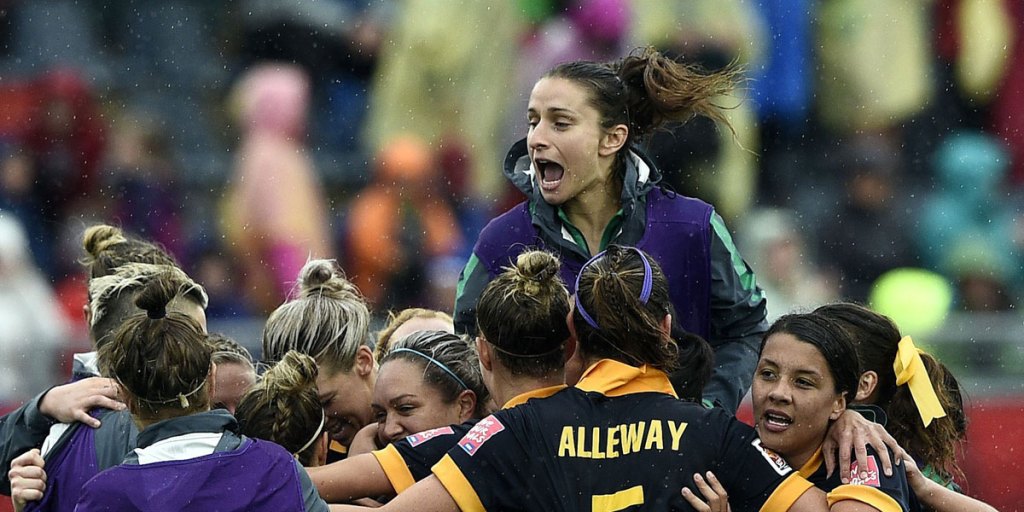
Could the Matildas have possibly captured more of the public’s imagination through their exceptional run at the FIFA Women’s World Cup?
Actually they could have – even without reaching the final.
Sunday morning’s loss to Japan cost Australia a dream semi-final against England with the match being played at 8.30am (Adelaide time) on Thursday.
We would have been able to build it up as an “Ashes” clash. Work colleagues could have watched the game together. Yesterday, today and tomorrow would have been full of columns mentioning that the team had never reached the semis before.
Even the most cynical sports fans – dismissive of soccer or women’s sport or both – might have found themselves caught up in the excitement.
But we’ve been cruelly denied. I almost feel like I should apologise for what I wrote a week ago as it proved to be prophetic: a team can be eliminated by one moment, perhaps a rotten piece of luck. And then that’s it. For four years.
Still, there has been unprecedented support for the Matildas. But that does raise a question: Why now?
You might like

There’s nothing new about the Matildas being one of the best international teams.
They went into the tournament ranked 10th in the world; they reached the World Cup quarter-finals in 2003 and 2007; and, in 2010, they won the Asian Cup.
Which is a big deal. The year after the Matildas won the Asian Cup, regional rival Japan won the World Cup. China is a former World Cup runner-up and both Koreas are traditionally strong too. Four Asian nations were in the last 16 of the current tournament in Canada.
There’s been a lot of comment about this team’s impressive style of play and its positive approach, both on and off the field.
But again, neither explains the surge in popularity. Aficionados, not the broader public, tend to be more focused on tactics. And Matildas teams have always been spirited. Female players have often had to make sacrifices to wear the green and gold – they’re not doing it to become wealthy.
Irrespective of what caused this increased enthusiasm, it presents an opportunity which might not come around again.
If women’s soccer is going to reach a level that allows our best players to earn more while helping the Matildas become top five instead of top 10, the next 12 months are crucial.
To continue the momentum generated over the last three weeks, two things should happen.
Stay informed, daily
The first is easier said than done – the Matildas need to qualify for next year’s Olympic Games in Rio.
That will be much harder than qualifying for the World Cup. Only 12 teams play in the women’s football competition at the Olympics and Asia gets just two of those spots.
Those two spots will be decided by a qualifying tournament in Japan in February/March. It’ll be tough.
The good news is you can help achieve the other outcome that’s needed – more people have to embrace the women’s domestic competition, the W-League.
It’s not much harder than what many people spent last week doing after reading about how poorly paid the players are – sharing those articles through social media.

If a new television broadcaster is found for the 2015/16 season (after the ABC cancelled its coverage), then watch matches and contribute to their ratings. And go to a few games. Nearly all the women who have been starring for Australia at the World Cup play in the W-League.
Without that immediate support, there’s a risk the memories of the Matildas’ heroics in Canada will fade, sponsors won’t get on board and (particularly if they don’t qualify for the Olympics) the team won’t reappear on the sporting radar for another four years.
Then, come 2019, the Matildas mightn’t have taken another step forward. The viewing numbers for that World Cup may be lower too (as it’s in France, any evening matches will kick off at around 3.00am or 4.00am over here).
That wouldn’t do justice to the ever-increasing number of women participating in the sport. They should continue to have players to look up to. Those who aspire to be Matildas themselves shouldn’t have to accept that a career in the game might involve the kind of financial challenges facing many of our best players now.
So if you’ve enjoyed the Matildas’ run and care about the future of women’s soccer, play your part. The time to do so wasn’t just last week. It’ll come again when the next W-League season begins in spring.
Paul Marcuccitti writes a weekly soccer column for InDaily. He is a co-presenter of 5RTI’s Soccer on 531 program which can be heard from 11am on Saturdays.
Want to see more stories from InDaily SA in your Google search results?
- Click here to set InDaily SA as a preferred source.
- Tick the box next to "InDaily SA". That's it.