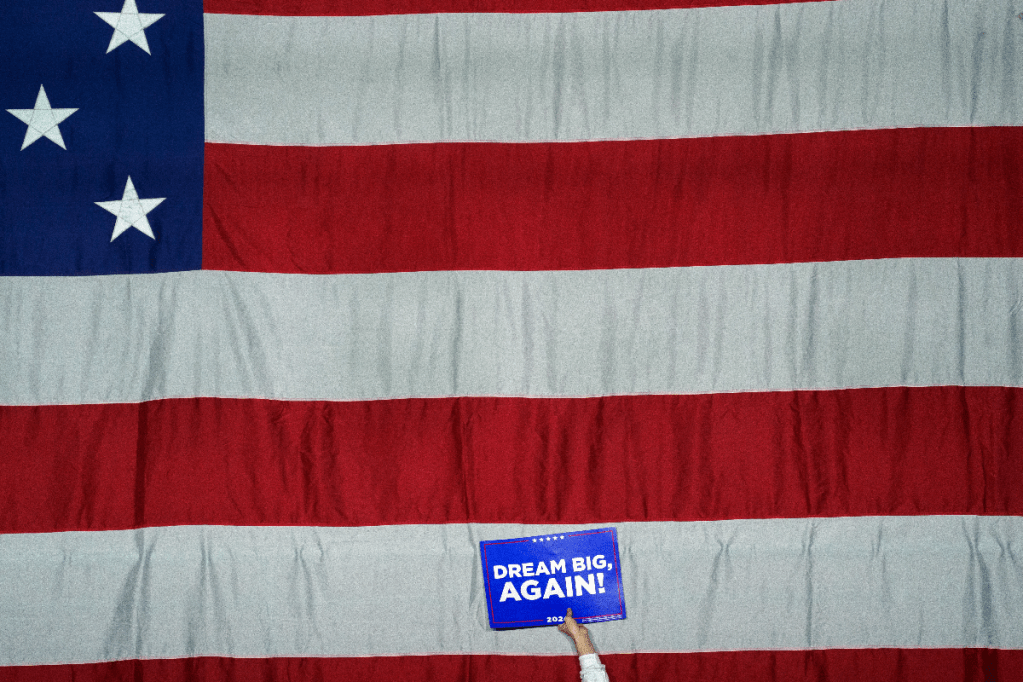
You have to think anyway, so why not think big? Donald Trump
Joe Hockey may not rank billionaire and latter-day reality TV host Donald Trump among his economic advisers but there is an elegant simplicity to Trump’s advice on “thinking big”.
With the public debate over taxation stimulated by the Federal Government’s discussion paper on taxation gathering pace, Hockey should do the nation a favour and encourage the widest possible consideration of reform.
With past taxation reviews either constrained by their terms of reference or resulting recommendations scuttled by partisan political imperatives, now is the time for the collective national imagination to be let off the leash. Put simply, it is time to ‘think big’.
The discussion should not get bogged down in the minutiae of redesigning the GST as if this is the only option. To do so would be to ignore the myriad complexities and inefficiencies of the rest of the tax system.
You might like

As the review headed by Ken Henry pointed out in 2010: “around 90 per cent of Australian tax revenue is raised through only 10 out of some 125 different taxes that are currently levied on businesses and individuals”. The top 10 include state payroll tax and stamp duty.
For a relatively small amount of revenue, 115 taxes at both Commonwealth and state level impose a massive compliance burden on businesses and individuals. As the Parliamentary Secretary to the Prime Minister, Christian Porter, told a Business SA red tape forum recently, the total cost of regulations imposed by the Federal Government was $65 billion a year, with the Treasury portfolio (which includes the Australian Taxation Office and Australian Securities and Investments Commission) imposing 72 per cent of the total.
As Joe Hockey’s discussion paper says: “Our tax system is too complex, with significant resources spent on tax compliance and tax management activities … Governance arrangements should ensure tax design and administration practices minimise unnecessary complexity and support the implementation of sound tax policy.”
We couldn’t agree more. So why not think big and aim for a radical overhaul of the taxation system? In the past vested interests and political expediency have stood between some good ideas and potential reform. But the public has shown on several defining occasions – the imposition of levies for the gun buyback in the 1996-97 and more recently for the National Disability Insurance Scheme – that they will accept additional taxation if the cause is just and the rationale is well explained. Which is not to advocate higher taxation but rather to simply point out that the public is willing to embrace change when it is clearly explained. And frankly, given the paucity of political dialogue in recent times, they are long overdue to be offered some big ideas.
Stay informed, daily
So, what is on the table? Basically, everything. Critics should have to explain why something should be off the table rather than in the tax policy mix. And the discussion should not be limited to revenue raising. As John O’Flaherty, the outgoing chief executive of Statewide Super noted in his recent appeal for some policy certainty on superannuation, such economic instruments do not operate in isolation.
O’Flaherty said any discussion of principles on superannuation should be broader than superannuation itself and include such issues as the level of income required for a reasonable retirement, the age entitlement and operation of the pension, related taxation issues, health and aged care, and the position of non-income earners.
“These issues need to be brought together and be translated into a coherent policy and not have one arm of government playing games with one bit of the system which all of a sudden impacts on other people,” he said.
One can mount the same argument in regard to taxation reform. It’s time to think big and look at the broader picture. Only then will Canberra truly gain a constituency for change.
But the imperative for big thinking and necessary change does not rest with the Federal Government alone. We are long overdue for the Federal Opposition to set aside political partisanship and start working with the Government in the national economic and social interest.
The new ReturnToWork regime that replaced the struggling WorkCover insurance scheme in this State showed the benefits that can be reaped with the Government and the Opposition agree on important reforms.
The reformed ReturnToWorkSA was legislated last year and achieved a dramatic reversal from an unfunded liability of $1.13 billion at 30 June last year to record $20 million in net assets in the six months to 31 December 2014.
As a result, the scheme which provides income support for injured employees became fully funded and, at same time, facilitated a fall in 2015-16 premiums for business to 1.95 per cent of a firm’s remuneration costs – the lowest since the inception of the insurance scheme in 1987.
If the Federal Government and the Opposition can find some common ground, it will also put pressure on the cross-bench senators to put aside their narrow electoral self-interest and start thinking big as well, and hopefully voting accordingly.
At all levels of government and within the lobby groups that influence our lawmakers, there is a need to come up with some big ideas and start acting in the national interest. To do otherwise as the economic clouds gather is no longer an option.
Nigel McBride is the Chief Executive of Business SA
Want to see more stories from InDaily SA in your Google search results?
- Click here to set InDaily SA as a preferred source.
- Tick the box next to "InDaily SA". That's it.