Public sector reform through disruption
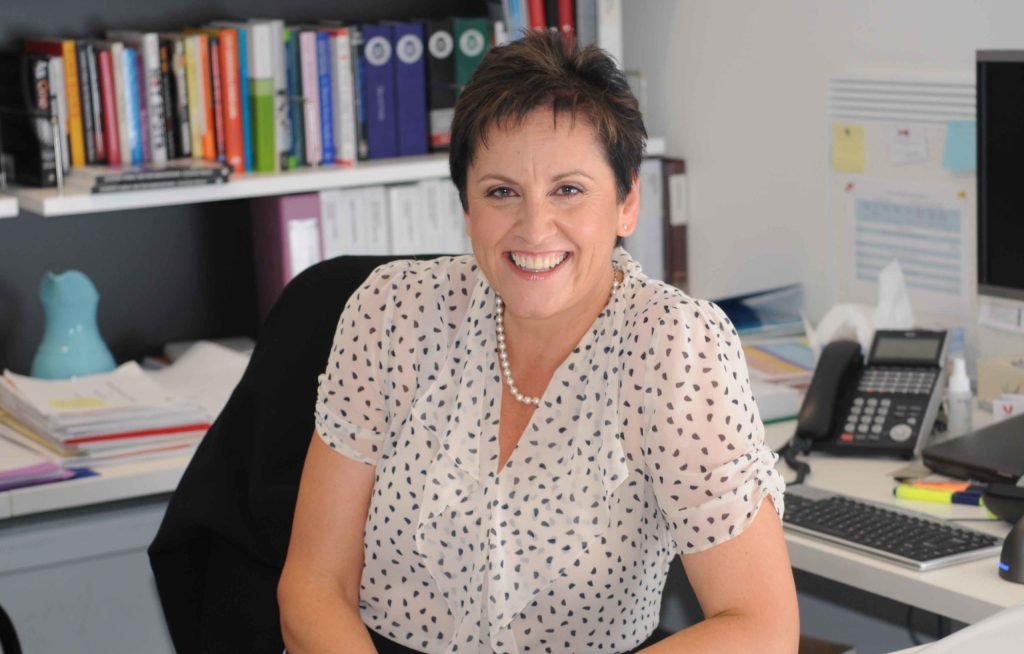
It’s not often that the word “disruption” is regarded as a positive, particularly in the public service. But that’s exactly the way in which Erma Ranieri describes her role and ambitions for South Australia’s public sector.
In fact, Ranieri is intent on “inverting the pyramid” of traditional public service structure and authority to bring more community engagement, leadership, and accountability into the system which, in turn, will ultimately provide better service for the State’s citizenry. The Commissioner for Public Sector Employment is talking figuratively, not literally, but the idea is founded on disrupting the status quo as a foundation for reform.
In an interview with Business Insight, Ranieri says that new thinking is required for a public sector that has to adapt to a changing world and that need extends throughout the organisational structure.
Ranieri maintains that accountability needs to be “sharpened” at every level of government and that a tendency towards risk aversion means that some public servants are reluctant to acknowledge problems or service shortcomings when they occur.
“If you don’t make accountabilities clear, if for instance, people who are serving on a counter don’t believe they have actually got the authority to make decisions, then it will look like we are not serving a customer (or) stalling an outcome,” Ranieri said.
“Then you must look up the line to actually see why that’s missing.
You might like

“In terms of my role, I can’t change everything but what I can do is sharpen the level of responsibility going all the way down and say: ‘Look, performance management is actually mandatory. Are you doing it? And more importantly, are you talking to your people every day. If there are issues, are you addressing them?’
“That’s the stuff that I’m very interested in doing. It’s happening in some pockets where you have got good leaders but it can’t be by chance. We actually have to have it happening everywhere and leaders need to be made accountable for that accountability down the line.”
The Telstra SA Business Women of the Year in 2014 with 30 years of public and private sector experience, Ranieri rates very highly the technical skills of the state’s public servants but says fresh thinking is required in terms of the regulatory and managerial regimes.
“Things are changing and maybe the way we regulated or the way we made rules in the past may need to be looked at in the future,” Ranieri said.
“If you are asking me if (public servants) have the capability to think outside the square, to involve citizens in decision-making and policy development, that is new for some people.
“In fact, some public servants would see themselves as being the expert and (thinking) ‘we do this on behalf of the community’.
Stay informed, daily
“So we are requiring a shift (to) what I would call adaptive leadership skills – you may not know the answer, you may not be the one giving the orders, and you might get the answers from someone else.
“It is almost challenging that old paradigm of leadership and saying: ‘Well, the boss may not have the answer’. So, I’m almost saying: ‘Turn the hierarchy upside down so that the pyramid actually has the person who delivers the service at the top and us, as leaders, including myself, empowering that person to be making that decision.”
Ranieri says the next wave of leadership throughout the public service will require both “adaptive” and technical skills.
“You do need the technical skills but to shift a culture and actually do things differently you need people to be thinking differently, and to not feel threatened by that.”
The Commissioner for Public Sector Employment and her team have set themselves a set of 2015 objectives centred on three themes – ‘building strong foundations’, ‘engaging our people’ and ‘forging our future’.
Among others, these goals encompass lifting the professionalism of the public service, delivering ‘game-changing’ government policies, ‘developing leaders not just managers’, improving responsiveness, and putting the welfare of employees first so they can reach their full potential.
Ranieri notes: “You get the most out of people when you hold them to account but you also have to nurture them.”
While describing herself as a “realist”, Ranieri says the adoption of the change@southaustralia initiative with the implementation of its 90 days project scheme – which has completed 56 projects to date – shows what can be achieved in a relatively short time.
“Culture change takes a long time but I believe you need a burning platform and you have to create that. So the burning platform for us (is the) economy and opportunities to see and do things differently.
“I reckon over the next two years there will be a significant shift and certainly from my perspective I’ve got some really key imperatives that I would like do to help the institution build on that – whether it’s leadership development, capability development, setting professional standards, and maybe looking at different models for how we deliver internal services.
“I like to disrupt – some of us like to go in and do things differently and make it exciting.”
Want to see more stories from InDaily SA in your Google search results?
- Click here to set InDaily SA as a preferred source.
- Tick the box next to "InDaily SA". That's it.