Protecting the vulnerable from IS brutality
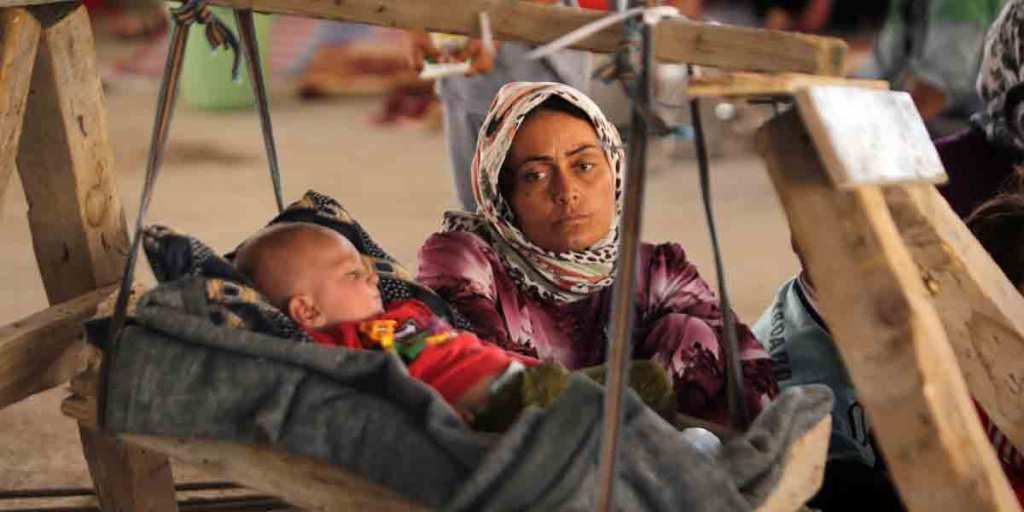
International agencies must protect the vulnerable people targeted by Islamic State, argues Adelaide lawyer Paul White who has just returned from the conflict zone.
In mid-2014 as the Senior Protection Officer with UNHCR – the UN refugee agency – in the small town of Dohuk in the Kurdish Region of Iraq I was happy to greet some unannounced visitors at my office. The two men belonged to the Yazidi – a religion and culture that is linked to the philosophy of Zoroaster and predates Christianity by some 600 years.
Like most of the UN staff based in Baghdad I had been evacuated in mid-2014 due to increasing risk of attacks by ISIS – known as Da’ish. I was assigned to Dohuk somewhat unexpectedly. My task was to work on the protection of internally displaced people – that is, those who had not crossed an international border but have been displaced by conflict and moved within Iraq.
The Dohuk Governorate, which shares borders with Turkey and Syria, already housed 200,000 Syrian refugees that UNHCR was assisting, mainly in camps and settlements. Soon after my arrival the Governor of Dohuk would need to find space for 500,000 internally displaced Iraqis from Mosul and Sinjar. The schools were the first to fill up with displaced people; then unfinished buildings and roadside camps developed including some under bridges and overpasses. All dwellings were very basic but with 200,000 refugees already in Dohuk there were few options available.
I knew little of the Yazidi. I was aware they were believers in a single God as creator and I had heard of the Peacock Angel they considered their leading angel. I had heard they were prohibited from wearing blue and eating lettuce. I was also aware that there had been attempts to wipe out Yazidi but not that there had been over 70 attempts at genocide of this group since the seventh century.
You might like
The purpose of the visit to my office by two Yazidi men was to enable them to seek some assistance from the UN for their relatives who had fled their village and gone to the Sinjar Mountain – some 250 kilometres from where I was sitting. This was not the time or place to discuss the Yazidi history and beliefs. I listened as they spoke with their relatives over the phone. The families of my visitors were under attack by Da’ish on the mountain and many people on the mountain had humanitarian needs. The information was passed to those in the UN responsible for civil-military liaison and those organizing an evacuation of civilians from the mountain. In time many Yazidi were rescued from the mountain.
"I learned from their first-hand reports that the modus operandi of Da’ish in Sinjar was to kill the men and boys. The women and girls were separated and some sent to Syria or to parts of Iraq controlled by Da’ish. Many were forced to work as sex slaves for Da’ish."
Just a few weeks earlier I had visited Sinjar town as part of the UNHCR delegation. Sinjar is a Yazidi area, with many shrines and other holy sites. Our delegation went there to meet the mayor to discuss how we could assist the local government cope with a large influx of displaced people from in and around Mosul seeking protection from Da’ish. A convoy of several trucks carrying our UNHCR non-food items was also travelling to Sinjar that day. Many displaced in Sinjar were Shia Muslims or from minorities including the mainly Shiite Turkmen and Christian Chaldean and Assyrian, all of whom were targeted by Da’ish. As UN international staff we had to be accompanied by UN security in our armoured Toyotas that contained various devices including one with capacity to block mobile phone coverage. Local UN security regulations required that we be accompanied there and back by Kurdish Peshmerga, who were in control of the area at the time. Our discussions at local government level and later with groups of displaced people indicated that there was much nervousness about the future. Some days after our delegation departed Da’ish took control of Sinjar and Yazedis and others fled many in the direction of Dohuk.
Sinjar appeared to be an isolated part of the world and life was fairly simple for most of the Yazidi Kurds who lived there. It was not an area in which any government had invested large resources over the years. Yet the locals were proud of it as it contained shrines and sites related to their beliefs.
Stay informed, daily
Based upon information provided by my visitors and others the UN assisted many of those families who survived the slaughter undertaken by Da’ish to leave Mount Sinjar where they had been sheltering in fear of further attacks. My visitors returned several times or I met with them near their new ‘houses’ – tents or basic structures in a very crowded camp or at the roadside.

Occasionally they would bring young girls sometimes as young as 13 who needed assistance after they had escaped from Da’ish or had been bought back by their family. I learned from their first-hand reports that the modus operandi of Da’ish in Sinjar was to kill the men and boys. The women and girls were separated and some sent to Syria or to parts of Iraq controlled by Da’ish. Many were forced to work as sex slaves for Da’ish. If media reports are correct, Australians who join Da’ish are also perpetrators of this brutality.
UNHCR worked together with Yazidi to try to find housing solutions for their people. Medical help and psychological follow up assistance was available for those in need. Some Yazidi see a need for the development of their own militia. As UN humanitarians we tried to ensure children were not recruited and that our camps did not becomes resting or recruiting sites for militia. Regular communication with Yazidi community leaders and those who support them gave us the opportunity to explain the UN position on recruitment and the seriousness of other grave violations impacting on children. We tried to ensure leaders had some understanding of international law.
Developing our understanding of this latest attempted genocide of the Yazidi by Da’ish (and the Sunni Muslim tribes supporting Da’ish) is important in itself so we can prevent any continuing destruction. We must find better ways to protect the future of this minority for many reasons, but also because the problems of the Yazidi are a microcosm of the situation of various other minorities in Iraq. Like other minorities, the Yazidi are not politically powerful nor strong militarily. Minority women in Iraq are subject to violence and discrimination both because of their sex and their minority affiliation.
In a society where government is based upon patronage networks the Yazidi are not in a strong position. As a religious minority in Iraq Yazidis continue to be targeted for abduction, rape and murder, and large numbers remained displaced. Like the Yazidi, many minority communities do not have the protection of either the authorities or militias so rely on international protection agencies and structures to ensure their survival.
Paul White is an Adelaide lawyer who has just returned from Dohuk where he led the UNHCR’s protection team.
You can hear more from Paul about his work in the Middle East at a free lecture tomorrow evening (Thursday, 9 April) hosted by the Hawke Centre at UniSA’s City West campus. Details here.
Want to see more stories from InDaily SA in your Google search results?
- Click here to set InDaily SA as a preferred source.
- Tick the box next to "InDaily SA". That's it.