Why Aussies should embrace Qatar 2022
Qatar 2022? Bring it on.
Yes, on Friday we heard confirmation that the 2022 FIFA World Cup in Qatar won’t be played in the traditional months of June and July, and will instead be played in November and December.
Yes, we knew this would probably happen as Qatar’s heat is extreme in the middle of the year and because FIFA leaders had already said the change was likely.
And yes, all the bidding for 2022 was done on the basis that the tournament would be held in June/July, when top European leagues are out of season.
It’s the latest affront since the decision to send the World Cup to the tiny gulf nation was made more than four years ago.
So of course the sensible thing to do over the weekend was indulge in another round of outrage by reading columns designed to infuriate and then adding comments filled with bile.
Australia was in the race for hosting rights and we do a magnificent job staging big international sporting events. There was certainly a time to be disappointed about the decisions made by FIFA’s executive committee in December 2010.
But there was also a time to get over it. And it was long before now.
"And it has to be said – there are a lot of things about hosting a World Cup that you won’t like."
You might like

There are serious problems in the lead up to Qatar 2022. Reports that migrant workers have been dying in the construction of infrastructure have led even FIFA President Sepp Blatter to call for more to be done to improve workers’ conditions.
More noise has been made about allegations of vote buying, which is undoubtedly important, however we’re also being encouraged to be angry about the one-off disruption to clubs in Europe who will have to interrupt the 2022-23 season and release their players (definitely a matter of life and death).
How will penniless charities like Manchester United, Bayern München, Juventus, and Real Madrid cope?
A few weeks ago, Fox Sports’ Simon Hill, a highly respected voice in our game, suggested that those hard-done-by “major European nations” should boycott the 2022 World Cup. He followed up on Saturday saying, among other things, that fans could do the same.
Which European nations should withdraw first?
What about Spain and Portugal, which made a joint bid to host the 2018 tournament, accused by the polar opposites of the FIFA President and a FIFA whistleblower of trading votes with Qatar for mutual benefit?
Perhaps England, another bidder for 2018, also put under the microscope for alleged collusion with South Korea’s campaign to host 2022?
Maybe France could lead the boycott. Its most powerful official Michel Platini, President of UEFA (Europe’s regional confederation), admitted that he voted for Qatar long ago and has also been a strong supporter of moving the tournament to November/December for some time.
Have the other Europeans shown their displeasure with Platini for championing a winter World Cup in Qatar?
Hardly. He was up for re-election as UEFA President a few months ago and the rest of the continent didn’t find a single candidate to oppose him.
Those Europeans sure have a lot of credibility.
Doubtless many of our complaints are fuelled by the idea that the tournament could have been held here in 2022.
Stay informed, daily
Except it probably wouldn’t have been. We didn’t come second in the vote, we came fifth. The United States, South Korea and Japan all received more support. Unless most of the 11 FIFA executive members who voted for Qatar (in the first round of voting) would have chosen Australia over those other three nations, we still wouldn’t have had a chance of succeeding in Qatar’s absence.
And it has to be said – there are a lot of things about hosting a World Cup that you won’t like.
Let’s start with tickets. Adelaide Oval’s capacity is more than 53,000 so that means a lot of South Australians will get to see games there, right?
Not so fast. Standing areas aren’t allowed by FIFA, so we’re already down to 50,000, perhaps boosted by some temporary seating on the hill. Then you have to clear out about 6000 to 7000 seats to accommodate the giant media centre that each World Cup stadium needs.
After tickets are given to multinational sponsors, VIPs, fans from the competing teams and other overseas supporters, around 40 per cent to 45 per cent (only about 18,000 to 20,000 spectators with the reduced capacity) are likely to be left for Australians for each game in Adelaide. Some of them will be snapped up interstate too. Many people will miss out and that will include genuine local fans.
You also have to give up sovereignty to FIFA. Its organisers will want the keys to the stadium several weeks before the first match there. Throughout the duration and in all pre-tournament marketing, it will be known as FIFA World Cup Stadium Adelaide. It will only be called Adelaide Oval again after the show is over.
Even FIFA’s Fan Fests, where people can go to a large outdoor area to watch matches on a big screen, are FIFA enclaves. They can be a lot of fun but once you go through their turnstiles, you leave the country that’s hosting the World Cup to enter FIFAville.
FIFA’s sponsors dominate the Fan Fest experience. Most of them set up booths there to promote their products. To ensure you consume nothing but those sponsors, you’re surrounded by high temporary walls (at the Fan Fest on Rio’s Copacabana beach, you were much more likely to see the logos of Hyundai, Emirates and Coca-Cola than you were to see the surf).
After ensuring that you spend plenty of money getting your infrastructure up to whatever level it deems acceptable, and after taking control of your stadiums and your cities’ best sites for its Fan Fests, when the party’s over, FIFA says “thanks very much” and leaves with all the revenue. It doesn’t pay taxes in the host country because it’s a non-profit organisation.
That non-profit organisation’s revenue for 2014 exceeded $US2 billion. Brazil’s reward for staging the World Cup last year was receiving a $US100 million “Legacy Fund” from FIFA, less than one percent of what the nation spent on public works to stage the tournament.
I’ve travelled to the last three World Cups so clearly I’m happy to visit FIFAville and contribute to its GDP. I’m just pointing out that, although they are wonderful, there are realities about hosting World Cups that many Australians (including many Aussie soccer fans) aren’t going to like. You may have noticed that even in Brazil, where the sport is adored, these realities resulted in large protests.
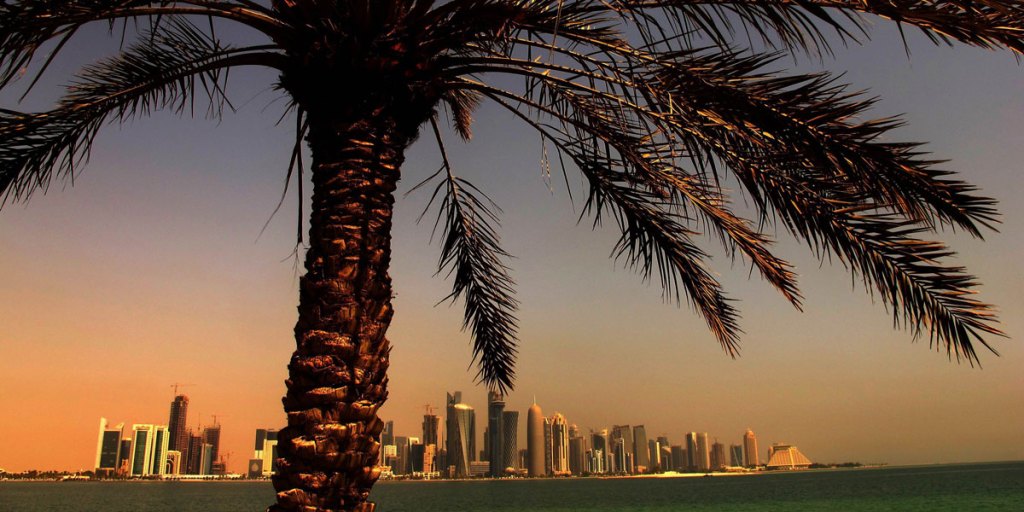
And Qatar? Bring it on.
More often than not, for most Aussie fans, watching World Cup matches live means setting the alarm for 2.00am or 4.00am, day after day, and then getting out of your warm bed on a cold winter night.
November and December with a slightly better time zone difference? Sounds great. An afternoon kick off in Qatar could mean a 10.00pm start here on a spring or summer evening. Invite friends over, fire up the barbeque and then watch the game together after dinner.
If you’re lucky enough to get there, you can stay in the same room for the duration because all the venues will be close by. In 18 days in Brazil, I boarded eight domestic flights and stayed in seven different hotels (some not worthy of the name) to get to five matches – it was a memorable experience but I’ll also appreciate easier logistical challenges.
So embrace Qatar (November/December) 2022. Enjoy it!
I hear Doha is lovely at that time of year.
Paul Marcuccitti’s soccer column is published in InDaily on Mondays. He is a co-presenter of 5RTI’s Soccer on 531 program which can be heard from 11am on Saturdays.
Want to see more stories from InDaily SA in your Google search results?
- Click here to set InDaily SA as a preferred source.
- Tick the box next to "InDaily SA". That's it.