Boosting productivity vital to prosperity
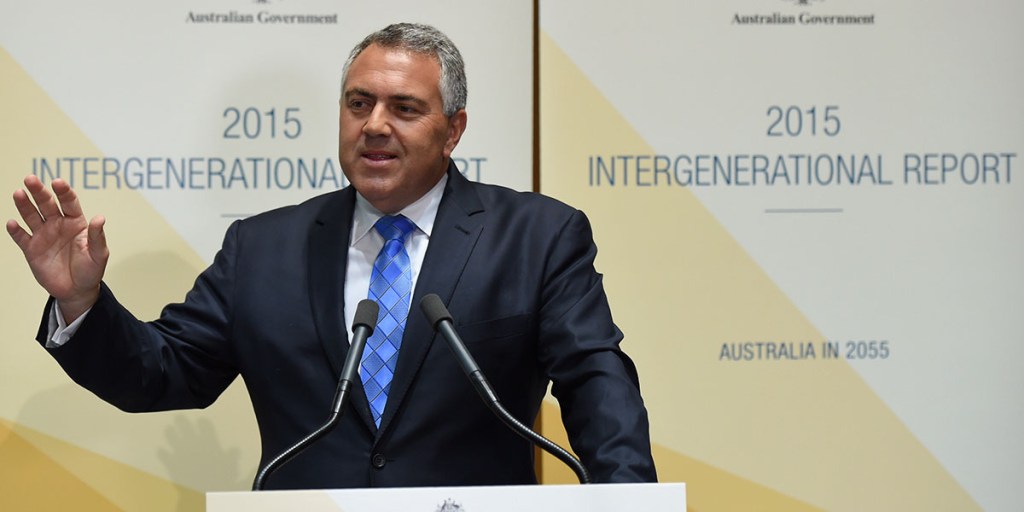
Australia must reverse the recent slowing in productivity growth if the country is to continue to enjoy the living standards experienced in the past 40 years, according to the 2015 Intergenerational Report, Australia in 2055.
Released by Federal Treasurer Joe Hockey last week, the report suggests the financial largesse generated by the 1990s resources boom dulled the enthusiasm for further microeconomic reform by governments in the 2000s.
“Reforms to enhance productivity over the next 40 years will be crucial if we are to achieve the growth in living standards we have enjoyed since the mid-1970s,” the report states bluntly.
Published every five years, the Intergenerational Report is a major analysis of Australia’s demographic, financial and economic conditions. The latest report includes forecasts and commentary on the country’s outlook to 2055.
The report notes that “labour productivity is expected to be the main driver of real GDP growth, with a smaller contribution coming from compositional changes in population”.
You might like


Australia’s productivity growth rose from 1.3 per cent per annum to 2.2 per cent per year in the 1990s on the back of the Federal Government’s reform agenda in the 1980s, before slowing to 1.5 per cent per annum in the 2000s.
“The slowdown in productivity growth between the 1990s and the 2000s has partly reflected the very high investment activity in the resources and utilities sectors and the slowing of growth internationally and in Australia since the Global Financial Crisis,” the report says.
“Nonetheless, these factors do not explain fully the breadth and magnitude of the slowdown in Australia’s productivity growth rates since the 1990s.
“Part of the slowdown may reflect the fading impact of past reforms. There have been fewer significant policy reforms since the early 2000s. Strong income growth, low unemployment and high rates of profitability through the 2000s may have significantly lowered the pressure on governments to undertake the necessary productivity enhancing reforms and reduced the incentive for businesses to become more competitive during this period”.
Stay informed, daily
It says that “some new environmental, water and electricity service standards have required many utilities service providers to invest in higher cost production technologies, which, while potentially enhancing the quality of service, reduce measured productivity.”
The report says that competition reforms in the 1980s and 1990s are estimated to have added 2.5 per cent to GDP above what it would otherwise have been over the 1990s.
“Continuing to encourage entrepreneurship and innovation, enhancing resource allocation, investing in and using infrastructure efficiently, facilitating trade with other countries and improving physical and human capital investment will all be critical to Australia’s future productivity performance.
“Efficient provision of infrastructure, including public infrastructure, is a hallmark of a well-functioning economy. Currently, deficiencies in certain aspects and usage of Australia’s infrastructure – including roads, rail and ports – limit business expansion and growth and undermine productivity growth and living standards.
“Investment in new infrastructure and making better use of Australia’s existing infrastructure assets is important to generating economic activity in the near term as the economy transitions from resources-investment-led growth.”
The report says Australia needs:
- A better tax system to deliver taxes that are lower, simpler and fairer if it is to enhance both productivity and participation in the workforce.
- Reform of the Federation to reduce costly duplication between Canberra and the States and Territories.
- Governments to learn lessons from the private sector on how to harness new technology more effectively.
- Continued budget repair if a surplus is to be achieved.
Want to see more stories from InDaily SA in your Google search results?
- Click here to set InDaily SA as a preferred source.
- Tick the box next to "InDaily SA". That's it.