AFL take note: how soccer boss won the fans
Andrew Demetriou must be shaking his head.
His decade-long tenure as Australian Football League boss was a period of extremely high growth.
Number of club memberships? Value of broadcast deals? Revenue? All reached record levels.
In our era of sport, in which the demand for financial strength and professionalism in administration never stops rising, these are measures used to determine success.
Yet the response of most of the kinder AFL fans to Demetriou’s legacy goes something like this: “sure, he did well in all those areas… but…”
Little more than a year after his appointment, Sydney Swans fans were shocked when Demetriou criticised their team’s style of football. He also predicted that Sydney wouldn’t win many matches playing the way they did. Five months later, the Swans were celebrating a drought-breaking premiership.
This episode also caused supporters of other clubs to question the AFL CEO’s judgement. Most would have known that Sydney’s coach, Paul Roos, was a popular player at the club and that its fans had backed his appointment when he was caretaker coach. An attack on the Swans’ style was an attack on their boy.
A bizarre claim, made on FIVEaa in 2013, that Essendon “cooperated fully” with the AFL over its supplements program while the Adelaide Crows failed to do so during #TippettGate (when trying to explain why Essendon’s penalties weren’t more severe than Adelaide’s), showed that Demetriou never lost the ability to light up internet forums and talkback radio.
You might like

For sport administrators, the inevitable result of getting fans offside is being blamed for all the game’s ills. It could be the inconsistency of the Match Review Panel, holding the ball interpretations or the price of hot chips at the SCG – the problem must be that chief executive you don’t like.
As fans, we’re also slow to credit all the things that are working well in our favourite sports while we’re quick to jump on the (usually few) things that are going badly.
But last week, something quite remarkable happened when David Gallop’s contract as CEO of Football Federation Australia was extended until the end of 2018.
The news was met with near universal support from Australian soccer fans.
How is this possible, especially when so much improvement is needed in so many areas of the game?
Many of our sport’s supporters want quick action to solve anything from the lack of A-League and Socceroos matches on free-to-air TV to the high costs of registering junior players.
Nevertheless, despite being in the job for two and a half years, Gallop still enjoys the supporters’ trust. Indeed, he seems to be quite popular.
A single act, just under a year into Gallop’s leadership of the FFA, won many soccer fans over.
He took a selfie.
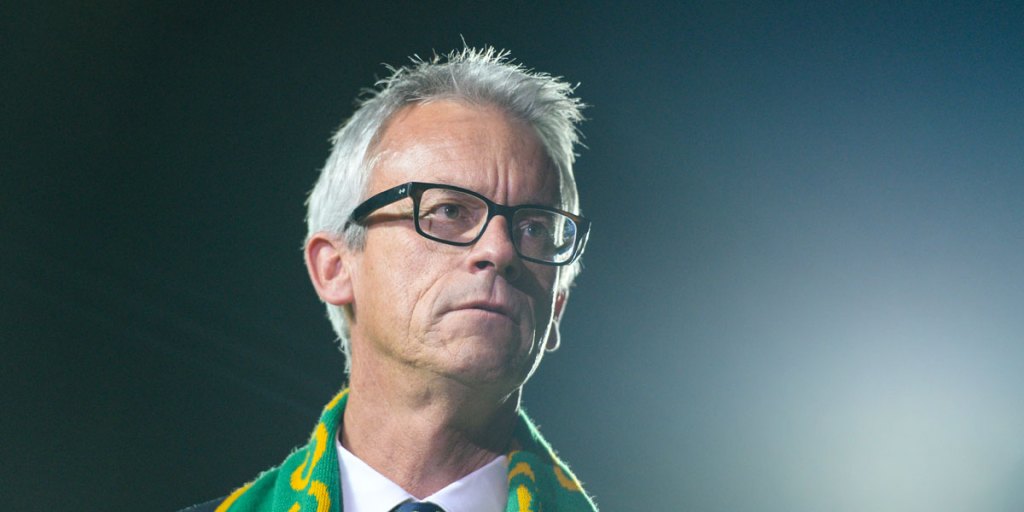
In it, Gallop is wearing the green and gold somewhere in Tokyo. The photo appears on Twitter (through the Socceroos’ official account) a few hours before Australia meets Japan in a crucial World Cup qualifier.
Stay informed, daily
It may not sound like a big deal. And perhaps Gallop never thought it would be. But his selfie became an instant talking point even beyond Twitter’s borders.
Gallop’s photo is a fan’s photo. It couldn’t be less like that picture we’re all familiar with of the VIP emerging from the best seat in the house with the recently bought scarf draped over the business suit.
When we saw our CEO’s selfie, we saw authenticity; the fan celebrating what we love about the game. Taking us to different parts of the world? Tick. Showing your team’s colours on match day? Tick.
He was even wearing the Socceroos shirt used at the 2010 World Cup, played two years before his appointment, rather than the up-to-date version. (Street cred!)
One popular twitter account declared: “David Gallop taking a selfie has to be the best thing I’ve seen all year.”

It’s possible that the photo was a public relations exercise trying to show how the former rugby league administrator’s eyes had been opened to soccer’s global appeal. But that would be almost as impressive – no one thought it was a stunt.
Of course, Gallop’s contract hasn’t been extended because he’s well liked. He’s being kept because he’s done an excellent job so far.
When a tired-looking Socceroos team was suffering embarrassing defeats under former coach Holger Osieck, Gallop strongly supported the appointment of Ange Postecoglou instead of looking for another overseas candidate.
He launched the FFA Cup, which gives state-based clubs the chance to join A-League teams in a knockout tournament, and its first edition was quite successful. Don’t underestimate the value of that. Many of those state-based clubs (particularly those that were giants in the National Soccer League era) feel they’ve been pushed aside by the A-League’s emergence.
Gallop has also shown that he’s looking ahead with a “National Plan for the Whole of Football” covering the future of the sport at every level. Its success can only be judged years from now but simply championing the need for such a comprehensive plan sends another important message to everyone involved in the game, from major sponsors to supporters.
It’s particularly refreshing for those of us who remember a time when it seemed like whoever was running soccer couldn’t look five minutes ahead in case he was stabbed in the meantime.
The sport still faces immense challenges. As well as those already mentioned, there are A-League clubs with uncertain futures, junior development needs improvement and integration of all the different levels of the sport still has a long way to go.
But winning over the fans means that if soccer struggles to meet those challenges, for a while at least, Gallop will have a rare asset that people in roles like his would dearly love: the benefit of the doubt.
Paul Marcuccitti is an Adelaide soccer fan and commentator.
Want to see more stories from InDaily SA in your Google search results?
- Click here to set InDaily SA as a preferred source.
- Tick the box next to "InDaily SA". That's it.