Richardson: The Jay who cried wolf
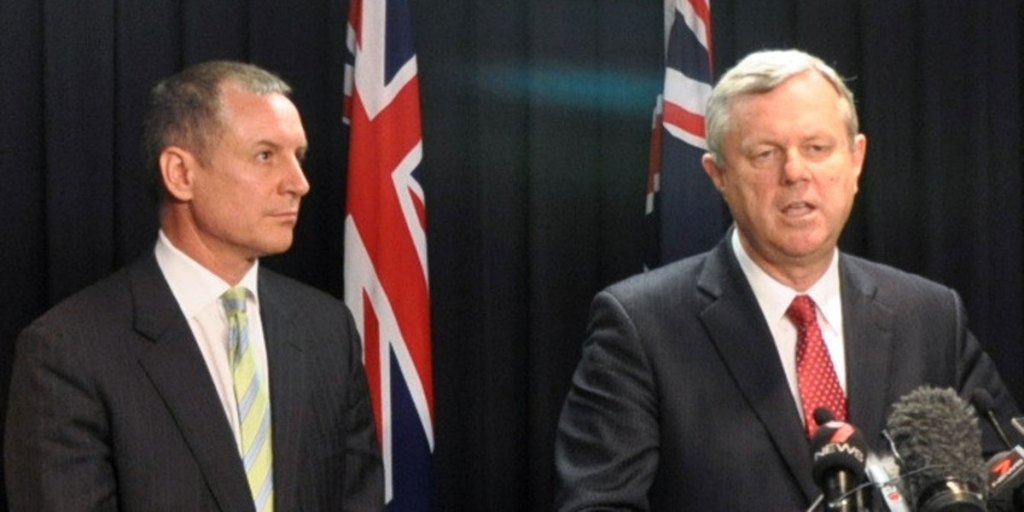
Are you gasping yet?
Are your socks knocked off?
Thus far, the balance of Jay Weatherill’s self-proclaimed “boldness” amounts to giving TV-watching punters the chance to live-tweet Q&A or MKR in real time.
It has been met with cynicism, of course, and some derision; that much is inevitable, for South Australians have become weary and wary of their politicians’ propensity for spin (that of their Labor politicians most conspicuously, having governed for 24 of the past 33 years).
“Overspruiking”, was how Jay Weatherill characterised it when, in a moment of self-reflection, he effectively jettisoned the “media management” baggage of the Rann era.
How then, can we characterise a Premier telling us, and telling us often, that his policy agenda will knock our socks off, make us gasp and that we “ain’t seen nothing yet”?
Weatherill will want to hope our collective definition of “boldness” conforms to his own, otherwise he will be responsible for the inevitable anti-climax when his vision ultimately underwhelms.
He risks being our latest political manifestation of the Boy Who Cried Wolf; telling us over and over again to expect big things, then tempering the subsequent disappointment with increasingly hysterical promises of bold agendas and radical governance.
You might like

The thing is, this is exactly the approach Weatherill derided in Mike Rann.
Indeed, as his Premiership plods on – and it is now in its fourth year – he increasingly resembles the man he ousted, the man from whose leadership style he pledged a clean break.
His Government is at once an amalgam of lofty notions as yet unfulfilled, and derisive hostility towards any whiff of dissent.
He described esteemed Supreme Court justice Malcolm Blue, whose scathing review of the Gillman land deal deemed the process “unlawful”, as “some judge”, casually dismissing his forensic examination as if it were the unstudied opinion piece of a right-wing commentator.
It was immediately redolent of Rann’s infamous rebuff of defence counsel Grant Algie as a “mullet-headed lawyer”.
The former Premier was a consummate salesman, but he had a tireless work ethic. I travelled overseas with him (at my then-employer’s expense) on two separate occasions, and he threw himself into those punishing schedules with endless vigour. The thing is, nothing he flagged on any of those trips actually amounted to much. We went to Chile to see Escondida, the world’s largest open-pit copper mine. The idea was that this would soon be superseded by Olympic Dam. Except it wasn’t.
In London, Rann announced University College London would be opening a campus right here in Adelaide. This week, the university opted to close the doors in 2017.
Other pipedreams didn’t even get that far: the McLaren Vale manufacture of the Marcos sportscar, for instance.
It always struck me as peculiar, if understandable, that Rann, on winning his famous 2006 “Rannslide” election rout, spoke of the journey from taking over as Opposition Leader post-State Bank “at the worst time in (Labor’s) history”, to a record victory.
“I am very privileged to be the leader of this great party at its finest hour,” he told the rapturous faithful.
Stay informed, daily
It was notable, perhaps, that Labor’s “finest hour” was not a policy achievement or major reform: it was a landslide electoral victory, just as its “worst time” was a desolate defeat. It says much about Labor in SA (and explains much of its recent electoral success) that it defines itself not by governmental achievements, but by political ones.
Thus far, Weatherill suggests nothing different.
"It’s conceivable either of them would have been more effective Premiers than Weatherill has been, but for the fact it’s unlikely either would have won the 2014 election."
A certain hubris has crept into the Premier’s demeanour of late, buoyed by an unlikely by-election win in Fisher and a five per cent swing in Davenport.
He has managed to conflate his political outcomes with ideological ones. Yesterday, in a speech to Business SA’s Back to Business lunch, he spoke of “reaching out to Geoff Brock because we needed a relationship with the regions” and to Martin Hamilton-Smith “because we needed a relationship with business”.
Yeah, not to mention that he needed a parliamentary majority!
Thus far, it has fallen to Weatherill to oversee the collapse of those tenuous victories of Rann-era governance: Olympic Dam – which, far from sparking a jobs boom, is laying off workers – and UCL’s closure have become symbols of what the Premier characterises as “genteel decline”.
However, he will never get a better opportunity to distinguish his premiership than the year ahead: he has a parliamentary majority, political support and clear air for another two years before the Government inevitably retreats into its pre-election policy shell.
But he will be judged harshly as he unveils his blueprint in the coming days, as he should, because he has hardly talked it down.
The “consensus” patois that made Weatherill so appealing to an electorate jaded by Rann’s slick shtick and his sidekick Kevin Foley’s sledgehammer diplomacy has now become something of a millstone. The notion that Labor will “consult and then decide” rather than “announce and defend” appears to have become shorthand for policy inertia. Thus, prognostications of “bold” visions that will unsock us with their magnificence are greeted with fatigued indifference, because no-one expects any of it to ever eventuate anyway.
The thing about the Boy Who Cried Wolf: in the end, the victims of his fanciful trickery turned their backs, and it was his undoing. The SA electorate evidently has more patience (or gullibility) than the townsfolk of Aesop’s fable, but even that patience is not limitless.
Now, more than ever, voters just want their Government to get on with governing.
In the meantime, two senior Ministers – Snelling and Rau – have actually got on with the tough business of reform, bearing the inevitable backlash that comes with overhauling health service delivery and injured workers’ compensation, respectively.
It’s conceivable either of them would have been more effective Premiers than Weatherill has been, but for the fact it’s unlikely either would have won the 2014 election.
South Australia, it seems, will always choose the salesman over the merchandise.
Tom Richardson is a senior journalist at InDaily. His political column is published every Friday.
Want to see more stories from InDaily SA in your Google search results?
- Click here to set InDaily SA as a preferred source.
- Tick the box next to "InDaily SA". That's it.