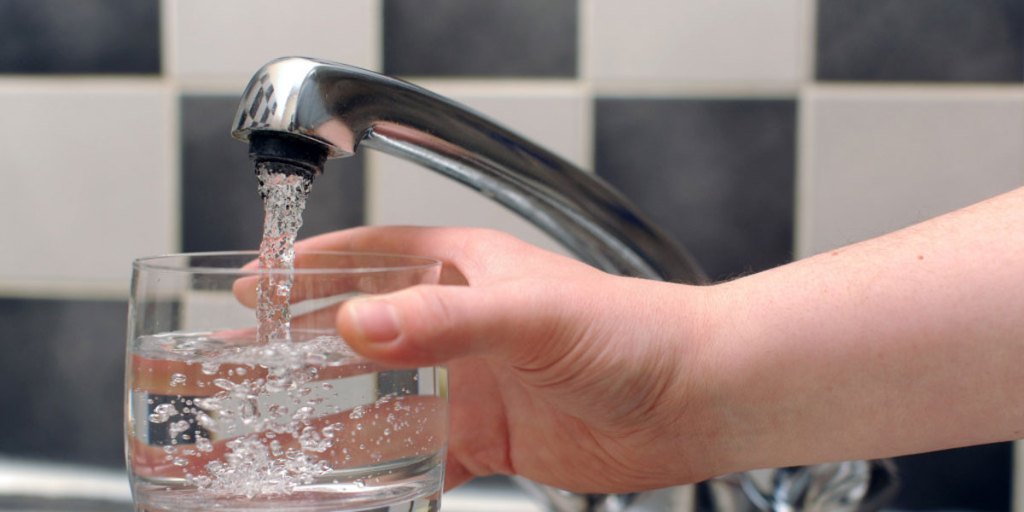
South Australian residential consumers will only enjoy lower water prices if the State Government fundamentally changes the way in which SA Water’s infrastructure assets are valued, and resulting revenues.
While an Essential Services Commission of SA (ESCOSA) proposal will wind back a $93 million annual subsidy from business to the public, Business SA Director of Policy, Rick Cairney, says further pricing reform is required if consumers are to enjoy lower prices long term.
Cairney said the ESCOSA report on water price reform published last week concluded that current price structures have, over time, departed from cost-reflective levels, leading to cross-subsidies from business to residential customers, inflating business costs and making local production less competitive.
“Under the present water pricing structure, South Australian businesses subsidise residential households to the tune of $93 million per annum,” he said.
“If ESCOSA’s proposals are adopted, these subsidies would be wound back to ensure all consumers of water pay a price which reflects the actual costs of delivering water, treating sewerage and treating trade waste.
You might like

“However, there is much more to South Australia’s high water prices than what has been investigated through ESCOSA’s report. The reality is that the majority of SA Water’s costs, around 90%, are actually considered to be ‘fixed costs’. That is, those costs are independent of the amount of water used or sewerage processed. So no matter how much water businesses or households conserve, the major driver of prices is the cost of the infrastructure, including the significant bill for the construction of the Adelaide Desalination Plant, required to deliver the water.”
Cairney said that infrastructure cost included, to a lesser extent, the North-South Interconnection System Project which is the extra pipes required to distribute desalinated water.
“ESCOSA was only given the responsibility for regulating SA Water in 2012, and one of its first major tasks was setting the maximum revenues SA Water could earn from 1 July 2013 until 30 June 2016. From there, SA Water was able to set prices for water and sewerage retail services consistent with the revenue allowances,” Cairney said.
“As a result, SA water is able to set its own prices, and the major driver of SA Water’s revenues is the return and associated depreciation that ESCOSA allows SA Water to earn on the value of its assets,” he said.
Stay informed, daily
“ESCOSA has independence over how it determines what is ‘a reasonable rate of return for SA Water to earn of its assets’ but the State Government instructs ESCOSA to set SA Water’s allowable revenues based on a pre-determined asset value which seems to defeat the purpose of an independent regulator of SA Water.
“Now this whole process would be somewhat easier to accept if there was transparency around how the State Government determines the value of SA Water’s assets – but unfortunately this is not the case.
“Business SA has repeatedly called for an independent valuation of SA Water’s assets but the State Government’s recent pricing order to ESCOSA requiring it to set SA Water’s revenues from 2016 until 2020 was based on the same asset value the Government determined in May 2013, which is $11.35 billion.
“The reason for concern over SA Water’s asset values is widespread and ESCOSA’s former CEO Paul Kerin recently told a parliamentary enquiry that ‘if it’s overvalued by $2 billion, and that’s probably conservative, water consumers out there are paying an extra $150 million a year, every year’.
“So, if existing subsidies from business to residential households are abolished and SA Water’s asset values are valued correctly, all consumers will pay less for water.
“This is not just an argument about business paying too much for water, but it is also about all South Australians paying more than they should.
“The South Australian economy is being held back by the high cost of doing business which makes it very difficult for key export sectors such as manufacturing and agriculture to compete in world markets.
“Accordingly, it is crucial for the State Government to ensure that where it has influence over the price of a key input for many exporters, such as water, that it is priced competitively.
“Competitively priced water will boost South Australian business and create more jobs for South Australians, and in particularly for our young people.”
Business InSight is a partnership between Business SA and InDaily.
Want to see more stories from InDaily SA in your Google search results?
- Click here to set InDaily SA as a preferred source.
- Tick the box next to "InDaily SA". That's it.